Halichoerus grypus
The grey seal, or gray seal in the United States, is a large seal of the family Phocidae, which are commonly referred to as "true seals" or "earless seals". The only species classified in the genus Halichoerus, it is found on both shores of the North Atlantic Ocean. In Latin, Halichoerus grypus means "hook-nosed sea pig". It is also known as the horsehead seal, owing to its large head.

Diego Delso · CC BY-SA 4.0 · via Wikipedia/Commons. May be a photograph of a specimen, or an artist’s reconstruction — an interpretation of a skeleton, since colour and soft tissue are almost never preserved.
On record
Recorded, not inferred- Also called
- grey sealPBDB
- Sits inside
- HalichoerusPBDB
- Diet
- piscivore, carnivorePBDB, for Phocidae
- Life habit
- amphibiousPBDB, for Pinnipedia
- Motility
- actively mobilePBDB, for Osteichthyes
- Environment
- marinePBDB, for Pinnipedia
Time the record covers
At most 2.6 million years on record.
Every occurrence read is dated to somewhere between 2.58 Mya and 0 Mya, and nothing in the dating separates them, so that window is what the record shows rather than a span.
18 occurrences of Halichoerus grypus on record, most of them in the Pleistocene. The Paleobiology Database records this as a living group. Bar height is expected occurrences, not a count: each fossil is spread across the span it is dated to, so a tall narrow bar means tight dating and a low wide one means loose.
When
18 occurrences- Pleistocene50%
- Holocene50%
These are dates about fossils, not the animal: the record can only begin after it arose and end before it died out, so either end may reach further. Shares are expected occurrences: a fossil dated to a span is counted partly in each period it straddles. More on what this infers.
Found in
3 formations
Loading coastlines…
The named rock units Halichoerus grypus has been recovered from, largest first. Drawn where the rock is now, not where it formed. 14 occurrences have no formation on record, which is common for older literature.
Halichoerus grypus and its relatives
PleistoceneWhere Halichoerus grypus and its relatives were recorded in the Pleistocene.
Found in the same rock
199 taxa- Erignathus barbatus3 sites
- Gadus3 sites
- Odobenus rosmarus3 sites
- Pinguinus impennis3 sites
- Acteocina canaliculata2 sites
- Anadara (Larkinia) transversa2 sites
- Angulus texanus2 sites
- Anomia simplex2 sites
- Argopecten gibbus2 sites
- Atractodon2 sites
- Barnea truncata2 sites
- Bornia2 sites
- Branta bernicla2 sites
- Busycon carica2 sites
- Busycotypus canaliculatus2 sites
- Capreolus capreolus2 sites
- Carcharias2 sites
- Caryocorbula contracta2 sites
- Cervus elaphus2 sites
- Crassinella lunulata2 sites
- Crassostrea virginica2 sites
- Crepidula convexa2 sites
- Crepidula fornicata2 sites
- Crepidula plana2 sites
The Paleobiology Database records 17 sites for Halichoerus grypus, and this reads all of them. The number is how many of those sites it was catalogued from too. The 24 sharing the most are listed.
This is not a list of everything alive at the time. It is only what has come out of the same ground as this animal and been written down.
Entered from
13 references- Holocene environmental changes and the seal (Phocidae) fauna of the Baltic Sea: coming, going and staying4
- Post-glacial history of the European seal fauna on the basis of sub-fossil records2
- Fossil vertebrates from the marine Pleistocene of southeastern Virginia2
- Humans and marine resource interaction reappraised: Archaeofauna remains during the late Pleistocene and Holocene in Cantabrian Spain1
- Ressources complémentaires et mobilité dans le Magdalénien cantabrique. Nouvelles données sur les mammifères marins, les crustacés, les mollusques et les roches organogènes de la Grotte de Las Caldas (Asturies, Espagne)1
- Missing mammals from mesolithic middens: A comparison of the fossil and archaeological records from Scotland1
- Coastal adaptation and marine exploitation of the island Hiiumaa, Estonia, during the stone age with special emphasis on the Kõpu I site1
- Pleistocene and Holocene mammalian faunas from the Maasvlakete near Rotterdam (The Netherlands)1
- Status of Common Seals (Phoca vitulina) in Norway1
- The fauna and paleoecology of the Late Pleistocene marine sediments of southeastern Virginia1
- Stratigraphie du Quaternaire et phoque fossile, région de la Durantaye, Québec1
- A late Pleistocene vertebrate assemblage from Edisto Island, South Carolina1
Each of the 18 occurrences read was entered from one of these publications, ordered by how many each accounts for. This is not a search for papers mentioning the name. 1 further reference is not listed. Entries link to doi.org where the Paleobiology Database holds an identifier, and to its own record where it does not. Relayed as the Paleobiology Database holds them, not checked against what they resolve to.
Media and terms
Media content2

Picture of Halichoerus grypus
- Source
- Wikipedia/Commons
- Credit
- Diego Delso
- Licence
- CC BY-SA 4.0
- Commercial use
- the licence allows it
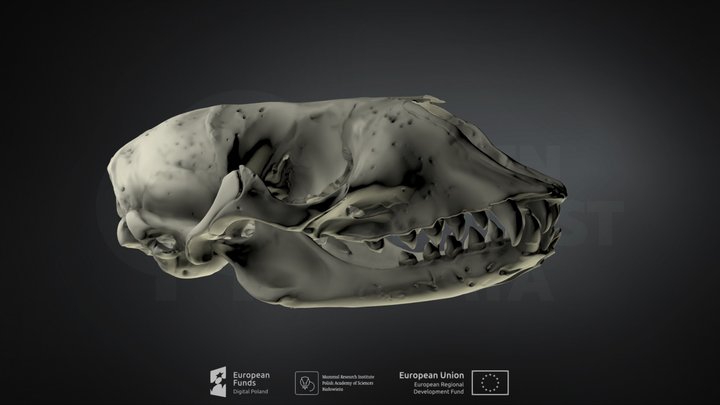
3D model
- Source
- Sketchfab
- Licence
- CC Attribution
- Commercial use
- cannot be read from the licence given — check the record
Smithsonian Open Access and MorphoSource were not reached for this taxon, so this list is what the others held rather than everything there is.
The description on this site
- Source
- Wikipedia, “Grey seal”
- Licence
- CC BY-SA 4.0
This is what the site found, which is not the same as what exists.
Keep going
What may have been alongside itHalichoerus through timeFormations of the PleistoceneThe world it lived on
Occurrence data from the Paleobiology Database, CC BY 4.0. (Fabricius 1791)