Hemicyclaspis murchisoni
No picture of Hemicyclaspis murchisoni was found. Wikidata and iDigBio were searched and had none. Wikipedia and Smithsonian Open Access did not answer, so this is what the others held rather than everything there is. GBIF was asked, and what came back is not recorded: nothing, or a picture this site could not tie to Hemicyclaspis murchisoni, or no answer at all. This entry cannot say which.
On record
Recorded, not inferred- Sits inside
- HemicyclaspisPBDB
- Motility
- actively mobilePBDB, for Chordata
Time the record covers
At most 9.7 million years on record.
Every occurrence read is dated to somewhere between 422.7 Mya and 413.02 Mya, and nothing in the dating separates them, so that window is what the record shows rather than a span.
7 occurrences of Hemicyclaspis murchisoni on record, most of them in the Silurian. Bar height is expected occurrences, not a count: each fossil is spread across the span it is dated to, so a tall narrow bar means tight dating and a low wide one means loose.
When
7 occurrencesThese are dates about fossils, not the animal: the record can only begin after it arose and end before it died out, so either end may reach further. Shares are expected occurrences: a fossil dated to a span is counted partly in each period it straddles. More on what this infers.
Found in
6 formations
- Ledbury Formation2
- Temeside Shale Formation1
- Peel Sound Formation1
- Somerset Island Formation1
- Downton Castle Sandstone Formation1
- Downton Formation1
Loading coastlines…
The named rock units Hemicyclaspis murchisoni has been recovered from, largest first. Drawn where the rock is now, not where it formed.
Hemicyclaspis murchisoni and its relatives
SilurianWhere Hemicyclaspis murchisoni and its relatives were recorded in the Silurian.
Found in the same rock
41 taxa- Acanthodii3 sites
- Auchenaspis salteri2 sites
- Corveolepis arctica2 sites
- Erettopterus2 sites
- Lingulidae2 sites
- Aplysiida1 site
- Auchenaspis egertoni1 site
- Bivalvia1 site
- Boothiaspis alata1 site
- Cephalaspis1 site
- Climatius1 site
- Cyathaspida1 site
- Didymaspis grindrodi1 site
- Dolichopterus1 site
- Erettopterus spatulatus1 site
- Eurypterus cephalaspis1 site
- Goniporus alatus1 site
- Hemicyclaspis lightbodii1 site
- Hughmilleria1 site
- Katoporus grossi1 site
- Loganellia1 site
- Loganellia cuneata1 site
- Loganellia kummerowi1 site
- Mixopterus1 site
The Paleobiology Database records 6 sites for Hemicyclaspis murchisoni, and this reads all of them. The number is how many of those sites it was catalogued from too. The 24 sharing the most are listed.
This is not a list of everything alive at the time. It is only what has come out of the same ground as this animal and been written down.
Entered from
5 references- Habitat of Llandoverian-Lochkovian eurypterids2
- A monograph of the fishes of the Old Red Sandstone of Britain. Part I (concluded). The Cephalaspidae2
- Late Silurian fossil fishes sites of the Welsh Borders1
- A new subfamily of the Pteraspididae (Agnatha, Heterostraci) from the Upper Silurian and Lower Devonian of Arctic Canada1
- A new species of Corvaspis (Agnatha, Heterostraci) from the upper Silurian to lower or middle Devonian of the North-west Territories, Canada1
Each of the 7 occurrences read was entered from one of these publications, ordered by how many each accounts for. This is not a search for papers mentioning the name. Each entry links to the Paleobiology Database's own record for the work.
Media and terms
Media content1
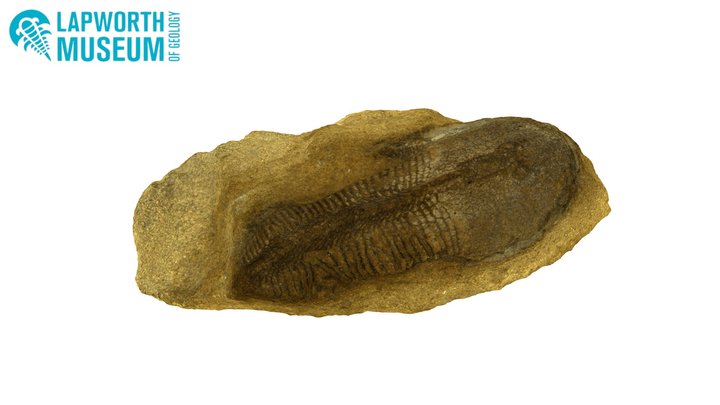
3D model
- Source
- Sketchfab
- Licence
- CC Attribution-NonCommercial
- Commercial use
- the licence does not allow it
No picture of Hemicyclaspis murchisoni was found. Wikidata and iDigBio were searched and had none.
Wikipedia and Smithsonian Open Access did not answer, so this is what the others held rather than everything there is.
GBIF was asked, and what came back is not recorded: nothing, or a picture this site could not tie to Hemicyclaspis murchisoni, or no answer at all. This entry cannot say which.
Smithsonian Open Access and MorphoSource were not reached for this taxon, so this list is what the others held rather than everything there is.
This is what the site found, which is not the same as what exists.
Keep going
What may have been alongside itHemicyclaspis through timeFormations of the SilurianThe world it lived on
Occurrence data from the Paleobiology Database, CC BY 4.0. Lankester 1870