Hexaplex (Trunculariopsis)
No picture of Hexaplex (Trunculariopsis) was found. Wikipedia, Wikidata and iDigBio were searched and had none. Smithsonian Open Access did not answer, so this is what the others held rather than everything there is. GBIF was asked, and what came back is not recorded: nothing, or a picture this site could not tie to Hexaplex (Trunculariopsis), or no answer at all. This entry cannot say which.
On record
Recorded, not inferred- Sits inside
- HexaplexPBDB
- Diet
- carnivorePBDB, for Muricidae
- Life habit
- epifaunalPBDB, for Muricidae
- Motility
- actively mobilePBDB, for Muricidae
- Vision
- limitedPBDB, for Gastropoda
Time the record covers
At least 5.3 million years on record.
The record covers at least 5.333 Mya to 11.7 ka. No occurrence read is dated outside 11.63 Mya to 0 Mya.
13 occurrences of Hexaplex (Trunculariopsis) on record, most of them in the Pliocene. The Paleobiology Database records this as a living group. Bar height is expected occurrences, not a count: each fossil is spread across the span it is dated to, so a tall narrow bar means tight dating and a low wide one means loose.
When
13 occurrences- Miocene23%
- Pliocene54%
- Pleistocene15%
- Holocene8%
These are dates about fossils, not the animal: the record can only begin after it arose and end before it died out, so either end may reach further. Shares are expected occurrences: a fossil dated to a span is counted partly in each period it straddles. More on what this infers.
Found in
2 formations
Loading coastlines…
The named rock units Hexaplex (Trunculariopsis) has been recovered from, largest first. Drawn where the rock is now, not where it formed. 9 occurrences have no formation on record, which is common for older literature.
Hexaplex (Trunculariopsis) and its relatives
PlioceneWhere Hexaplex (Trunculariopsis) and its relatives were recorded in the Pliocene.
Found in the same rock
258 taxa- Antigona3 sites
- Austrohinnites polyaktinos3 sites
- Clanculus3 sites
- Diastoma3 sites
- Eucrassatella3 sites
- Rissoa3 sites
- Thericium3 sites
- Acteon2 sites
- Ancilla (Turrancilla)2 sites
- Astraea (Pomaulax) biangulata2 sites
- Austromitra2 sites
- Bornia2 sites
- Cadulus yatalensis2 sites
- Calliostoma2 sites
- Callucina balcombica2 sites
- Calyptraea crassa2 sites
- Cantharidus2 sites
- Cassis (Hypocassis)2 sites
- Charonia2 sites
- Chemnitzia2 sites
- Chioneryx2 sites
- Chlamys antiaustralis2 sites
- Cingula2 sites
- Closia2 sites
The Paleobiology Database records 6 sites for Hexaplex (Trunculariopsis), and this reads all of them. The number is how many of those sites it was catalogued from too. The 24 sharing the most are listed.
This is not a list of everything alive at the time. It is only what has come out of the same ground as this animal and been written down.
Entered from
6 references- The Early Pliocene Gastropoda (Mollusca) of Estepona, Southern Spain. Part 7: Muricidae6
- The molluscan fauna of the Pliocene strata underlying the Adelaide Plains. Part V - Gastropoda (Eratoidae to Scaphandridae)3
- The marine fossils malacofauna in a Plio-Pleistocene section from Vallin Buio (Livorno, Italy)1
- Palaeoecology and feeding evidence of decapod crustaceans on some shells of gastropods from the Pliocene of Masserano (Biella, NW Italy)1
- Whale bones and shell purple-dye at Motya (western Sicily, Italy)1
- Recherches sur le Neogene et le Quaternaire marins de la cote Atlantique du Maroc1
Each of the 13 occurrences read was entered from one of these publications, ordered by how many each accounts for. This is not a search for papers mentioning the name. Entries link to doi.org where the Paleobiology Database holds an identifier, and to its own record where it does not. Relayed as the Paleobiology Database holds them, not checked against what they resolve to.
Media and terms
Media content1
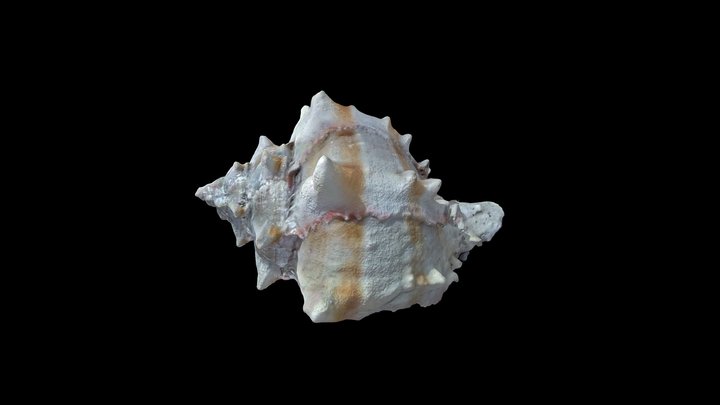
No picture of Hexaplex (Trunculariopsis) was found. Wikipedia, Wikidata and iDigBio were searched and had none.
Smithsonian Open Access did not answer, so this is what the others held rather than everything there is.
GBIF was asked, and what came back is not recorded: nothing, or a picture this site could not tie to Hexaplex (Trunculariopsis), or no answer at all. This entry cannot say which.
Smithsonian Open Access and MorphoSource were not reached for this taxon, so this list is what the others held rather than everything there is.
This is what the site found, which is not the same as what exists.
Keep going
What may have been alongside itHexaplex through timeFormations of the PlioceneThe world it lived on
Occurrence data from the Paleobiology Database, CC BY 4.0. (Cossmann 1921)