Leuciscus

Uncredited · Public Domain · via Wikidata/Commons. May be a photograph of a specimen, or an artist’s reconstruction — an interpretation of a skeleton, since colour and soft tissue are almost never preserved.
On record
Recorded, not inferred- Sits inside
- CyprinidaePBDB
- Diet
- omnivorePBDB, for Cypriniformes
- Life habit
- nektonicPBDB, for Cypriniformes
- Motility
- actively mobilePBDB, for Cypriniformes
- Environment
- freshwaterPBDB, for Cypriniformes
Time the record covers
At least 27 million years on record.
The record covers at least 27.3 Mya to 11.7 ka. No occurrence read is dated outside 143.1 Mya to 0 Mya.
42 occurrences of Leuciscus on record, most of them in the Miocene. The Paleobiology Database records this as a living group. Bar height is expected occurrences, not a count: each fossil is spread across the span it is dated to, so a tall narrow bar means tight dating and a low wide one means loose.
When
42 occurrences- Early Cretaceousunder 1%
- Late Cretaceousunder 1%
- Paleoceneunder 1%
- Eoceneunder 1%
- Oligocene10%
- Miocene31%
- Pliocene29%
- Pleistocene26%
- Holocene2%
These are dates about fossils, not the animal: the record can only begin after it arose and end before it died out, so either end may reach further. Shares are expected occurrences: a fossil dated to a span is counted partly in each period it straddles. More on what this infers.
Found in
9 formations
- Cromer Forest Bed Formation3
- Lower Bone Bed Formation1
- Shanwang Formation1
- Upper Freshwater Molasse Formation1
- Forest Bed Formation1
- Córcoles Formation1
Loading coastlines…
The named rock units Leuciscus has been recovered from, largest first. Drawn where the rock is now, not where it formed. 31 occurrences have no formation on record, which is common for older literature.
Leuciscus and its relatives
MioceneWhere Leuciscus and its relatives were recorded in the Miocene.
Found in the same rock
613 taxa- Barbus8 sites
- Rana7 sites
- Tinca7 sites
- Bithynia6 sites
- Mimomys6 sites
- Scardinius6 sites
- Esox5 sites
- Esox lucius5 sites
- Sorex5 sites
- Stephanorhinus etruscus5 sites
- Testudo5 sites
- Trionyx5 sites
- Aves4 sites
- Bufo4 sites
- Cervus4 sites
- Cyprinidae4 sites
- Equus4 sites
- Gyraulus4 sites
- Pisidium4 sites
- Plantae4 sites
- Prolagus oeningensis4 sites
- Rhinocerotidae4 sites
- Sus scrofa4 sites
- Anas3 sites
The Paleobiology Database records 37 sites for Leuciscus, and this reads all of them. The number is how many of those sites it was catalogued from too. The 24 sharing the most are listed.
This is not a list of everything alive at the time. It is only what has come out of the same ground as this animal and been written down.
Entered from
27 references- Nota sobre la ictiofauna continental de los yacimientos de la cuenca de Guadix-Baza (Granada)8
- The Vertebrata of the Forest Bed Series of Norfolk and Suffolk4
- A Lower Oligocene Mammalian Fauna from Dětañ and Dvérce NW Bohemia, Czechoslovakia3
- The Afro–Asian labeonine genus Garra Hamilton, 1822 (Teleostei, Cyprinidae) in the Pliocene of Central Armenia: Palaeoecological and palaeobiogeographical implications2
- Pleistocene vertebrate faunas of Hungary2
- Contributions à la paléontologie du Miocène moyen continental du Bassin du Tage, III; Mammifères - Póvoa de Santarém, Pero Filho et Chões (Secorio), Conclusions générales. [Paleontology of the continental middle Miocene of the Tagus Basin, III; Mammals - Póvoa de Santarém, Pero Filho et Chões (Secorio), General Conclusions2
- Small vertebrates from the Late Pliocene Las Higueruelas locality of central Spain with new biochronological and palaeoecological inferences1
- A new Miocene ape and locomotion in the ancestor of great apes and humans1
- A 9,000 Year History of Seal Hunting on Lake Baikal, Siberia: The Zooarchaeology of Sagan-Zaba II1
- Late Miocene bony fishes from Pocsesti (Republic of Moldova)1
- Iberomeryx minor (Mammalia, Artiodactyla) from the Early Oligocene of Soulce (Canton Jura, NW Switzerland): systematics and palaeodiet1
- Pharyngeal Teeth, Lateral Ethmoids, and Jaw Teeth of Fishes and Additional Fossils From the Late Miocene (Late Khersonian / Early Maeotian) of Eastern Paratethys (Yalova, Near Istanbul, Turkey)1
Each of the 42 occurrences read was entered from one of these publications, ordered by how many each accounts for. This is not a search for papers mentioning the name. 15 further references are not listed. Entries link to doi.org where the Paleobiology Database holds an identifier, and to its own record where it does not. Relayed as the Paleobiology Database holds them, not checked against what they resolve to.
Media and terms
Media content2
Picture of Leuciscus
- Source
- Wikidata/Commons
- Credit
- nobody named on the record
- Licence
- Public Domain
- Commercial use
- the licence allows it
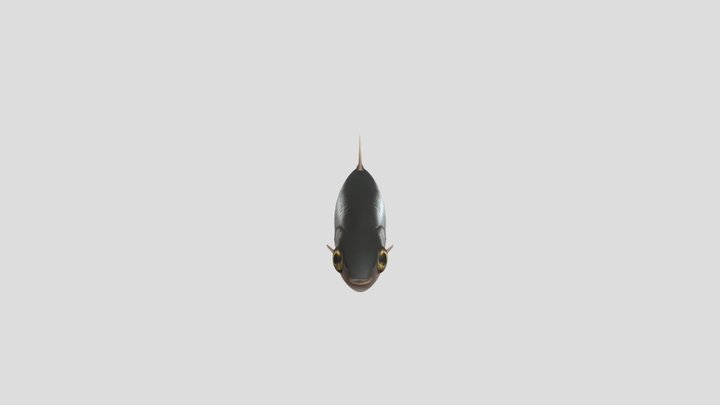
3D model
- Source
- Sketchfab
- Credit
- faerbogdan99
- Licence
- CC Attribution
- Commercial use
- cannot be read from the licence given — check the record
Smithsonian Open Access and MorphoSource were not reached for this taxon, so this list is what the others held rather than everything there is.
This is what the site found, which is not the same as what exists.
Keep going
What may have been alongside itCyprinidae through timeFormations of the MioceneThe world it lived on
Occurrence data from the Paleobiology Database, CC BY 4.0. Cuvier 1817