Scardinius
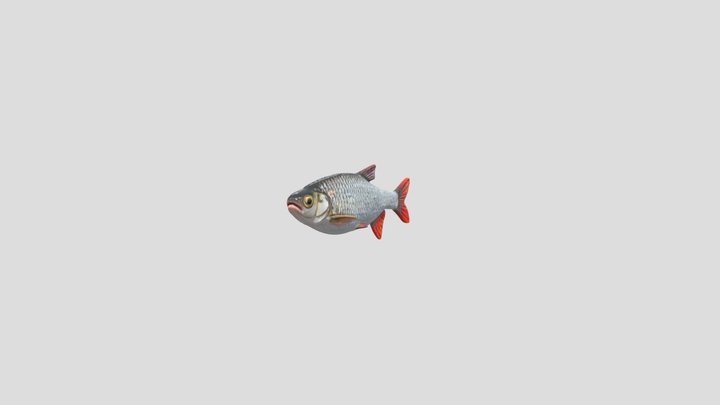
Scardinius is a genus of freshwater ray-finned fishes belonging to the family Leuciscidae, which includes daces, Eurasian minnows, and related species. The fishes in this genus are commonly called rudds. Locally, the name "rudd" without any further qualifiers is also used for individual species, particularly the common rudd. The rudd can be distinguished from the very similar roach by its upturned mouth, allowing it to pick food items such as aquatic insects from the surface of the water with minimal disturbance.

Uncredited · CC BY-SA 2.5 · via Wikipedia/Commons. May be a photograph of a specimen, or an artist’s reconstruction — an interpretation of a skeleton, since colour and soft tissue are almost never preserved.
On record
Recorded, not inferred- Sits inside
- CyprinidaePBDB
- Diet
- omnivorePBDB, for Cypriniformes
- Life habit
- nektonicPBDB, for Cypriniformes
- Motility
- actively mobilePBDB, for Cypriniformes
- Environment
- freshwaterPBDB, for Cypriniformes
Time the record covers
At least 26 million years on record.
The record covers at least 27.3 Mya to 774 ka. No occurrence read is dated outside 33.9 Mya to 129 ka.
14 occurrences of Scardinius on record, most of them in the Miocene. Bar height is expected occurrences, not a count: each fossil is spread across the span it is dated to, so a tall narrow bar means tight dating and a low wide one means loose.
When
14 occurrences- Oligocene7%
- Miocene50%
- Pliocene26%
- Pleistocene18%
These are dates about fossils, not the animal: the record can only begin after it arose and end before it died out, so either end may reach further. Shares are expected occurrences: a fossil dated to a span is counted partly in each period it straddles. More on what this infers.
Found in
6 formations
- Upper Freshwater Molasse Formation1
- Kuyal'nikian Formation1
- Yalakdere Formation1
- Chersonian Formation · Balta Group1
- Reuver clay Formation1
- Volhyn Beds Formation1
Loading coastlines…
The named rock units Scardinius has been recovered from, largest first. Drawn where the rock is now, not where it formed. 8 occurrences have no formation on record, which is common for older literature.
Scardinius and its relatives
MioceneWhere Scardinius and its relatives were recorded in the Miocene.
Found in the same rock
368 taxa- Leuciscus6 sites
- Tinca6 sites
- Cervidae4 sites
- Esox4 sites
- Mimomys4 sites
- Rutilus4 sites
- Silurus4 sites
- Testudo4 sites
- Trogontherium4 sites
- Anancus arvernensis3 sites
- Emys3 sites
- Esox lucius3 sites
- Rana3 sites
- Trionyx3 sites
- Anura2 sites
- Apodemus2 sites
- Aspius2 sites
- Barbus2 sites
- Beremendia fissidens2 sites
- Blarinoides mariae2 sites
- Castor fiber2 sites
- Cervus2 sites
- Chelydropsis2 sites
- Clupea2 sites
The Paleobiology Database records 13 sites for Scardinius, and this reads all of them. The number is how many of those sites it was catalogued from too. The 24 sharing the most are listed.
This is not a list of everything alive at the time. It is only what has come out of the same ground as this animal and been written down.
Entered from
14 references- A new Sarmatian (late Middle Miocene) vertebrate assemblage from the periphery of the Forecarpathian Basin1
- New Extinct Carp Fish Species (Teleostei, Cyprinidae) from the Late Neogene of Southeastern Europe1
- Late Miocene bony fishes from Pocsesti (Republic of Moldova)1
- Early Pliocene Bear Ursus thibetanus (Mammalia, Carnivora) from Priozernoe Locality in the Dniester Basin (Moldova Republic)1
- Pharyngeal Teeth, Lateral Ethmoids, and Jaw Teeth of Fishes and Additional Fossils From the Late Miocene (Late Khersonian / Early Maeotian) of Eastern Paratethys (Yalova, Near Istanbul, Turkey)1
- The First Representative Vertebrate Fauna from the Late Miocene of Southern European Russia1
- Biostratigraphy and paleoecology of continental Tertiary vertebrate faunas in the Lower Rhine Embayment (NW-Germany)1
- Neues aus dem Villafranchium von Hajnacka bei Filakovo (Slowakei, cssr)1
- The Early Middle Pleistocene vertebrate fauna from Little Oakley, Essex1
- Pleistocene vertebrate faunas of Hungary1
- Catalog of Localities of Tertiary Vertebrates of the USSR1
- Eine unterpliozäne Kleinsäugerfauna aus der Oberen Süßwasser-Molasse Bayerns1
Each of the 14 occurrences read was entered from one of these publications, ordered by how many each accounts for. This is not a search for papers mentioning the name. 2 further references are not listed. Entries link to doi.org where the Paleobiology Database holds an identifier, and to its own record where it does not. Relayed as the Paleobiology Database holds them, not checked against what they resolve to.
Media and terms
Media content2

Picture of Scardinius
- Source
- Wikipedia/Commons
- Credit
- nobody named on the record
- Licence
- CC BY-SA 2.5
- Commercial use
- the licence allows it
Smithsonian Open Access and MorphoSource were not reached for this taxon, so this list is what the others held rather than everything there is.
The description on this site
- Source
- Wikipedia, “Scardinius”
- Licence
- CC BY-SA 4.0
This is what the site found, which is not the same as what exists.
Keep going
What may have been alongside itCyprinidae through timeFormations of the MioceneThe world it lived on
Occurrence data from the Paleobiology Database, CC BY 4.0. (Sauvage 1873)