Lonchidion
Lonchidion is a genus of extinct hybodont in the family Lonchidiidae. The genus first appears in the fossil record during the Middle Triassic (Ladinian) and was among the last surviving hybodont genera, with its youngest known fossils dating to the very end of the Cretaceous (Maastrichtian).

Arratia et al., 2002 · CC BY-SA 3.0 · via Wikipedia/Commons. May be a photograph of a specimen, or an artist’s reconstruction — an interpretation of a skeleton, since colour and soft tissue are almost never preserved.
On record
Recorded, not inferred- Sits inside
- LonchidiidaePBDB
- Diet
- carnivorePBDB, for Chondrichthyes
- Life habit
- nektonicPBDB, for Chondrichthyes
- Motility
- actively mobilePBDB, for Chondrichthyes
Time the record covers
At least 155 million years on record.
The record covers at least 227.3 Mya to 72.2 Mya. No occurrence read is dated outside 237 Mya to 66 Mya.
170 occurrences of Lonchidion on record, most of them in the Late Cretaceous. Bar height is expected occurrences, not a count: each fossil is spread across the span it is dated to, so a tall narrow bar means tight dating and a low wide one means loose.
When
170 occurrences- Late Triassic8%
- Early Jurassic1%
- Middle Jurassicunder 1%
- Late Jurassic2%
- Early Cretaceous31%
- Late Cretaceous58%
These are dates about fossils, not the animal: the record can only begin after it arose and end before it died out, so either end may reach further. Shares are expected occurrences: a fossil dated to a span is counted partly in each period it straddles. More on what this infers.
Found in
49 formations
- Hell Creek Formation · Montana Group31
- Durlston Formation · Purbeck Group20
- Mesaverde Formation11
- Aguja Formation9
- Lance Formation9
- Chinle Formation6
Loading coastlines…
The named rock units Lonchidion has been recovered from, largest first. Drawn where the rock is now, not where it formed. 25 further formations hold fewer occurrences each and are not listed. 7 occurrences have no formation on record, which is common for older literature.
Lonchidion and its relatives
Late CretaceousWhere Lonchidion and its relatives were recorded in the Late Cretaceous.
Found in the same rock
1,190 taxa- Myledaphus bipartitus49 sites
- Theropoda40 sites
- Trionychidae39 sites
- Crocodylia33 sites
- Borealosuchus sternbergii32 sites
- Brachychampsa montana32 sites
- Lepisosteus occidentalis32 sites
- Paronychodon32 sites
- Scapherpeton tectum30 sites
- Dromaeosauridae29 sites
- Anura28 sites
- Cyclurus fragosus28 sites
- Hybodus28 sites
- Osteichthyes28 sites
- Egertonodus basanus27 sites
- Parvodus parvidens27 sites
- Texatrygon avonicola27 sites
- Ceratopsidae26 sites
- Scapanorhynchus texanus26 sites
- Adocus25 sites
- Compsemys victa25 sites
- Ischyrhiza mira25 sites
- Lepisosteidae25 sites
- Champsosaurus24 sites
The Paleobiology Database records 156 sites for Lonchidion, and this reads all of them. The number is how many of those sites it was catalogued from too. The 24 sharing the most are listed.
This is not a list of everything alive at the time. It is only what has come out of the same ground as this animal and been written down.
Entered from
78 references- Selachian faunas from the lowermost Purbeck Group of Dorset, southern England20
- Vertebrate biostratigraphy of the Hell Creek Formation in southwestern North Dakota and northwestern South Dakota13
- A new selachian fauna from the late Campanian of Wyoming (Teapot Sandstone Member, Mesaverde Formation, Big Horn Basin)10
- Fossil Vertebrate Collections9
- Fossil vertebrates from the Late Cretaceous Lance Formation, eastern Wyoming7
- Vertebrate paleoecology from microsites, Talley Mountain, Upper Aguja Formation (Late Cretaceous), Big Bend National Park, Texas, USA6
- Vertebrate faunal changes through Lancian and Puercan time in southern Wyoming5
- New data on the microvertebrate fauna from the Upper Jurassic or lowest Cretaceous of Ksar Metlili (Anoual Syncline, eastern Morocco)4
- Non-marine fishes of the late Santonian Milk River Formation of Alberta, Canada – evidence from vertebrate microfossil localities4
- The stratigraphy of the Atherfield Clay Formation (Lower Aptian, Lower Cretaceous) at the type and other localities in southern England4
- Microvertebrates from the Lower Greensand Group (Lower Cretaceous) of Clophill, Bedfordshire, UK, and Nutfield, Surrey, UK3
- Late Triassic microvertebrates from the lower Chinle Group (Otischalkian-Adamanian: Carnian), southwestern U.S.A.3
Each of the 170 occurrences read was entered from one of these publications, ordered by how many each accounts for. This is not a search for papers mentioning the name. 66 further references are not listed. Entries link to doi.org where the Paleobiology Database holds an identifier, and to its own record where it does not. Relayed as the Paleobiology Database holds them, not checked against what they resolve to.
Media and terms
Media content2

Picture of Lonchidion
- Source
- Wikipedia/Commons
- Credit
- Arratia et al., 2002
- Licence
- CC BY-SA 3.0
- Commercial use
- the licence allows it
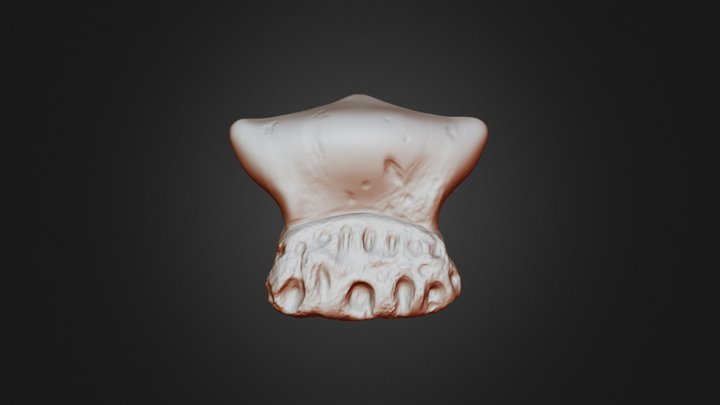
3D model
- Source
- Sketchfab
- Credit
- Fossil Models
- Licence
- CC Attribution-NonCommercial
- Commercial use
- the licence does not allow it
Smithsonian Open Access and MorphoSource were not reached for this taxon, so this list is what the others held rather than everything there is.
The description on this site
- Source
- Wikipedia, “Lonchidion”
- Licence
- CC BY-SA 4.0
This is what the site found, which is not the same as what exists.
Keep going
What may have been alongside itLonchidiidae through timeFormations of the Late CretaceousThe world it lived on
Occurrence data from the Paleobiology Database, CC BY 4.0. Estes 1964