Metacarcinus
Metacarcinus is a genus of crabs formerly included in the genus Cancer. It includes nine exclusively fossil species and five extant species, of which four are also known from the fossil record. A molecular study using the cytochrome oxidase I gene does not support the monophyly of this genus.

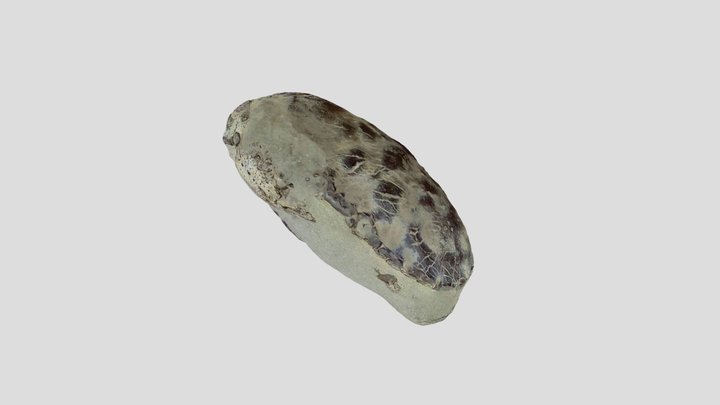
The original uploader was Stemonitis at English Wikipedia . · Public Domain · via Wikipedia/Commons. May be a photograph of a specimen, or an artist’s reconstruction — an interpretation of a skeleton, since colour and soft tissue are almost never preserved.
On record
Recorded, not inferred- Sits inside
- CancrinaePBDB
- Diet
- carnivorePBDB, for Decapoda
- Life habit
- semi-infaunalPBDB, for Cancridae
- Motility
- actively mobilePBDB, for Malacostraca
- Vision
- well-developedPBDB, for Malacostraca
Time the record covers
At least 40 million years on record.
The record covers at least 41.03 Mya to 129 ka. No occurrence read is dated outside 48.07 Mya to 0 Mya.
69 occurrences of Metacarcinus on record, most of them in the Pleistocene. The Paleobiology Database records this as a living group. Bar height is expected occurrences, not a count: each fossil is spread across the span it is dated to, so a tall narrow bar means tight dating and a low wide one means loose.
When
69 occurrences- Eocene1%
- Miocene20%
- Pliocene16%
- Pleistocene62%
- Holoceneunder 1%
These are dates about fossils, not the animal: the record can only begin after it arose and end before it died out, so either end may reach further. Shares are expected occurrences: a fossil dated to a span is counted partly in each period it straddles. More on what this infers.
Found in
25 formations
- Palos Verdes Sand Formation14
- San Pedro Formation9
- Etchegoin Formation4
- Elk River Formation4
- Greta Formation3
- Bear Lake Formation3
Loading coastlines…
The named rock units Metacarcinus has been recovered from, largest first. Drawn where the rock is now, not where it formed. One further formation holds fewer occurrences and is not listed. 4 occurrences have no formation on record, which is common for older literature.
Metacarcinus and its relatives
PleistoceneWhere Metacarcinus and its relatives were recorded in the Pleistocene.
Found in the same rock
980 taxa- Cancer (Metacarcinus) magister18 sites
- Cancer productus16 sites
- Romaleon jordani12 sites
- Romaleon antennarium11 sites
- Hirtoscala sawinae10 sites
- Romaleon branneri10 sites
- Hirtoscala tincta8 sites
- Nitidiscala indianorum8 sites
- Asperiscala minuticosta7 sites
- Hirtoscala hindsii7 sites
- Asperiscala bellastriata6 sites
- Cancer chaneyi5 sites
- Glebocarcinus oregonensis5 sites
- Myliobatis californica5 sites
- Nitidiscala californica5 sites
- Opalia borealis5 sites
- Seriphus politus5 sites
- Triakis semifasciata5 sites
- Carcharhinus4 sites
- Chilara taylori4 sites
- Citharichthys sordidus4 sites
- Citharichthys stigmaeus4 sites
- Cymatogaster aggregata4 sites
- Engraulis mordax4 sites
The Paleobiology Database records 54 sites for Metacarcinus, and this reads all of them. The number is how many of those sites it was catalogued from too. The 24 sharing the most are listed.
This is not a list of everything alive at the time. It is only what has come out of the same ground as this animal and been written down.
Entered from
14 references- The genus Cancer (Crustacea: Brachyura): systematics, biogeography and fossil record41
- The fossil stalk-eyed Crustacea of the Pacific slope of North America6
- Additions to the records for decapod Crustacea from Motunau and Glenafric Beaches, North Canterbury, New Zealand5
- Re-evaluation of the Cancridae Latreille, 1902 (Decapoda: Brachyura) including three new genera and three new species3
- A new crab (Brachyura: Cancridae) from lower Miocene rocks of the Northwestern Olympic Peninsula, Washington2
- Late Pleistocene invertebrates of the Newport Bay area, California2
- Pleistocene Brachyura from the Los Angeles area: Cancridae2
- An Upper Pleistocene fauna from the Baldwin Hills, Los Angeles County, California2
- A new species of Tymolus and a report on Metacarcinus (Crustacea: Decapoda: Brachyura) from the Miocene of Alaska1
- Piacenzian (Pliocene) decapod crustacean faunules from northwest Belgium1
- 40Ar/39Ar age and oxygen isotope temperature of the Centinela Formation, southwestern Argentina: An Eocene age for crustacean-rich "Patagonian" beds1
- Cenozoic Decapod Crustacea from Southwest Japan1
Each of the 69 occurrences read was entered from one of these publications, ordered by how many each accounts for. This is not a search for papers mentioning the name. 2 further references are not listed. Entries link to doi.org where the Paleobiology Database holds an identifier, and to its own record where it does not. Relayed as the Paleobiology Database holds them, not checked against what they resolve to.
Media and terms
Media content2

Picture of Metacarcinus
- Source
- Wikipedia/Commons
- Credit
- The original uploader was Stemonitis at English Wikipedia .
- Licence
- Public Domain
- Commercial use
- the licence allows it
Smithsonian Open Access was not reached for this taxon, so this list is what the others held rather than everything there is.
The description on this site
- Licence
- CC BY-SA 4.0
This is what the site found, which is not the same as what exists.
Keep going
What may have been alongside itCancrinae through timeFormations of the PleistoceneThe world it lived on
Occurrence data from the Paleobiology Database, CC BY 4.0. (Milne Edwards 1862)