Mollusca indet.
No picture of Mollusca indet. was found. Wikipedia and Wikidata were searched and had none. iDigBio and GBIF were not searched: the Paleobiology Database does not place Mollusca indet. firmly enough to tell it from something else bearing the same name, and a search on the name alone returns whichever of them was photographed. Smithsonian Open Access did not answer, so this is what the others held rather than everything there is.
Time the record covers
At least 520 million years on record.
The record covers at least 521 Mya to 11.7 ka. No occurrence read is dated outside 538.8 Mya to 0 Mya.
836 occurrences of Mollusca indet. on record, most of them in the Pleistocene. Bar height is expected occurrences, not a count: each fossil is spread across the span it is dated to, so a tall narrow bar means tight dating and a low wide one means loose.
When
836 occurrences- Cambrian2%
- Ordovician2%
- Silurianunder 1%
- Devonianunder 1%
- Carboniferousunder 1%
- Permianunder 1%
- Early Triassicunder 1%
- Middle Triassic1%
- Late Triassic2%
- Early Jurassicunder 1%
- Middle Jurassic2%
- Late Jurassicunder 1%
- Early Cretaceousunder 1%
- Late Cretaceous4%
- Paleoceneunder 1%
- Eocene6%
- Oligocene14%
- Miocene14%
- Pliocene22%
- Pleistocene24%
- Holocene1%
These are dates about fossils, not the animal: the record can only begin after it arose and end before it died out, so either end may reach further. Shares are expected occurrences: a fossil dated to a span is counted partly in each period it straddles. More on what this infers.
Found in
134 formations
- Qom Formation Formation102
- Oxford Clay Formation · Ancholme Group13
- Luning Formation11
- Guitar Formation Formation11
- Lianglitag Formation10
- Nummulitic Limestone Formation10
Loading coastlines…
The named rock units Mollusca indet. has been recovered from, largest first. Drawn where the rock is now, not where it formed. 110 further formations hold fewer occurrences each and are not listed. 494 occurrences have no formation on record, which is common for older literature.
Mollusca indet. and its relatives
PleistoceneWhere Mollusca indet. and its relatives were recorded in the Pleistocene.
Found in the same rock
1,781 taxa- Echinodermata27 sites
- Ostracoda25 sites
- Osteichthyes22 sites
- Gastropoda21 sites
- Echinoidea18 sites
- Brachiopoda17 sites
- Bryozoa16 sites
- Foraminifera15 sites
- Anthozoa14 sites
- Crocodylia14 sites
- Plantae12 sites
- Procerithium12 sites
- Dinosauria11 sites
- Meleagrinella11 sites
- Palaeonucula11 sites
- Trilobita11 sites
- Aves10 sites
- Crinoidea10 sites
- Mesosaccella10 sites
- Theropoda10 sites
- Trionychidae10 sites
- Bryozoa indet.9 sites
- Cetacea9 sites
- Testudines9 sites
The Paleobiology Database records 737 sites for Mollusca indet., and this reads 240 of them. The number is how many of those sites it was catalogued from too. The 24 sharing the most are listed.
This is not a list of everything alive at the time. It is only what has come out of the same ground as this animal and been written down.
Entered from
194 references- Sedimentary facies and depositional environments of the Oligocene–early Miocene marine Qom Formation, Central Iran Back-Arc Basin, Iran (northeastern margin of the Tethyan Seaway)102
- Site U135390
- Site U135282
- Site U135181
- Site U135479
- Late Chattian platform carbonates with benthic foraminifera and coralline algae from the SE Iberian plate41
- Coralline Algae and Benthic Foraminifera from the Long Formation (middle Miocene) of the Little Andaman Island, India: Biofacies Analysis, Systematics and Palaeoenvironmental Implications17
- Paleoecology, structure, and distribution of Triassic coral buildups in western North America12
- Facies analysis and paleoenvironmental interpretation of Piacenzian carbonate deposits from the Guitar Formation of Car Nicobar Island, India11
- Biostratigraphie (micromammiferes) des depots plio-pleistocenes de la zone de Slatina (dep. d'Olt).11
- Skeletal assemblages and terrigenous input in the Eocene carbonate systems of the Nummulitic Limestone (NW Europe)10
- Palaeoecology of a Bituminous Shale - The Lower Oxford Clay of Central England10
Each of the 836 occurrences read was entered from one of these publications, ordered by how many each accounts for. This is not a search for papers mentioning the name. 182 further references are not listed. Entries link to doi.org where the Paleobiology Database holds an identifier, and to its own record where it does not. Relayed as the Paleobiology Database holds them, not checked against what they resolve to.
Media and terms
Media content2
Photogrammetry
- Source
- MorphoSource
- Licence
- not stated by the source
- Commercial use
- cannot be read from the licence given — check the record
- Specimen
- mollusca indet. · MST:PALEO:MST-SP-2476
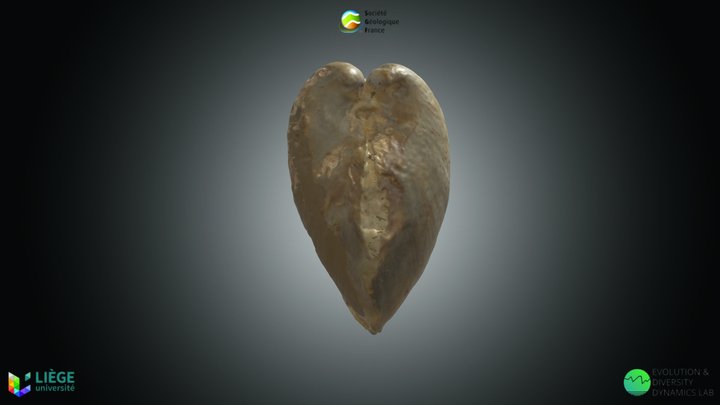
3D model
- Source
- Sketchfab
- Licence
- CC Attribution-NonCommercial-ShareAlike
- Commercial use
- the licence does not allow it
No picture of Mollusca indet. was found. Wikipedia and Wikidata were searched and had none.
iDigBio and GBIF were not searched: the Paleobiology Database does not place Mollusca indet. firmly enough to tell it from something else bearing the same name, and a search on the name alone returns whichever of them was photographed.
Smithsonian Open Access did not answer, so this is what the others held rather than everything there is.
Smithsonian Open Access was not reached for this taxon, so this list is what the others held rather than everything there is.
This is what the site found, which is not the same as what exists.
Keep going
What may have been alongside itFormations of the PleistoceneThe world it lived on
Occurrence data from the Paleobiology Database, CC BY 4.0.