Mylossoma
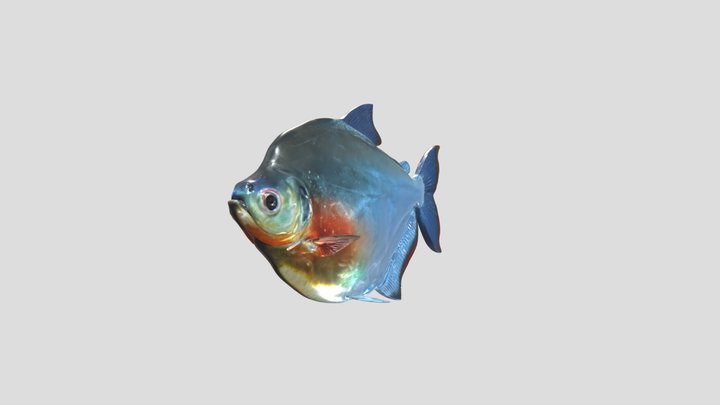
Mylossoma is a genus of serrasalmids from tropical and subtropical South America, including the basins of the Amazon, Orinoco, Lake Maracaibo and Paraguay-Paraná. These common fish are found both in main river sections and floodplains. They support important fisheries and based on a review by IBAMA, they are the seventh most caught fish by weight in the Brazilian Amazon. They primarily feed on plant material such as seeds and fruits, and in their ecology they generally resemble the larger tambaqui. Mylossoma reach up to 28.5 cm (11.2 in) in length and 1 kg (2.2 lb) in weight.

Clinton & Charles Robertson · CC BY 2.0 · via Wikipedia/Commons. May be a photograph of a specimen, or an artist’s reconstruction — an interpretation of a skeleton, since colour and soft tissue are almost never preserved.
On record
Recorded, not inferred- Sits inside
- SerrasalmidaePBDB
- Motility
- actively mobilePBDB, for Osteichthyes
- Environment
- freshwaterPBDB, for Characiformes
Time the record covers
At least 10 million years on record.
The record covers at least 13.82 Mya to 3.6 Mya. No occurrence read is dated outside 15.98 Mya to 2.58 Mya.
3 occurrences of Mylossoma on record, most of them in the Miocene. The Paleobiology Database records this as a living group, and the chart stops with its fossils rather than at the present. Bar height is expected occurrences, not a count: each fossil is spread across the span it is dated to, so a tall narrow bar means tight dating and a low wide one means loose.
When
3 occurrencesThese are dates about fossils, not the animal: the record can only begin after it arose and end before it died out, so either end may reach further. Shares are expected occurrences: a fossil dated to a span is counted partly in each period it straddles. More on what this infers.
Found in
3 formations
Loading coastlines…
The named rock units Mylossoma has been recovered from, largest first. Drawn where the rock is now, not where it formed.
Mylossoma and its relatives
MioceneWhere Mylossoma and its relatives were recorded in the Miocene.
Found in the same rock
83 taxa- Callichthyidae3 sites
- Chelonoidis2 sites
- Cichlidae2 sites
- Doradidae2 sites
- Loricariidae2 sites
- Pimelodidae2 sites
- Podocnemididae2 sites
- Serrasalmidae2 sites
- Siluriformes2 sites
- ? Sciaenidaea indet.1 site
- Acregoliath1 site
- Actinopterygii1 site
- Alethinophidia1 site
- Alligatoridae1 site
- Anilius scytale1 site
- Anura1 site
- Boidae1 site
- Boreostemma1 site
- Caimaninae1 site
- Cardiatherium1 site
- Caviodon1 site
- Caviomorpha1 site
- cf. Amblydoras sp.1 site
- cf. Megaleporinus sp.1 site
The Paleobiology Database records 3 sites for Mylossoma, and this reads all of them. The number is how many of those sites it was catalogued from too. The 24 sharing the most are listed.
This is not a list of everything alive at the time. It is only what has come out of the same ground as this animal and been written down.
Entered from
3 references- A fossil fish assemblage from the middle Miocene of the Cocinetas Basin, northern Colombia1
- A historical vertebrate collection from the Middle Miocene of the Peruvian Amazon1
- A Pliocene–Pleistocene continental biota from Venezuela1
Each of the 3 occurrences read was entered from one of these publications, ordered by how many each accounts for. This is not a search for papers mentioning the name. Each entry links to doi.org. Relayed as the Paleobiology Database holds them, not checked against what they resolve to.
Media and terms
Media content2

Picture of Mylossoma
- Source
- Wikipedia/Commons
- Credit
- Clinton & Charles Robertson
- Licence
- CC BY 2.0
- Commercial use
- the licence allows it
Smithsonian Open Access and MorphoSource were not reached for this taxon, so this list is what the others held rather than everything there is.
The description on this site
- Source
- Wikipedia, “Mylossoma”
- Licence
- CC BY-SA 4.0
This is what the site found, which is not the same as what exists.
Keep going
What may have been alongside itSerrasalmidae through timeFormations of the MioceneThe world it lived on
Occurrence data from the Paleobiology Database, CC BY 4.0. Eigenmann and Kennedy 1903