Notiomastodon
Notiomastodon is an extinct genus of gomphothere proboscidean, endemic to South America from the Pleistocene to the early Holocene. Individuals of Notiomastodon reached a size similar to that of the modern Asian elephant, with a body mass of 3-4 tonnes. Like other brevirostrine gomphotheres such as Cuvieronius and Stegomastodon, Notiomastodon had a shortened lower jaw and lacked lower tusks, unlike more primitive gomphotheres like Gomphotherium.

Gergas · CC BY-SA 4.0 · via Wikipedia/Commons. May be a photograph of a specimen, or an artist’s reconstruction — an interpretation of a skeleton, since colour and soft tissue are almost never preserved.
On record
Recorded, not inferred- Sits inside
- CuvieroniinaePBDB
- Diet
- browserPBDB, for Gomphotheriidae
- Life habit
- ground dwellingPBDB, for Gomphotheriidae
- Motility
- actively mobilePBDB, for Osteichthyes
- Environment
- terrestrialPBDB, for Eutheria
Time the record covers
At least 7.9 million years on record.
The record covers at least 8 Mya to 11.7 ka. No occurrence read is dated outside 23.04 Mya to 0 Mya.
190 occurrences of Notiomastodon on record, most of them in the Pleistocene. Bar height is expected occurrences, not a count: each fossil is spread across the span it is dated to, so a tall narrow bar means tight dating and a low wide one means loose.
When
190 occurrences- Miocene2%
- Plioceneunder 1%
- Pleistocene94%
- Holocene2%
These are dates about fossils, not the animal: the record can only begin after it arose and end before it died out, so either end may reach further. Shares are expected occurrences: a fossil dated to a span is counted partly in each period it straddles. More on what this infers.
Found in
22 formations
- Solimões Formation12
- Lujan Formation3
- Dolores Formation3
- Salto Ander Egg Formation3
- Tarija Formation2
- Tucuman Formation2
Loading coastlines…
The named rock units Notiomastodon has been recovered from, largest first. Drawn where the rock is now, not where it formed. 148 occurrences have no formation on record, which is common for older literature.
Notiomastodon and its relatives
PleistoceneWhere Notiomastodon and its relatives were recorded in the Pleistocene.
Found in the same rock
578 taxa- Gomphotheriidae28 sites
- Eremotherium laurillardi21 sites
- Toxodon18 sites
- Smilodon populator14 sites
- Equus caballus13 sites
- Glyptodon13 sites
- Panochthus13 sites
- Toxodon platensis13 sites
- Hippidion12 sites
- Glyptodon reticulatus11 sites
- Neosclerocalyptus11 sites
- Equus10 sites
- Macrauchenia patagonica10 sites
- Eremotherium9 sites
- Glyptotherium9 sites
- Lestodon armatus9 sites
- Pampatherium9 sites
- Toxodontidae9 sites
- Chelonoidis8 sites
- Glossotherium8 sites
- Glyptodon clavipes8 sites
- Hemiauchenia paradoxa8 sites
- Propraopus sulcatus8 sites
- Testudinidae8 sites
The Paleobiology Database records 147 sites for Notiomastodon, and this reads all of them. The number is how many of those sites it was catalogued from too. The 24 sharing the most are listed.
This is not a list of everything alive at the time. It is only what has come out of the same ground as this animal and been written down.
Entered from
72 references- Sixty years after ‘The mastodonts of Brazil’: The state of the art of South American proboscideans (Proboscidea, Gomphotheriidae)58
- Georeferencing fossiliferous localities from Solimões and Acre Basins (Brazil) -what we know so far about Solimões Formation and future perspectives15
- Mythbusting evolutionary issues on South American Gomphotheriidae (Mammalia: Proboscidea)12
- Les Mammiferes Pleistocenes de la Republique de L´Equateur10
- El registro de Stegomastodon (Mammalia, Gomphotheriidae) en el Pleistoceno superior de Brasil8
- Nearctic Pleistocene ungulates from the Pampean region (Argentina) in the historical collections of Santiago Roth in Switzerland: an overview4
- Registros fósiles del género Notiomastodon cf. platensis (Mammalia: Proboscidea) en el sur occidente colombiano, depositados en el Museo de Historia Natural de la Universidad del Cauca, Popayán3
- Ain’t no mountain high enough? New records of Notiomastodon platensis (Mammalia, Proboscidea) from Colombia and the Quaternary dry corridor of the Cauca valley3
- Síntesis actualizada del registro paleontológico pleistoceno en el Noroeste argentino3
- A systematic reassessment and paleogeographic review of fossil Xenarthra from Peru3
- Vertebrate continental assemblage from the Last Interglacial in southern South America (Entre Ríos, Argentina). Biostratigraphy and paleoenvironment2
- Tanque Loma, a new late-Pleistocene megafaunal tar seep locality from southwest Ecuador2
Each of the 190 occurrences read was entered from one of these publications, ordered by how many each accounts for. This is not a search for papers mentioning the name. 60 further references are not listed. Entries link to doi.org where the Paleobiology Database holds an identifier, and to its own record where it does not. Relayed as the Paleobiology Database holds them, not checked against what they resolve to.
Media and terms
Media content3
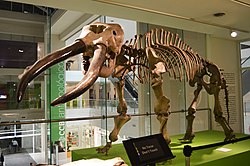
Picture of Notiomastodon
- Source
- Wikipedia/Commons
- Credit
- Gergas
- Licence
- CC BY-SA 4.0
- Commercial use
- the licence allows it
Structured light scan
- Source
- MorphoSource
- Credit
- Instituto de Investigaciones Arqueológicas y Paleontológicas del Cuaternario Pampeano (INCUAPA)
- Licence
- In Copyright
- Commercial use
- cannot be read from the licence given — check the record
- Specimen
- Notiomastodon platensis · FCS-P.303
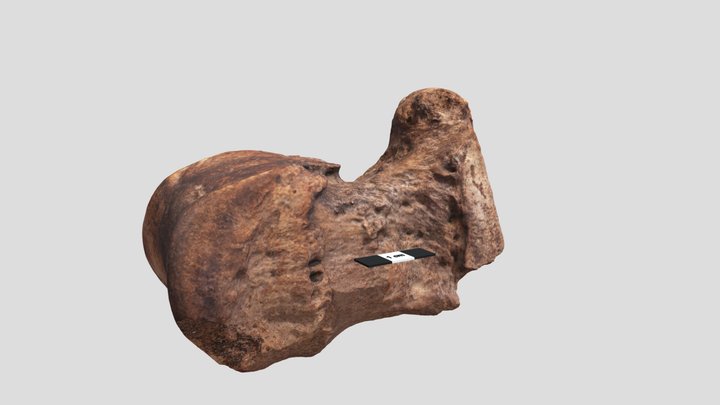
3D model
- Source
- Sketchfab
- Licence
- CC Attribution
- Commercial use
- cannot be read from the licence given — check the record
The description on this site
- Licence
- CC BY-SA 4.0
This is what the site found, which is not the same as what exists.
Keep going
What may have been alongside itCuvieroniinae through timeFormations of the PleistoceneThe world it lived on
Occurrence data from the Paleobiology Database, CC BY 4.0. Cabrera 1929