Parareptilia
Parareptilia ("near-reptiles") is an extinct subclass of basal sauropsids ("reptiles"). Traditionally considered the sister taxon to Eureptilia, its validity as a monophyletic clade has been disputed by modern cladistic analyses.

the paleo bear Yara Haridy et al. Paul Hudson Ghedoghedo GaKaGaMa · CC BY 4.0 · via Wikipedia/Commons. May be a photograph of a specimen, or an artist’s reconstruction — an interpretation of a skeleton, since colour and soft tissue are almost never preserved.
On record
Recorded, not inferred- Also called
- parareptilePBDB
- Sits inside
- ReptiliaPBDB
- Motility
- actively mobilePBDB, for Osteichthyes
- Environment
- terrestrialPBDB, for Amniota
Time the record covers
At least 101 million years on record.
The record covers at least 307.4 Mya to 205.7 Mya. No occurrence read is dated outside 309.8 Mya to 174.7 Mya.
404 occurrences of Parareptilia on record, most of them in the Permian. The Paleobiology Database records this as a living group, and the chart stops with its fossils rather than at the present. Bar height is expected occurrences, not a count: each fossil is spread across the span it is dated to, so a tall narrow bar means tight dating and a low wide one means loose.
When
404 occurrences- Carboniferousunder 1%
- Permian59%
- Early Triassic21%
- Middle Triassic10%
- Late Triassic9%
- Early Jurassicunder 1%
These are dates about fossils, not the animal: the record can only begin after it arose and end before it died out, so either end may reach further. Shares are expected occurrences: a fossil dated to a span is counted partly in each period it straddles. More on what this infers.
Found in
100 formations
- Abrahamskraal Formation · Beaufort Group27
- Katberg Formation · Beaufort Group17
- Balfour Formation · Beaufort Group13
- Belebei Formation9
- Shihtienfeng, Shiqianfeng, Sunjiagou Formation9
- Burgersdorp Formation · Beaufort Group9
Loading coastlines…
The named rock units Parareptilia has been recovered from, largest first. Drawn where the rock is now, not where it formed. 76 further formations hold fewer occurrences each and are not listed. 110 occurrences have no formation on record, which is common for older literature.
Parareptilia and its relatives
PermianWhere Parareptilia and its relatives were recorded in the Permian.
Found in the same rock
1,254 taxa- Procolophonidae20 sites
- Archosauriformes16 sites
- Procolophon trigoniceps13 sites
- Temnospondyli12 sites
- Toyemia blumentalis10 sites
- Cynodontia9 sites
- Isadia aristoviensis8 sites
- Lissodus8 sites
- Mesenosaurus romeri8 sites
- Pareiasauria8 sites
- Actinopterygii7 sites
- Bradysaurus seeleyi7 sites
- Dvinosaurus7 sites
- Dvinosaurus primus7 sites
- Karpinskiosaurus secundus7 sites
- Pareiasauridae7 sites
- Prolacerta broomi7 sites
- Redfieldiidae7 sites
- Toyemia tverdochlebovi7 sites
- Archosauromorpha6 sites
- Gorgonopsia6 sites
- Isadia6 sites
- Lepidosauria6 sites
- Nyctiphruretus acudens6 sites
The Paleobiology Database records 207 sites for Parareptilia, and this reads all of them. The number is how many of those sites it was catalogued from too. The 24 sharing the most are listed.
This is not a list of everything alive at the time. It is only what has come out of the same ground as this animal and been written down.
Entered from
186 references- The distribution of the Karroo vertebrate fauna28
- The fauna of the Tapinocephalus Zone (Beaufort Beds of the Karoo)23
- Podklass Parareptilia16
- Upper Permian vertebrates and their sedimentological context in the South Urals, Russia16
- A taxonomic revision of pareiasaurian reptiles: implications for Permian terrestrial paleoecology10
- Pareiasaurian studies. Part I. - An Attempt at a Classification of the Pareiasauria based on Skull Features10
- New Late Permian nycteroleterids from Eastern Europe8
- Elginiid Pareiasaurs of Eastern Europe7
- Tetrapod localities from the Triassic of the SE of European Russia7
- Novye Dannye po Prokolofoninam SSSR [New data on Procolophonines of the USSR]6
- A Re-evaluation of Parasaurus geinitzi, the first named pareiasaur (Amniota, Parareptilia)5
- A re-evaluation of small tetrapods from the Middle Triassic Otter Sandstone Formation of Devon, England5
Each of the 404 occurrences read was entered from one of these publications, ordered by how many each accounts for. This is not a search for papers mentioning the name. 174 further references are not listed. Entries link to doi.org where the Paleobiology Database holds an identifier, and to its own record where it does not. Relayed as the Paleobiology Database holds them, not checked against what they resolve to.
Media and terms
Media content2

Picture of Parareptilia
- Source
- Wikipedia/Commons
- Credit
- the paleo bear Yara Haridy et al. Paul Hudson Ghedoghedo GaKaGaMa
- Licence
- CC BY 4.0
- Commercial use
- the licence allows it
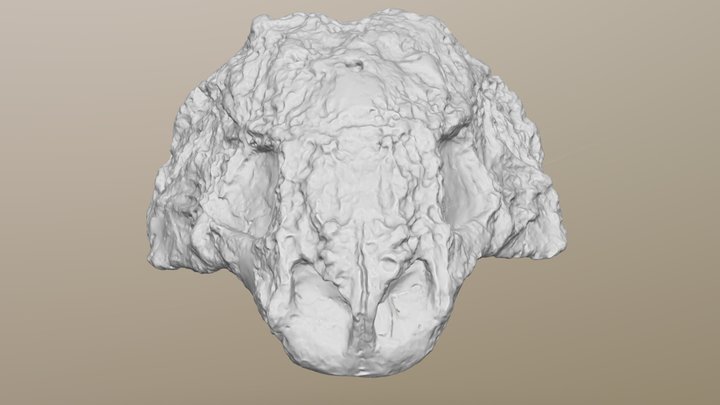
3D model
- Source
- Sketchfab
- Licence
- CC Attribution
- Commercial use
- cannot be read from the licence given — check the record
Smithsonian Open Access and MorphoSource were not reached for this taxon, so this list is what the others held rather than everything there is.
The description on this site
- Licence
- CC BY-SA 4.0
This is what the site found, which is not the same as what exists.
Keep going
What may have been alongside itReptilia through timeFormations of the PermianThe world it lived on
Occurrence data from the Paleobiology Database, CC BY 4.0. (Lawrence 1868)