Phaps chalcoptera
The common bronzewing is a species of medium-sized, heavily built pigeon. Native to Australia and one of the country's most common pigeons, the common bronzewing is able to live in almost any habitat, with the possible exception of very barren areas and dense rainforests. Its advertising call is an extraordinary mournful whooo repeated at metronomic intervals.

JJ Harrison ( https://www.jjharrison.com.au/ ) · CC BY-SA 4.0 · via Wikipedia/Commons. May be a photograph of a specimen, or an artist’s reconstruction — an interpretation of a skeleton, since colour and soft tissue are almost never preserved.
On record
Recorded, not inferred- Also called
- common bronzewingPBDB
- Sits inside
- PhapsPBDB
- Diet
- frugivore, granivorePBDB, for Columbidae
- Life habit
- volantPBDB, for Columbidae
- Motility
- actively mobilePBDB, for Theropoda
- Environment
- terrestrialPBDB, for Columbidae
- Mass
- 338 gWikidata
Time the record covers
At most 129 thousand years on record.
Every occurrence read is dated to somewhere between 129 ka and 0 Mya, and nothing in the dating separates them, so that window is what the record shows rather than a span.
3 occurrences of Phaps chalcoptera on record, most of them in the Pleistocene. The Paleobiology Database records this as a living group. Bar height is expected occurrences, not a count: each fossil is spread across the span it is dated to, so a tall narrow bar means tight dating and a low wide one means loose.
When
3 occurrences- Pleistocene64%
- Holocene36%
These are dates about fossils, not the animal: the record can only begin after it arose and end before it died out, so either end may reach further. Shares are expected occurrences: a fossil dated to a span is counted partly in each period it straddles. More on what this infers.
Phaps chalcoptera and its relatives
PleistoceneWhere Phaps chalcoptera and its relatives were recorded in the Pleistocene.
Found in the same rock
54 taxa- Cacatua tenuirostris2 sites
- Corvus2 sites
- Dasyornis broadbenti2 sites
- Hirundinidae2 sites
- Tribonyx mortierii2 sites
- Accipiter fasciatus1 site
- Accipitridae1 site
- Acrobates pygmaeus1 site
- Anatidae1 site
- Anthochaera carunculata1 site
- Anthochaera chrysoptera1 site
- Aves1 site
- Bettongia1 site
- Cacatuidae1 site
- Callocephalon fimbriatum1 site
- Calyptorhynchus banksii1 site
- Calyptorhynchus lathami1 site
- Centropus colossus1 site
- Chroicocephalus novaehollandiae1 site
- Cinclosoma punctatum1 site
- Coturnix1 site
- Cracticidae1 site
- Dacelo novaeguineae1 site
- Dasyornis brachypterus1 site
The Paleobiology Database records 3 sites for Phaps chalcoptera, and this reads all of them. The number is how many of those sites it was catalogued from too. The 24 sharing the most are listed.
This is not a list of everything alive at the time. It is only what has come out of the same ground as this animal and been written down.
Entered from
3 references- An assessment of ancient DNA preservation in Holocene-Pleistocene fossil bone excavated from the world heritage Naracoorte Caves, South Australia1
- Fossil avian assemblage of Pitfall Origin from Holocene sediments in Amphitheatre Cave (G-2), South-western Victoria, Australia1
- Avian fossils from Quaternary deposits in 'Green Waterhole Cave', south-eastern South Australia1
Each of the 3 occurrences read was entered from one of these publications, ordered by how many each accounts for. This is not a search for papers mentioning the name. Each entry links to doi.org. Relayed as the Paleobiology Database holds them, not checked against what they resolve to.
Media and terms
Media content3

Picture of Phaps chalcoptera
- Source
- Wikipedia/Commons
- Credit
- JJ Harrison ( https://www.jjharrison.com.au/ )
- Licence
- CC BY-SA 4.0
- Commercial use
- the licence allows it
CT scan
- Source
- MorphoSource
- Licence
- In Copyright
- Commercial use
- cannot be read from the licence given — check the record
- Specimen
- Phaps chalcoptera · sama:Ornithology:B61413
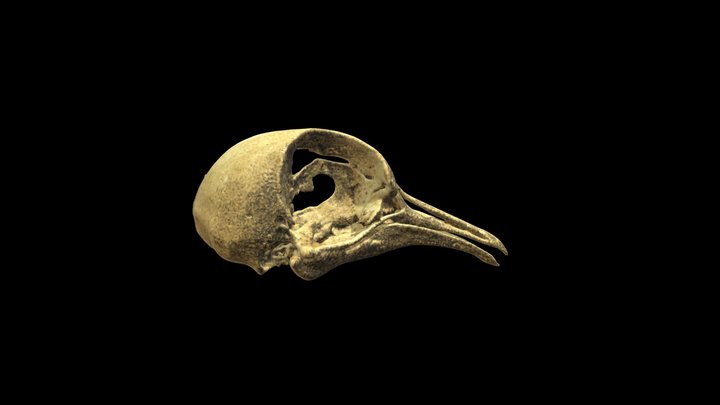
3D model
- Source
- Sketchfab
- Licence
- CC Attribution
- Commercial use
- cannot be read from the licence given — check the record
Smithsonian Open Access was not reached for this taxon, so this list is what the others held rather than everything there is.
The description on this site
- Licence
- CC BY-SA 4.0
This is what the site found, which is not the same as what exists.
Keep going
What may have been alongside itPhaps through timeFormations of the PleistoceneThe world it lived on
Occurrence data from the Paleobiology Database, CC BY 4.0. (Latham 1790)