Platecarpus
Platecarpus is an extinct genus of aquatic lizards belonging to the mosasaur family, living around 84–81 million years ago during the middle Santonian to early Campanian, of the Late Cretaceous period. Fossils have been found in the United States and possibly in Belgium, Australia, and Africa. A well-preserved specimen of Platecarpus shows that it fed on moderate-sized fish, and it has been hypothesized to have fed on squid and ammonites as well. Like other mosasaurs, it was initially thought to have swum in an eel-like fashion, although another study suggests that it swam more like modern sharks. An exceptionally well-preserved specimen of Platecarpus, known as LACM 128319, shows skin impressions, pigments around the nostrils, bronchial tubes, and the presence of a high-profile tail fluke, showing that it and other mosasaurs did not necessarily have an eel-like swimming method, but were more powerful, fast swimmers. It is held in the Natural History Museum of Los Angeles County. Isotopic analysis on teeth specimens has suggested that this genus and Clidastes may have entered freshwater occasionally, just like modern sea snakes.

Creator: Dmitry Bogdanov · CC BY 3.0 · via Wikidata/Commons. May be a photograph of a specimen, or an artist’s reconstruction — an interpretation of a skeleton, since colour and soft tissue are almost never preserved.
On record
Recorded, not inferred- Sits inside
- PlioplatecarpiniPBDB
- Diet
- carnivorePBDB, for Mosasauridae
- Life habit
- aquaticPBDB, for Mosasauridae
- Motility
- actively mobilePBDB, for Osteichthyes
- Vision
- well-developedPBDB, for Mosasauridae
- Environment
- terrestrialPBDB, for Amniota
- Length
- 4.3 mWikidata
Time the record covers
At least 17 million years on record.
The record covers at least 89.8 Mya to 72.2 Mya. No occurrence read is dated outside 143.1 Mya to 66 Mya.
60 occurrences of Platecarpus on record, most of them in the Late Cretaceous. Bar height is expected occurrences, not a count: each fossil is spread across the span it is dated to, so a tall narrow bar means tight dating and a low wide one means loose.
When
60 occurrences- Early Cretaceousunder 1%
- Late Cretaceous99%
These are dates about fossils, not the animal: the record can only begin after it arose and end before it died out, so either end may reach further. Shares are expected occurrences: a fossil dated to a span is counted partly in each period it straddles. More on what this infers.
Found in
20 formations
- Niobrara Formation · Colorado Group14
- Pierre Shale Formation · Montana Group10
- Pierre Shale Formation4
- Molecap Greensand Formation2
- Blufftown Formation1
- Point Lookout Formation1
Loading coastlines…
The named rock units Platecarpus has been recovered from, largest first. Drawn where the rock is now, not where it formed. 14 occurrences have no formation on record, which is common for older literature.
Platecarpus and its relatives
Late CretaceousWhere Platecarpus and its relatives were recorded in the Late Cretaceous.
Found in the same rock
445 taxa- Prognathodon8 sites
- Tylosaurus8 sites
- Squalicorax kaupi7 sites
- Elasmosauridae5 sites
- Osteichthyes5 sites
- Chiloscyllium4 sites
- Clidastes propython4 sites
- Crocodylia4 sites
- Hybodus4 sites
- Lepisosteidae4 sites
- Plesiosauria4 sites
- Protosphyraena4 sites
- Squalicorax pristodontus4 sites
- Bivalvia3 sites
- Cretalamna3 sites
- Cretoxyrhina mantelli3 sites
- Enchodus petrosus3 sites
- Eonatator sternbergii3 sites
- Hainosaurus3 sites
- Halisaurus3 sites
- Hesperornis3 sites
- Heterodontus3 sites
- Ischyrhiza mira3 sites
- Mosasauridae3 sites
The Paleobiology Database records 59 sites for Platecarpus, and this reads all of them. The number is how many of those sites it was catalogued from too. The 24 sharing the most are listed.
This is not a list of everything alive at the time. It is only what has come out of the same ground as this animal and been written down.
Entered from
40 references- The Skull of American Mosasaurs11
- Fossil vertebrates from the marine Cretaceous of Manitoba4
- Food resources and habitat selection of a diverse vertebrate fauna from the upper lower Campanian of the Kristianstad Basin, southern Sweden2
- The mosasaur collections of the Museum National d'Histoire Naturelle of Paris2
- New specimens of Platecarpus planifrons (Cope, 1874) (Squamata: Mosasauridae) and a revised taxonomy of the genus2
- First record of the mosasaur Platecarpus Cope, 1869 from South America and its systematic implications2
- Die Mosasaurier des Roemer-Museums in Hildesheim. (The Mosasauridae of the Roemer Museum in Hildesheim)2
- Notes on mosasaurs from Texas2
- On some species of Pythonomorpha from the Cretaceous beds of Kansas and New Mexico2
- Redescription of the holotype of Platecarpus tympaniticus Cope, 1869 (Mosasauridae: Plioplatecarpinae), and its implications for the alpha taxonomy of the genus1
- On the occurrence of a giant flying reptile (Pterosauria) in the terminal Late Cretaceous of the Lower Volga Region1
- Revisions to the biostratigraphy of the Moasasauridae (Squamata) in the Smoky Hill Chalk Member of the Niobara Chalk (Late Cretaceous) of Kansas1
Each of the 60 occurrences read was entered from one of these publications, ordered by how many each accounts for. This is not a search for papers mentioning the name. 28 further references are not listed. Entries link to doi.org where the Paleobiology Database holds an identifier, and to its own record where it does not. Relayed as the Paleobiology Database holds them, not checked against what they resolve to.
Media and terms
Media content3
Picture of Platecarpus
- Source
- Wikidata/Commons
- Credit
- Creator: Dmitry Bogdanov
- Licence
- CC BY 3.0
- Commercial use
- the licence allows it
Photogrammetry
- Source
- MorphoSource
- Licence
- In Copyright
- Commercial use
- cannot be read from the licence given — check the record
- Specimen
- Platecarpus sp. · UCM:Paleontology:UCM:FossilVert:20576
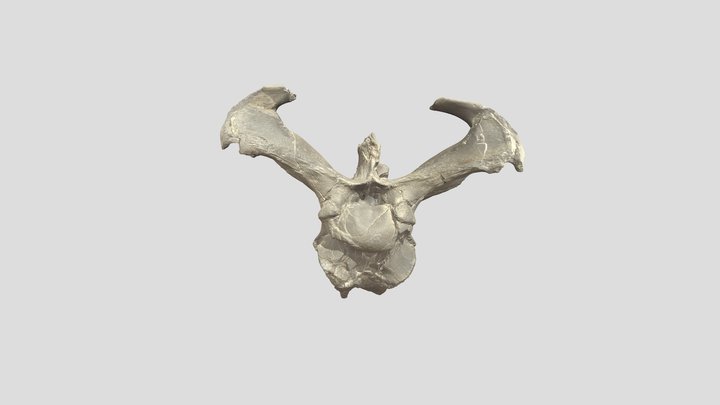
3D model
- Source
- Sketchfab
- Credit
- UIPaleoRepository
- Licence
- CC Attribution
- Commercial use
- cannot be read from the licence given — check the record
Smithsonian Open Access was not reached for this taxon, so this list is what the others held rather than everything there is.
The description on this site
- Source
- Wikipedia, “Platecarpus”
- Licence
- CC BY-SA 4.0
This is what the site found, which is not the same as what exists.
Keep going
What may have been alongside itPlioplatecarpini through timeFormations of the Late CretaceousThe world it lived on
Occurrence data from the Paleobiology Database, CC BY 4.0. Cope 1869