Platybelodon
Platybelodon is an extinct genus of amebelodontid proboscidean mammal, distantly related to modern-day elephants. Fossils are known from middle Miocene strata from parts of Asia and the Caucasus. The first specimens of Platybelodon, consisting of a partial skull, a nearly complete lower jaw, and multiple disarticulated remains, were discovered in the Tchokrak beds of north Caucasus, in the summer of 1927. The following year, Russian palaeontologist Alexey Borissiak described the remains, giving them the name Platybelodon danovi. Several additional species have been described, including Platybelodon grangeri, named by Henry Fairfield Osborn in 1928.

Popolon · CC BY-SA 4.0 · via Wikipedia/Commons. May be a photograph of a specimen, or an artist’s reconstruction — an interpretation of a skeleton, since colour and soft tissue are almost never preserved.
On record
Recorded, not inferred- Sits inside
- AmebelodontinaePBDB
- Diet
- browserPBDB
- Life habit
- ground dwellingPBDB
- Motility
- actively mobilePBDB, for Osteichthyes
- Environment
- terrestrialPBDB, for Eutheria
- Length
- 6 mWikidata
Time the record covers
At least 7.2 million years on record.
The record covers at least 15.98 Mya to 8.725 Mya. No occurrence read is dated outside 20.45 Mya to 4.7 Mya.
25 occurrences of Platybelodon on record, most of them in the Miocene. Bar height is expected occurrences, not a count: each fossil is spread across the span it is dated to, so a tall narrow bar means tight dating and a low wide one means loose.
When
25 occurrencesThese are dates about fossils, not the animal: the record can only begin after it arose and end before it died out, so either end may reach further. Shares are expected occurrences: a fossil dated to a span is counted partly in each period it straddles. More on what this infers.
Found in
11 formations
- Shanwang Formation2
- Lengshuigou Formation2
- Ash Hollow Formation1
- Xianshuihe Formation1
- Lothidok Formation1
- Magian suite Formation1
Loading coastlines…
The named rock units Platybelodon has been recovered from, largest first. Drawn where the rock is now, not where it formed. 12 occurrences have no formation on record, which is common for older literature.
Platybelodon and its relatives
MioceneWhere Platybelodon and its relatives were recorded in the Miocene.
Found in the same rock
236 taxa- Listriodon5 sites
- Anchitherium4 sites
- Palaeotragus4 sites
- Aceratherium3 sites
- Percrocuta3 sites
- Trionychidae3 sites
- Amphicyon2 sites
- Cervidae2 sites
- Chilotherium2 sites
- Cricetidae2 sites
- Dicrocerus2 sites
- Giraffidae2 sites
- Gomphotherium2 sites
- Hipparion2 sites
- Hispanotherium2 sites
- Hispanotherium matritense2 sites
- Kubanochoerus2 sites
- Kubanochoerus gigas2 sites
- Listriodon lishanensis2 sites
- Machairodus2 sites
- Micromeryx2 sites
- Natricinae2 sites
- Oioceros lishanensis2 sites
- Palaeomeryx2 sites
The Paleobiology Database records 18 sites for Platybelodon, and this reads all of them. The number is how many of those sites it was catalogued from too. The 24 sharing the most are listed.
This is not a list of everything alive at the time. It is only what has come out of the same ground as this animal and been written down.
Entered from
14 references- The Chinese Neogene mammalian biochronology - its correlation with the European Neogene mammal zonation6
- A new species of Pliopithecus from the middle Miocene of China and its implications for early catarrhine zoogeography5
- The middle Miocene mammalian site of Belometchetskaya, North Caucasus: an important biostratigraphic link between Europe and China2
- Tertiary mammal faunas of the Lantien Region, Shaanxi Province2
- The early evolution of cranial appendages in Bovoidea revealed by new species of Amphimoschus (Mammalia: Ruminantia) from China1
- Gomphotherium inopinatum, a basal Gomphotherium species from the Linxia Basin, China, and other Chinese members of the genus1
- New material of Hispanotherium matritense (Rhinocerotidae, Perissodactyla) from Laogou of Hezheng County (Gansu, China), with special reference to the Chinese Middle Miocene elasmotheres1
- Synonymies and reidentifications of North American fossil mammals1
- Fossil equids (Mammalia, Equidae) from the Neogene and Pleistocene of Tadzhikistan1
- Faunal succession and biochronology of the Arikareean through Hemphillian interval (late Oligocene through earliest Pliocene epochs) in North America1
- A new Miocene hominoid from Kenya1
- Tertiary stratigraphy and the Frick Collection of fossil vertebrates from north-central Nebraska1
Each of the 25 occurrences read was entered from one of these publications, ordered by how many each accounts for. This is not a search for papers mentioning the name. 2 further references are not listed. Entries link to doi.org where the Paleobiology Database holds an identifier, and to its own record where it does not. Relayed as the Paleobiology Database holds them, not checked against what they resolve to.
Media and terms
Media content2

Picture of Platybelodon
- Source
- Wikipedia/Commons
- Credit
- Popolon
- Licence
- CC BY-SA 4.0
- Commercial use
- the licence allows it
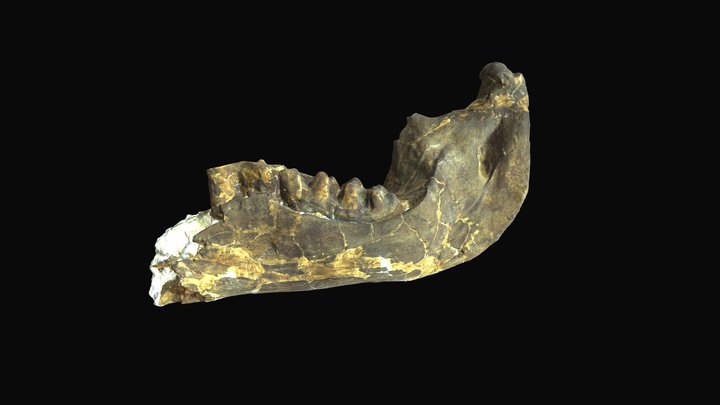
3D model
- Source
- Sketchfab
- Licence
- CC Attribution
- Commercial use
- cannot be read from the licence given — check the record
Smithsonian Open Access and MorphoSource were not reached for this taxon, so this list is what the others held rather than everything there is.
The description on this site
- Licence
- CC BY-SA 4.0
This is what the site found, which is not the same as what exists.
Keep going
What may have been alongside itAmebelodontinae through timeFormations of the MioceneThe world it lived on
Occurrence data from the Paleobiology Database, CC BY 4.0. Borissiak 1928