Porichthys
A midshipman fish is any species of toadfish belonging to the genus Porichthys. Historically, there have been two common names. Porichthys refers to the well developed pores on the fish, and this led to the common name "Porous Catfish". The other common name, "Midshipman" is based on the pattern of button-like luminous spots (photophores) which resemble the buttons on the uniforms of young naval officers known as midshipmen.

U.S. Geological Survey Department of the Interior/USGS U.S. Geological Survey/photo by Jane Doe · Public Domain · via Wikipedia/Commons. May be a photograph of a specimen, or an artist’s reconstruction — an interpretation of a skeleton, since colour and soft tissue are almost never preserved.
On record
Recorded, not inferred- Sits inside
- BatrachoididaePBDB
- Diet
- carnivorePBDB, for Batrachoidiformes
- Life habit
- nektobenthicPBDB, for Batrachoidiformes
- Motility
- actively mobilePBDB, for Batrachoidiformes
Time the record covers
At least 7.2 million years on record.
The record covers at least 7.246 Mya to 11.7 ka. No occurrence read is dated outside 11.63 Mya to 0 Mya.
25 occurrences of Porichthys on record, most of them in the Pleistocene. The Paleobiology Database records this as a living group. Bar height is expected occurrences, not a count: each fossil is spread across the span it is dated to, so a tall narrow bar means tight dating and a low wide one means loose.
When
25 occurrences- Miocene8%
- Pliocene24%
- Pleistocene64%
- Holocene4%
These are dates about fossils, not the animal: the record can only begin after it arose and end before it died out, so either end may reach further. Shares are expected occurrences: a fossil dated to a span is counted partly in each period it straddles. More on what this infers.
Found in
6 formations
- Palos Verdes Sand Formation12
- Onzole Formation · Daule Group3
- Gatun Formation2
- Bowden Formation1
- San Pedro Formation1
- Timms Point Silt Formation1
Loading coastlines…
The named rock units Porichthys has been recovered from, largest first. Drawn where the rock is now, not where it formed. 5 occurrences have no formation on record, which is common for older literature.
Porichthys and its relatives
PleistoceneWhere Porichthys and its relatives were recorded in the Pleistocene.
Found in the same rock
627 taxa- Genyonemus lineatus12 sites
- Galeorhinus galeus11 sites
- Seriphus politus11 sites
- Cymatogaster aggregata10 sites
- Engraulis mordax9 sites
- Myliobatis californica9 sites
- Raja9 sites
- Citharichthys stigmaeus8 sites
- Squatina californica8 sites
- Triakis semifasciata8 sites
- Citharichthys7 sites
- Citharichthys sordidus7 sites
- Semicossyphus pulcher7 sites
- Carcharodon carcharias6 sites
- Chilara taylori6 sites
- Heterodontus francisci6 sites
- Isurus oxyrinchus6 sites
- Leptocottus armatus6 sites
- Merluccius productus6 sites
- Ophidion scrippsae6 sites
- Paralichthys californicus6 sites
- Rhacochilus vacca6 sites
- Atherinops affinis5 sites
- Atherinopsis californiensis5 sites
The Paleobiology Database records 14 sites for Porichthys, and this reads all of them. The number is how many of those sites it was catalogued from too. The 24 sharing the most are listed.
This is not a list of everything alive at the time. It is only what has come out of the same ground as this animal and been written down.
Entered from
12 references- Fish remains, mostly otoliths and teeth, from the Palos Verdes Sand (Late Pleistocene) of California10
- Taphonomic and paleoecological analyses (mollusks and fishes) of the Súa Member condensed shelled, upper Onzole Formation (Early Pliocene, Ecuador)3
- Bathymetric distribution of Miocene to Pleistocene Caribbean teleostean fishes from the coast of Panama and Costa Rica2
- Otoliths and other fish remains from a Long Beach, California, Pliocene deposit2
- Otolith-based fishes form the Bowden Shell Bed (Pliocene) of Jamaica: Systematics and Palaeoecology1
- Preliminary List of the Marine Fishes and Other Vertebrate Remains from the Late Pleistocene Palos Verdes Sand Formation at Costa Mesa, Orange County, California1
- Late Pleistocene-early Holocene teleostean otoliths from a Mississippi River mudlump1
- Otoliths and other fish remains from the Chumash Midden at Rincon Point (SBa-1) Santa Barbara-Ventura counties, California1
- Otoliths and other fish remains from the Timms Point Silt (Early Pleistocene) at San Pedro, California1
- The marine fish fauna, based primarily on otoliths, of a Lower Pleistocene deposit at San Pedro, California (LACMIP 332, San Pedro Sand)1
- The fish fauna of the Playa Del Rey locality, a southern California marine Pleistocene deposit1
- Fish records from the Pleistocene of southern California in the collections of the Los Angeles County Museum1
Each of the 25 occurrences read was entered from one of these publications, ordered by how many each accounts for. This is not a search for papers mentioning the name. Entries link to doi.org where the Paleobiology Database holds an identifier, and to its own record where it does not. Relayed as the Paleobiology Database holds them, not checked against what they resolve to.
Media and terms
Media content3

Picture of Porichthys
- Source
- Wikipedia/Commons
- Credit
- U.S. Geological Survey Department of the Interior/USGS U.S. Geological Survey/photo by Jane Doe
- Licence
- Public Domain
- Commercial use
- the licence allows it
CT scan
- Source
- MorphoSource
- Licence
- not stated by the source
- Commercial use
- cannot be read from the licence given — check the record
- Specimen
- Porichthys bathoiketes · UF:Fish:228539
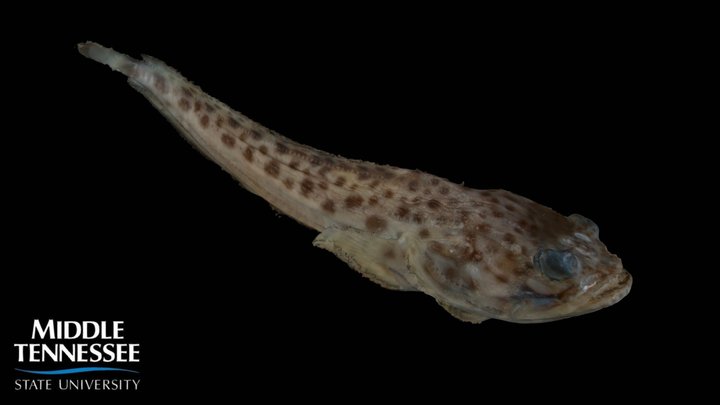
3D model
- Source
- Sketchfab
- Credit
- MTSUichthyology
- Licence
- CC Attribution
- Commercial use
- cannot be read from the licence given — check the record
The description on this site
- Licence
- CC BY-SA 4.0
This is what the site found, which is not the same as what exists.
Keep going
What may have been alongside itBatrachoididae through timeFormations of the PleistoceneThe world it lived on
Occurrence data from the Paleobiology Database, CC BY 4.0. Girard 1854