Scapanorhynchus
Scapanorhynchus is an extinct genus of shark belonging to the family Mitsukurinidae, that lived during the Cretaceous period, from the Aptian to the end of the Maastrichtian.

User:Apokryltaros · CC BY 2.5 · via Wikidata/Commons. May be a photograph of a specimen, or an artist’s reconstruction — an interpretation of a skeleton, since colour and soft tissue are almost never preserved.
On record
Recorded, not inferred- Sits inside
- MitsukurinidaePBDB
- Diet
- carnivorePBDB, for Lamniformes
- Life habit
- nektonicPBDB, for Lamniformes
- Motility
- actively mobilePBDB, for Lamniformes
Time the record covers
At least 107 million years on record.
The record covers at least 121.4 Mya to 13.82 Mya. No occurrence read is dated outside 143.1 Mya to 11.63 Mya.
337 occurrences of Scapanorhynchus on record, most of them in the Late Cretaceous. Bar height is expected occurrences, not a count: each fossil is spread across the span it is dated to, so a tall narrow bar means tight dating and a low wide one means loose.
When
337 occurrences- Early Cretaceous4%
- Late Cretaceous94%
- Paleoceneunder 1%
- Eocene1%
- Oligoceneunder 1%
- Mioceneunder 1%
These are dates about fossils, not the animal: the record can only begin after it arose and end before it died out, so either end may reach further. Shares are expected occurrences: a fossil dated to a span is counted partly in each period it straddles. More on what this infers.
Found in
97 formations
- Menuha Formation12
- Mesaverde Formation10
- Mancos Shale Formation9
- Aguja Formation8
- Navesink Formation · Monmouth Group8
- Black Creek Formation7
Loading coastlines…
The named rock units Scapanorhynchus has been recovered from, largest first. Drawn where the rock is now, not where it formed. 73 further formations hold fewer occurrences each and are not listed. 112 occurrences have no formation on record, which is common for older literature.
Scapanorhynchus and its relatives
Late CretaceousWhere Scapanorhynchus and its relatives were recorded in the Late Cretaceous.
Found in the same rock
1,758 taxa- Cretalamna appendiculata74 sites
- Squalicorax kaupi67 sites
- Archaeolamna kopingensis50 sites
- Ischyrhiza mira47 sites
- Squalicorax falcatus45 sites
- Squalicorax pristodontus38 sites
- Hybodus36 sites
- Squalicorax35 sites
- Cretoxyrhina mantelli33 sites
- Paranomotodon angustidens25 sites
- Rhinobatos24 sites
- Pseudoscapanorhynchus compressidens23 sites
- Squatina (Cretascyllium) hassei22 sites
- Carcharias holmdelensis21 sites
- Crocodylia21 sites
- Odontaspis aculeatus20 sites
- Carcharias samhammeri19 sites
- Cretodus semiplicatus19 sites
- Stephanodus19 sites
- Brachyrhizodus wichitaensis18 sites
- Pseudohypolophus mcnultyi18 sites
- Ptychotrygon18 sites
- Rhinobatos casieri18 sites
- Testudines18 sites
The Paleobiology Database records 310 sites for Scapanorhynchus, and this reads 240 of them. The number is how many of those sites it was catalogued from too. The 24 sharing the most are listed.
This is not a list of everything alive at the time. It is only what has come out of the same ground as this animal and been written down.
Entered from
150 references- Les poissons fossiles du Bas-Congo et des régions voisines20
- Les sélaciens des terrains néocrétacés and paléocènes de Belgique and des contrées limitrophes. Eléments d'une biostratigraphie intercontinentale15
- Selachians from the Greenhorn Cyclothem ("Middle" Cretaceous: Cenomanian-Turonian), Black Mesa, Arizona, and the paleogeographic distribution of Late Cretaceous selachians12
- Sharks (Elasmobranchii: Euselachii) from the Late Cretaceous of France and the UK11
- Chondrichthyans from the Menuha Formation (Late Cretaceous: Santonian–Early Campanian) of the Makhtesh Ramon region, southern Israel11
- A new selachian fauna from the late Campanian of Wyoming (Teapot Sandstone Member, Mesaverde Formation, Big Horn Basin)10
- Contribution a l'étude des sélaciens du Groupe Monmouth (Campanien-Maestrichtian) du New Jersey10
- Sélaciens du Crétacé (Albien-Maastrichtien) d'Angola9
- The vertebrate fauna of the Selma Formation of Alabama, part VIII, the fishes9
- The Cretaceous formations9
- Selakhiazony Santona i nizhnego Kampana yuzhnogo Urala y Mugodzhar6
- Paleoecology of the Delaware Valley region. Part II: Cretaceous to Quartenary6
Each of the 337 occurrences read was entered from one of these publications, ordered by how many each accounts for. This is not a search for papers mentioning the name. 138 further references are not listed. Entries link to doi.org where the Paleobiology Database holds an identifier, and to its own record where it does not. Relayed as the Paleobiology Database holds them, not checked against what they resolve to.
Media and terms
Media content2
Picture of Scapanorhynchus
- Source
- Wikidata/Commons
- Credit
- User:Apokryltaros
- Licence
- CC BY 2.5
- Commercial use
- the licence allows it
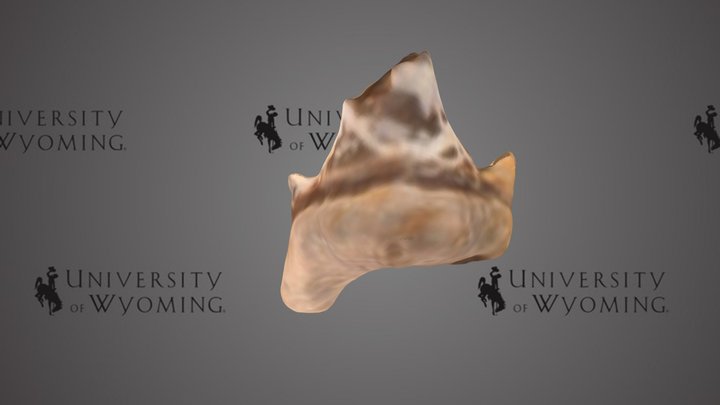
3D model
- Source
- Sketchfab
- Licence
- CC Attribution-NonCommercial
- Commercial use
- the licence does not allow it
Smithsonian Open Access and MorphoSource were not reached for this taxon, so this list is what the others held rather than everything there is.
The description on this site
- Licence
- CC BY-SA 4.0
This is what the site found, which is not the same as what exists.
Keep going
What may have been alongside itMitsukurinidae through timeFormations of the Late CretaceousThe world it lived on
Occurrence data from the Paleobiology Database, CC BY 4.0. Woodward 1889