Spermophilus
Spermophilus, also known as the Old World ground squirrels, sousliks or, sometimes, spermophiles, is an Old World genus of ground squirrels in the squirrel family (Sciuridae). Formerly, the genus was more species rich, but it has since been reduced to contain only species from Eurasia, with many former species having been moved to other genera. The 18 known species are distributed across the Eurasian steppe belt and adjacent regions between Central Europe and Manchuria. They inhabit steppe and comparable short grassland habitats, including airports, as well semi-deserts and, in some cases, agricultural fields. Their diet is dominated by seeds, grasses, forbs, roots and tubers, but may also include small invertebrates. Spermophilus live in colonial burrows, and spend much of the year in hibernation and, in dry regions, aestivation.

Charles J. Sharp · CC BY-SA 4.0 · via Wikipedia/Commons. May be a photograph of a specimen, or an artist’s reconstruction — an interpretation of a skeleton, since colour and soft tissue are almost never preserved.
On record
Recorded, not inferred- Also called
- ground squirrelPBDB
- Sits inside
- MarmotiniPBDB
- Diet
- granivore, frugivorePBDB, for Sciuridae
- Life habit
- semifossorialPBDB
- Motility
- actively mobilePBDB, for Osteichthyes
- Environment
- terrestrialPBDB, for Eutheria
Time the record covers
At least 12 million years on record.
The record covers at least 12.75 Mya to 11.7 ka. No occurrence read is dated outside 23.04 Mya to 0 Mya.
222 occurrences of Spermophilus on record, most of them in the Pleistocene. The Paleobiology Database records this as a living group. Bar height is expected occurrences, not a count: each fossil is spread across the span it is dated to, so a tall narrow bar means tight dating and a low wide one means loose.
When
222 occurrences- Miocene21%
- Pliocene13%
- Pleistocene65%
- Holocene1%
These are dates about fossils, not the animal: the record can only begin after it arose and end before it died out, so either end may reach further. Shares are expected occurrences: a fossil dated to a span is counted partly in each period it straddles. More on what this infers.
Found in
51 formations
- Crooked Creek Formation8
- Kingsdown Formation7
- Ash Hollow Formation · Ogallala Group5
- St. David Formation4
- Alamosa Formation4
- Chalk Hills Formation · Idaho Group4
Loading coastlines…
The named rock units Spermophilus has been recovered from, largest first. Drawn where the rock is now, not where it formed. 27 further formations hold fewer occurrences each and are not listed. 127 occurrences have no formation on record, which is common for older literature.
Spermophilus and its relatives
PleistoceneWhere Spermophilus and its relatives were recorded in the Pleistocene.
Found in the same rock
1,832 taxa- Equus45 sites
- Peromyscus41 sites
- Microtus40 sites
- Microtus pennsylvanicus36 sites
- Lepus35 sites
- Sylvilagus35 sites
- Neotoma33 sites
- Camelops29 sites
- Sorex29 sites
- Canis latrans27 sites
- Sorex cinereus27 sites
- Geomys26 sites
- Blarina brevicauda24 sites
- Synaptomys cooperi24 sites
- Thamnophis24 sites
- Eptesicus fuscus23 sites
- Myodes23 sites
- Ondatra zibethicus23 sites
- Perognathinae23 sites
- Platygonus23 sites
- Hemiauchenia22 sites
- Neotoma floridana22 sites
- Myotis21 sites
- Leporidae20 sites
The Paleobiology Database records 205 sites for Spermophilus, and this reads all of them. The number is how many of those sites it was catalogued from too. The 24 sharing the most are listed.
This is not a list of everything alive at the time. It is only what has come out of the same ground as this animal and been written down.
Entered from
117 references- Synonymies and reidentifications of North American fossil mammals25
- Biochronology of the Pleistocene deposits at Betfia (Bihor, Romania)12
- Vertebrate biostratigraphy of the Ogallala Group in Nebraska7
- Pliocene mammals of southeast Oregon and adjacent Idaho6
- A late Pleistocene and early Holocene mammalian fauna from Little Beaver Cave, Central Ozarks, Missouri.5
- Geologic history, stratigraphy, and paleontology of SAM Cave, north-central New Mexico5
- Quaternary vertebrate localities of Virginia and their avian and mammalian fauna5
- Owyhee bones: Hemphillian (latest Miocene) Little Jacks Creek (LJC) and Sugar Creek (SC) terrestrial local faunas of the western Snake River Plain, Owyhee County, Idaho4
- Middle Pleistocene (late Irvingtonian: Nebraskan) climatic changes in south-central Colorado4
- Cenozoic Vertebrate Localities and Faunas in Arizona4
- Hibbard, 19704
- Paleontology and historic field trip of the John Guilday Cave Preserve (Trout Rock)3
Each of the 222 occurrences read was entered from one of these publications, ordered by how many each accounts for. This is not a search for papers mentioning the name. 105 further references are not listed. Entries link to doi.org where the Paleobiology Database holds an identifier, and to its own record where it does not. Relayed as the Paleobiology Database holds them, not checked against what they resolve to.
Media and terms
Media content2

Picture of Spermophilus
- Source
- Wikipedia/Commons
- Credit
- Charles J. Sharp
- Licence
- CC BY-SA 4.0
- Commercial use
- the licence allows it
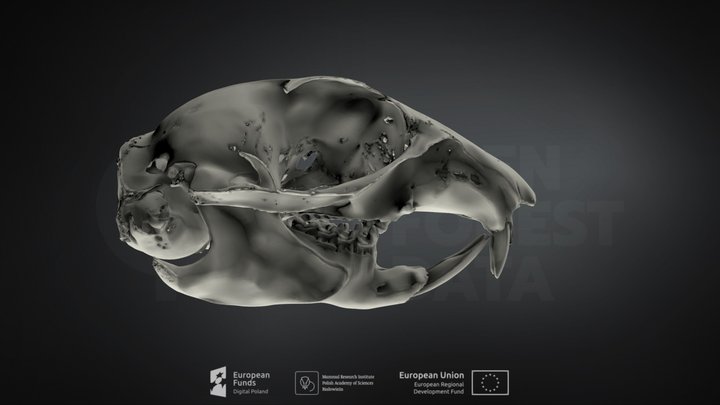
3D model
- Source
- Sketchfab
- Licence
- CC Attribution
- Commercial use
- cannot be read from the licence given — check the record
Smithsonian Open Access and MorphoSource were not reached for this taxon, so this list is what the others held rather than everything there is.
The description on this site
- Licence
- CC BY-SA 4.0
This is what the site found, which is not the same as what exists.
Keep going
What may have been alongside itMarmotini through timeFormations of the PleistoceneThe world it lived on
Occurrence data from the Paleobiology Database, CC BY 4.0. Cuvier 1825