Sternotherus
Sternotherus is a genus of turtles in the family Kinosternidae including six species commonly known as musk turtles. The genus is endemic to North America, occurring in the eastern third of the US and southeast Ontario, Canada. Musk glands positioned near the bridge of the shell can produce foul smelling secretions when the turtles are threatened, although gentle handling does not normally provoke a response. Sternotherus are moderately small turtles, with the largest species in the genus, the razor-backed musk turtle, attaining a maximum of 17.6 cm. in shell length. The carapace is characteristically oval and domed, with most species having one or three keels on the back which may become smoother and obscure with age in some species. Musk turtles are generally drab in color, mostly black, gray, brown, olive, or ocher, which aid in camouflaging them in their natural habitats. The head is relatively large and stout, marked with spots, streaks, or strips. The plastron has only 10 or 11 scutes, as opposed to 12, a more common condition in North American turtles. The tail is short, with males having a horny claw like tip.

User:Dawson · CC BY-SA 3.0 · via Wikipedia/Commons. May be a photograph of a specimen, or an artist’s reconstruction — an interpretation of a skeleton, since colour and soft tissue are almost never preserved.
On record
Recorded, not inferred- Also called
- musk turtlePBDB
- Sits inside
- KinosterninaePBDB
- Diet
- omnivorePBDB, for Cryptodira
- Life habit
- aquaticPBDB, for Cryptodira
- Motility
- actively mobilePBDB, for Osteichthyes
- Environment
- freshwaterPBDB, for Cryptodira
Time the record covers
At least 9.3 million years on record.
The record covers at least 9.4 Mya to 11.7 ka. No occurrence read is dated outside 12.5 Mya to 0 Mya.
19 occurrences of Sternotherus on record, most of them in the Pleistocene. The Paleobiology Database records this as a living group. Bar height is expected occurrences, not a count: each fossil is spread across the span it is dated to, so a tall narrow bar means tight dating and a low wide one means loose.
When
19 occurrences- Miocene29%
- Pliocene10%
- Pleistocene51%
- Holocene11%
These are dates about fossils, not the animal: the record can only begin after it arose and end before it died out, so either end may reach further. Shares are expected occurrences: a fossil dated to a span is counted partly in each period it straddles. More on what this infers.
Found in
4 formations
- Kingsdown Formation1
- Fort Thompson Formation1
- Ash Hollow Formation1
- Peace River Formation · Hawthorn Group1
Loading coastlines…
The named rock units Sternotherus has been recovered from, largest first. Drawn where the rock is now, not where it formed. 15 occurrences have no formation on record, which is common for older literature.
Sternotherus and its relatives
PleistoceneWhere Sternotherus and its relatives were recorded in the Pleistocene.
Found in the same rock
492 taxa- Chelydra serpentina10 sites
- Odocoileus virginianus8 sites
- Terrapene carolina7 sites
- Alligator mississippiensis6 sites
- Kinosternon6 sites
- Lepisosteus6 sites
- Nerodia6 sites
- Procyon lotor6 sites
- Rana6 sites
- Trachemys scripta6 sites
- Dasypus bellus5 sites
- Deirochelys reticularia5 sites
- Emydidae5 sites
- Equus5 sites
- Gopherus polyphemus5 sites
- Hesperotestudo5 sites
- Mammuthus columbi5 sites
- Ondatra zibethicus5 sites
- Siren5 sites
- Tapirus (Helicotapirus) veroensis5 sites
- Amia calva4 sites
- Amphiuma4 sites
- Bufo4 sites
- Castor canadensis4 sites
The Paleobiology Database records 18 sites for Sternotherus, and this reads all of them. The number is how many of those sites it was catalogued from too. The 24 sharing the most are listed.
This is not a list of everything alive at the time. It is only what has come out of the same ground as this animal and been written down.
Entered from
15 references- Fossil musk turtles (Kinosternidae, Sternotherus) from the late Miocene–early Pliocene (Hemphillian) of Tennessee and Florida4
- Pleistocene (Rancholabrean) vertebrate faunas from coastal Georgia2
- A small flat-shelled musk turtle from the Late Miocene of Florida and new Pleistocene records of Sternotherus (Kinosternidae)1
- Turtles of the early Pleistocene Santa Fe River 1B locality1
- The geology and paleontology of Ashfall Fossil Beds, a late Miocene (Clarendonian) mass-death assemblage, Antelope County and adjacent Knox County, Nebraska, USA1
- After Hopewell in Southern Québec1
- Reassessment of a putative fossil stinkpot (Kinosternidae: Sternotherus) from the late Miocene (Clarendonian) of Kansas1
- A new early Pleistocene tapir (Mammalia: Perissodactyla) from Florida, with a review of Blancan tapirs from around the state1
- A Late Pleistocene Hepetofauna from Clark Quarry, Glynn County, Georgia1
- Early Holocene Vertebrate Paleontology1
- Vertebrate Paleontology1
- Late-Pleistocene horse (Equus sp.) from the Wilson-Leonard archaeological site, central Texas1
Each of the 19 occurrences read was entered from one of these publications, ordered by how many each accounts for. This is not a search for papers mentioning the name. 3 further references are not listed. Entries link to doi.org where the Paleobiology Database holds an identifier, and to its own record where it does not. Relayed as the Paleobiology Database holds them, not checked against what they resolve to.
Media and terms
Media content2

Picture of Sternotherus
- Source
- Wikipedia/Commons
- Credit
- User:Dawson
- Licence
- CC BY-SA 3.0
- Commercial use
- the licence allows it
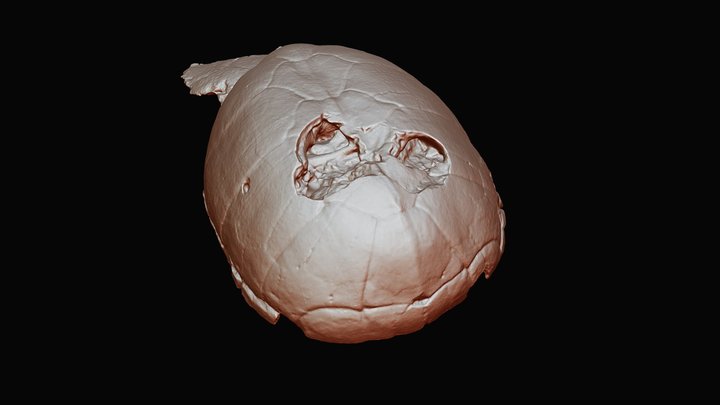
3D model
- Source
- Sketchfab
- Licence
- CC Attribution
- Commercial use
- cannot be read from the licence given — check the record
Smithsonian Open Access and MorphoSource were not reached for this taxon, so this list is what the others held rather than everything there is.
The description on this site
- Licence
- CC BY-SA 4.0
This is what the site found, which is not the same as what exists.
Keep going
What may have been alongside itKinosterninae through timeFormations of the PleistoceneThe world it lived on
Occurrence data from the Paleobiology Database, CC BY 4.0. Gray 1825