Ancolioceras
Ancolioceras is an extinct genus of cephalopod belonging to the ammonite subclass.
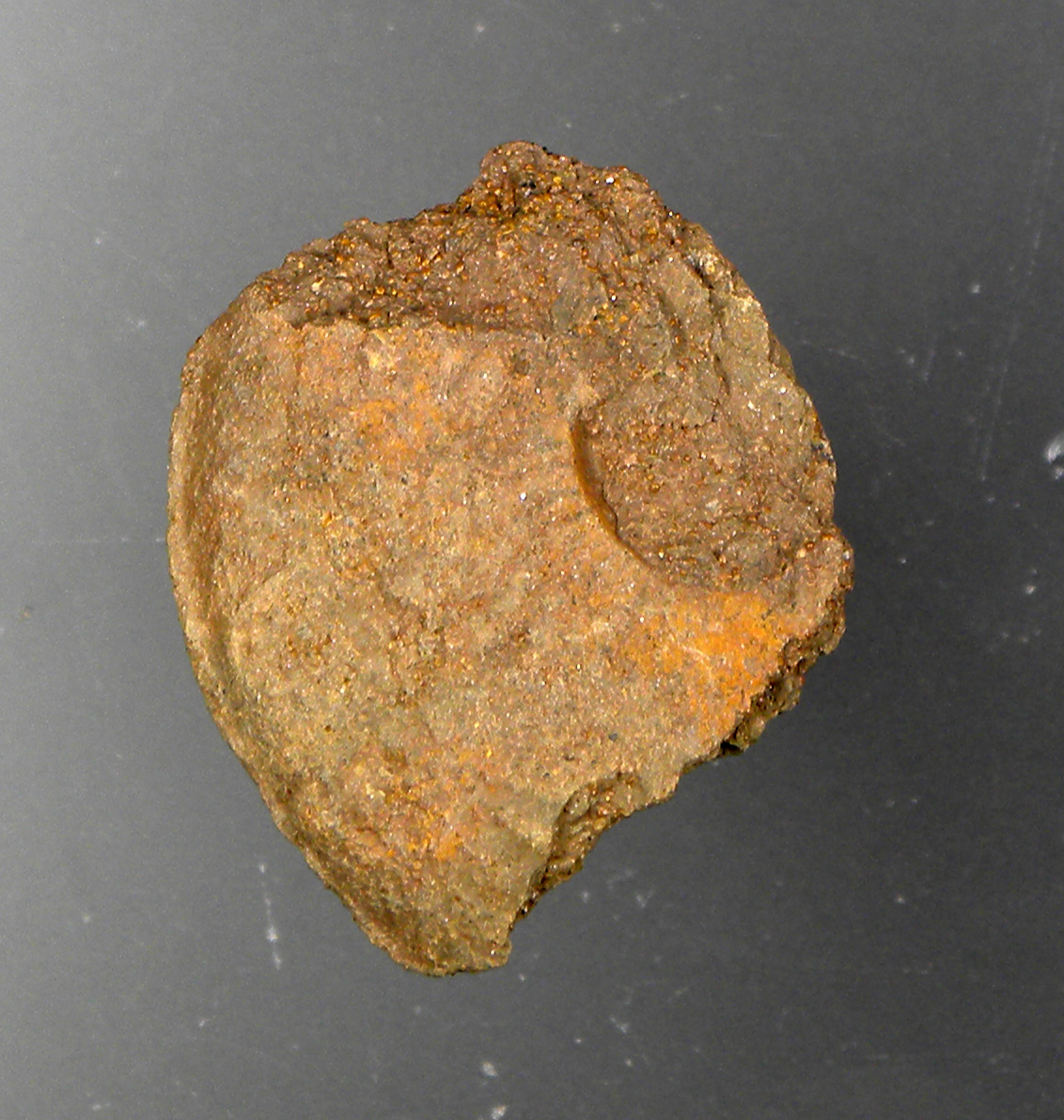
équipe des Fouilles du MnhnL · CC0 · via GBIF. May be a photograph of a specimen, or an artist’s reconstruction — an interpretation of a skeleton, since colour and soft tissue are almost never preserved.
On record
Recorded, not inferred- Sits inside
- GraphoceratidaePBDB
- Diet
- carnivorePBDB, for Ammonoidea
- Life habit
- nektonicPBDB, for Ammonoidea
- Motility
- fast-movingPBDB, for Ammonoidea
- Vision
- well-developedPBDB, for Cephalopoda
- Environment
- marinePBDB, for Cephalopoda
Time the record covers
At most 14 million years on record.
Every occurrence read is dated to somewhere between 174.7 Mya and 161.5 Mya, and nothing in the dating separates them, so that window is what the record shows rather than a span.
44 occurrences of Ancolioceras on record, most of them in the Middle Jurassic. Bar height is expected occurrences, not a count: each fossil is spread across the span it is dated to, so a tall narrow bar means tight dating and a low wide one means loose.
When
44 occurrences- Middle Jurassic100%
These are dates about fossils, not the animal: the record can only begin after it arose and end before it died out, so either end may reach further. Shares are expected occurrences: a fossil dated to a span is counted partly in each period it straddles. More on what this infers.
Found in
5 formations
- Achdorf Formation27
- Tölgyhát Formation5
- Castillo Pedroso Formation4
- Lower Limestone Formation · Inferior Oolite Group1
- Inferior Oolite Formation1
Loading coastlines…
The named rock units Ancolioceras has been recovered from, largest first. Drawn where the rock is now, not where it formed. 6 occurrences have no formation on record, which is common for older literature.
Ancolioceras and its relatives
Middle JurassicWhere Ancolioceras and its relatives were recorded in the Middle Jurassic.
Found in the same rock
26 taxa- Leioceras goetzendorfense4 sites
- Leioceras striatum4 sites
- Leioceras paucicostatum3 sites
- Ludwigia3 sites
- Leioceras2 sites
- Abbasitoides modestus1 site
- Brasilia bradfordensis1 site
- Calliphylloceras1 site
- Chlamys1 site
- Entolium (Entolium) corneolum1 site
- Erycites fallifax1 site
- Erycites intermedius1 site
- Erycites sutneri1 site
- Isocrinus1 site
- Leioceras capillare1 site
- Leioceras evertens1 site
- Montlivaltia1 site
- Parvamussium1 site
- Planammatoceras planiforme1 site
- Planammatoceras tenuinsigne1 site
- Pleurolytoceras dilucidum1 site
- Porifera1 site
- Pronoella1 site
- Serpula1 site
The Paleobiology Database records 16 sites for Ancolioceras, and this reads all of them. The number is how many of those sites it was catalogued from too. The 24 sharing the most are listed.
This is not a list of everything alive at the time. It is only what has come out of the same ground as this animal and been written down.
Entered from
8 references- Ammonites and stratigraphy of the Achdorf Formation (Braunjura Group; Aalenian) at the type locality of the Wilflingen-Bank near Gosheim (W Swabian Alb)14
- Ammonites and stratigraphy of the Achdorf Formation (Braunjura Group; Aalenian) at the Wochenberg hill near Schömberg-Schörzingen (W Swabian Alb, SW Germany)13
- Ammonites, taphonomical analysis and biostratigraphy of the Aalenian (Middle Jurassic) from Capo San Vigilio (Lake Garda, N Italy)5
- Toarcian-Aalenian Hammatoceratinae (Ammonitina) from the Gerecse Mts (NE Transdanubian Range, Hungary)5
- Palaeoclimatic and biotic changes during the Aalenian (Middle Jurassic) at the southern Laurasian Seaway (Basque–Cantabrian Basin, northern Spain)4
- Ammonites and stratigraphy of the “Wild Bed” (Middle Jurassic, Aalenian, Inferior Oolite) at Quarr Hill, Chideock, Dorset1
- Jurassic radiolarites in a Tethyan continental margin (Subbetic, southern Spain): palaeobatymetric and biostratigraphic considerations1
- The Stratigraphical Palaeontology, ammonites excluded, of the Stowell Park borehole1
Each of the 44 occurrences read was entered from one of these publications, ordered by how many each accounts for. This is not a search for papers mentioning the name. Entries link to doi.org where the Paleobiology Database holds an identifier, and to its own record where it does not. Relayed as the Paleobiology Database holds them, not checked against what they resolve to.
Media and terms
Media content2
Picture of Ancolioceras
- Source
- GBIF
- Credit
- équipe des Fouilles du MnhnL
- Licence
- CC0
- Commercial use
- the licence allows it
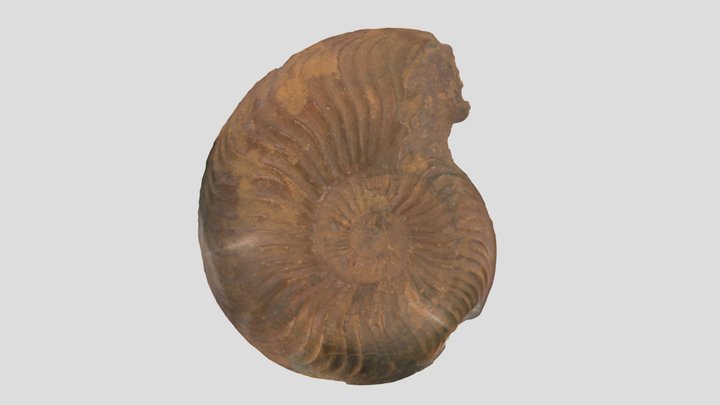
Smithsonian Open Access and MorphoSource were not reached for this taxon, so this list is what the others held rather than everything there is.
The description on this site
- Licence
- CC BY-SA 4.0
This is what the site found, which is not the same as what exists.
Keep going
What may have been alongside itGraphoceratidae through timeFormations of the Middle JurassicThe world it lived on
Occurrence data from the Paleobiology Database, CC BY 4.0.