Isocrinus

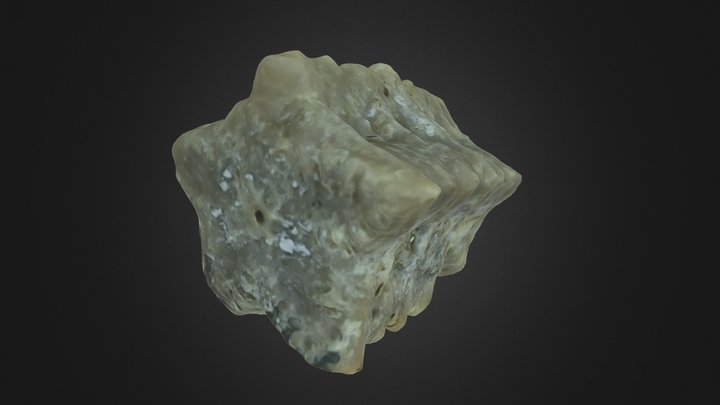
Wilson44691 · Public Domain · via Wikidata/Commons. May be a photograph of a specimen, or an artist’s reconstruction — an interpretation of a skeleton, since colour and soft tissue are almost never preserved.
On record
Recorded, not inferred- Sits inside
- IsocrininaePBDB
- Diet
- suspension feederPBDB, for Isocrinidae
- Life habit
- upper-level epifaunalPBDB, for Isocrinidae
- Motility
- stationary, attachedPBDB, for Isocrinidae
- Vision
- blindPBDB, for Crinoidea
- Environment
- marinePBDB, for Echinodermata
Time the record covers
At least 223 million years on record.
The record covers at least 247 Mya to 23.04 Mya. No occurrence read is dated outside 248.6 Mya to 15.98 Mya.
252 occurrences of Isocrinus on record, most of them in the Early Cretaceous. The Paleobiology Database records this as a living group, and the chart stops with its fossils rather than at the present. Bar height is expected occurrences, not a count: each fossil is spread across the span it is dated to, so a tall narrow bar means tight dating and a low wide one means loose.
When
252 occurrences- Early Triassicunder 1%
- Middle Triassic4%
- Late Triassic22%
- Early Jurassic17%
- Middle Jurassic11%
- Late Jurassic3%
- Early Cretaceous24%
- Late Cretaceous13%
- Paleoceneunder 1%
- Eocene2%
- Oligocene3%
- Mioceneunder 1%
These are dates about fossils, not the animal: the record can only begin after it arose and end before it died out, so either end may reach further. Shares are expected occurrences: a fossil dated to a span is counted partly in each period it straddles. More on what this infers.
Found in
61 formations
- Red Chalk Formation33
- Cassian Formation · Wegen Group18
- Blue Lias Formation · Lias Group16
- Keasey Formation10
- Luning Formation9
- Hiraiga Formation · Miyako Group8
Loading coastlines…
The named rock units Isocrinus has been recovered from, largest first. Drawn where the rock is now, not where it formed. 37 further formations hold fewer occurrences each and are not listed. 74 occurrences have no formation on record, which is common for older literature.
Isocrinus and its relatives
Early CretaceousWhere Isocrinus and its relatives were recorded in the Early Cretaceous.
Found in the same rock
2,710 taxa- Echinoidea26 sites
- Gastropoda24 sites
- Plagiostoma18 sites
- Polydiadema15 sites
- Serpula15 sites
- Bivalvia14 sites
- Cidaris14 sites
- Plicatula13 sites
- Lima12 sites
- Parallelodon12 sites
- Temnocidaris (Stereocidaris)12 sites
- Chlamys11 sites
- Echinogalerus11 sites
- Salenia11 sites
- Astarte10 sites
- Coelostylina conica10 sites
- Liostrea10 sites
- Metopaster10 sites
- Modiolus10 sites
- Pentacrinites10 sites
- Umbrostrea montiscaprilis10 sites
- Balanocrinus subsulcatus9 sites
- Catopygus9 sites
- Ostrea9 sites
The Paleobiology Database records 195 sites for Isocrinus, and this reads all of them. The number is how many of those sites it was catalogued from too. The 24 sharing the most are listed.
This is not a list of everything alive at the time. It is only what has come out of the same ground as this animal and been written down.
Entered from
96 references- Palaeobiology of isocrinid crinoids from the Red Chalk (Albian, Lower Cretaceous) of North− east England33
- A sedimentary and faunal study of the Blue Lias of Dorset and Glamorgan14
- Early Cretaceous Isocrinus from Northeast Japan12
- Cenomanian and Lower Turonian echinoderms from Wilmington, south-east Devon, England10
- Primary collection data of Cassian Formation used for publication of Fürsich and Wendt (1977) (ref. 9188)9
- Die Crinoiden aus dem Pliensbachium (mittlerer Lias) von Rottorf am Klei und Empelde (Süd-Niedersachsen)7
- The Stratigraphical Palaeontology, ammonites excluded, of the Stowell Park borehole7
- Late Cretaceous environments and communities as recorded at Chrtníky (Bohemian Cretaceous Basin, Czech Republic)6
- Variations morphologiques des Toxaster (Echinoida : Spatangoida) en regard des fluctuations spatiales (Arc de Castellane, SE France) et temporelles (Valanginien-Hauterivien) du milieu sédimentaire : expression d'un potentiel adaptatif restreint5
- Exceptional crinoid occurrences and associated carbonates of the Keasey Formation (Early Oligocene) at Mist, Oregon, USA5
- Crinoids from the Chambara Formation, Pucara Group, Central Peru5
- Community structure, paleoecology, and depositional environments within the Upper Triassic Luning Formation of Nevada5
Each of the 252 occurrences read was entered from one of these publications, ordered by how many each accounts for. This is not a search for papers mentioning the name. 84 further references are not listed. Entries link to doi.org where the Paleobiology Database holds an identifier, and to its own record where it does not. Relayed as the Paleobiology Database holds them, not checked against what they resolve to.
Media and terms
Media content2
Picture of Isocrinus
- Source
- Wikidata/Commons
- Credit
- Wilson44691
- Licence
- Public Domain
- Commercial use
- the licence allows it
This is what the site found, which is not the same as what exists.
Keep going
Everything alive alongside itIsocrininae through timeFormations of the Early CretaceousThe world it lived on
Occurrence data from the Paleobiology Database, CC BY 4.0. von Meyer 1836