Anodonta
Anodonta is a genus of freshwater mussels in the family Unionidae, the river mussels.

Joel Berglund · Public Domain · via Wikipedia/Commons. May be a photograph of a specimen, or an artist’s reconstruction — an interpretation of a skeleton, since colour and soft tissue are almost never preserved.
On record
Recorded, not inferred- Sits inside
- UnionidaePBDB
- Diet
- suspension feederPBDB, for Bivalvia
- Life habit
- infaunalPBDB, for Bivalvia
- Motility
- facultatively mobilePBDB, for Bivalvia
- Vision
- blindPBDB, for Bivalvia
- Environment
- freshwaterPBDB, for Unionida
Time the record covers
At least 40 million years on record.
The record covers at least 41.03 Mya to 129 ka. No occurrence read is dated outside 48.07 Mya to 11.7 ka.
21 occurrences of Anodonta on record, most of them in the Eocene. The Paleobiology Database records this as a living group. Bar height is expected occurrences, not a count: each fossil is spread across the span it is dated to, so a tall narrow bar means tight dating and a low wide one means loose.
When
21 occurrences- Eocene38%
- Oligocene5%
- Miocene10%
- Pliocene15%
- Pleistocene33%
These are dates about fossils, not the animal: the record can only begin after it arose and end before it died out, so either end may reach further. Shares are expected occurrences: a fossil dated to a span is counted partly in each period it straddles. More on what this infers.
Found in
14 formations
- Domanda Formation · Khirthar Group3
- Kiyokawa Formation · Shimosa Group2
- Baynunah Formation1
- Santa Maria di Ciciliano Formation1
- Rushin Formation · Urahoro Group1
- Akabira Formation · Ishikari Group1
Loading coastlines…
The named rock units Anodonta has been recovered from, largest first. Drawn where the rock is now, not where it formed. 4 occurrences have no formation on record, which is common for older literature.
Anodonta and its relatives
EoceneWhere Anodonta and its relatives were recorded in the Eocene.
Found in the same rock
366 taxa- Conus4 sites
- Corbula4 sites
- Lucina4 sites
- Tellina4 sites
- Venericardia4 sites
- Arca3 sites
- Astarte3 sites
- Barbatia3 sites
- Cardita3 sites
- Gila3 sites
- Mya3 sites
- Panopea3 sites
- Pisidium3 sites
- Trachycardium3 sites
- Turritella rakhiensis3 sites
- Aechmophorus occidentalis2 sites
- Cervidae2 sites
- Cetacea2 sites
- Emys marmorata2 sites
- Equus2 sites
- Fossaria2 sites
- Fulica americana2 sites
- Goniobasis2 sites
- Gyraulus2 sites
The Paleobiology Database records 15 sites for Anodonta, and this reads all of them. The number is how many of those sites it was catalogued from too. The 24 sharing the most are listed.
This is not a list of everything alive at the time. It is only what has come out of the same ground as this animal and been written down.
Entered from
17 references- Reconnaissance survey and vertebrate paleontology of some Paleocene and Eocene Formations in Pakistan3
- Ocadia nipponica, a new species of aquatic turtle (Testudines: Testudinoidea: Geoemydidae) from the Middle Pleistocene of Chiba Prefecture, central Japan2
- Summary of the Paleogene molluscan faunas in North Japan2
- New Record of Capybara (Rodentia: Caviidae: Hydrochoerinae) from the Pleistocene of San Diego County, California with Remarks on Their Biogeography and Dispersal in the Pleistocene of Western North America1
- Resilience of marine invertebrate communities during the early Cenozoic hyperthermals1
- Unpublished census data from Atlantic coastal plain and circum-Caribbean Neogene assemblages and taxonomic opinions1
- The section of Torre Picchio (Terni, Umbria, Central Italy): A Villafranchian site rich in vertebrates, molluscs, ostracods and plants.1
- Stratigraphy and mammal faunas of the Brackwassermolasse in the surroundings of Ulm (Southwest Germany)1
- Neues aus dem Villafranchium von Hajnacka bei Filakovo (Slowakei, cssr)1
- The Shelton Mastodon Site: Multidisciplinary study of a late Pleistocene (Twocreekan) locality in Southeastern Michigan1
- New Stratotype: the Baynunah Formation (Late Miocene), United Arab Emirates: Lithology and palaeontology1
- The Camp Cady Local Fauna: Paleoenvironment of the Lake Manix Basin1
Each of the 21 occurrences read was entered from one of these publications, ordered by how many each accounts for. This is not a search for papers mentioning the name. 5 further references are not listed. Entries link to doi.org where the Paleobiology Database holds an identifier, and to its own record where it does not. Relayed as the Paleobiology Database holds them, not checked against what they resolve to.
Media and terms
Media content3

Picture of Anodonta
- Source
- Wikipedia/Commons
- Credit
- Joel Berglund
- Licence
- Public Domain
- Commercial use
- the licence allows it
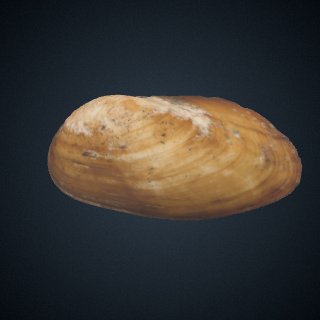
3D scan
- Source
- Smithsonian
- Licence
- CC0 — this site’s default, not the record’s
- Commercial use
- the licence allows it
- Specimen
- Anodonta wheatleyi
Photogrammetry
- Source
- MorphoSource
- Licence
- In Copyright
- Commercial use
- cannot be read from the licence given — check the record
- Specimen
- Anodonta nuttalliana · UF:Invertebrate Zoology:268940-Mollusca
The description on this site
- Source
- Wikipedia, “Anodonta”
- Licence
- CC BY-SA 4.0
This is what the site found, which is not the same as what exists.
Keep going
What may have been alongside itUnionidae through timeFormations of the EoceneThe world it lived on
Occurrence data from the Paleobiology Database, CC BY 4.0.