Astroscopus
Astroscopus, the electric stargazers, is a genus of stargazers, a type of percomorph fish from the family Uranoscopidae, part of the order Labriformes. The species in this genus are anatomically distinct uranoscopids, being characterized by internal nares and being the only group of marine bony fish having organs which produce electricity which are derived from the extraocular muscles. They are found on the Atlantic and Pacific coasts of the Americas.

Canvasman21 at English Wikipedia · CC BY-SA 3.0 · via Wikipedia/Commons. May be a photograph of a specimen, or an artist’s reconstruction — an interpretation of a skeleton, since colour and soft tissue are almost never preserved.
On record
Recorded, not inferred- Sits inside
- UranoscopidaePBDB
- Motility
- actively mobilePBDB, for Osteichthyes
Time the record covers
At least 40 million years on record.
The record covers at least 41.03 Mya to 129 ka. No occurrence read is dated outside 48.07 Mya to 11.7 ka.
7 occurrences of Astroscopus on record, most of them in the Eocene. Bar height is expected occurrences, not a count: each fossil is spread across the span it is dated to, so a tall narrow bar means tight dating and a low wide one means loose.
When
7 occurrences- Eocene57%
- Miocene14%
- Pliocene14%
- Pleistocene14%
These are dates about fossils, not the animal: the record can only begin after it arose and end before it died out, so either end may reach further. Shares are expected occurrences: a fossil dated to a span is counted partly in each period it straddles. More on what this infers.
Found in
6 formations
- Yorktown Formation · Chesapeake Group1
- Kempsville Formation1
- St. Marys Formation1
- Cook Mountain Formation · Claiborne Group1
- “upper” Lisbon Formation1
- Piney Point Formation · Claiborne Group1
Loading coastlines…
The named rock units Astroscopus has been recovered from, largest first. Drawn where the rock is now, not where it formed. 1 occurrence has no formation on record, which is common for older literature.
Astroscopus and its relatives
EoceneWhere Astroscopus and its relatives were recorded in the Eocene.
Found in the same rock
502 taxa- Allomorone burlesonis4 sites
- Preophidion4 sites
- Protanago sector4 sites
- Sciaena4 sites
- Symmetrosulcus4 sites
- Bauzaia3 sites
- Brazosiella kokeni3 sites
- Lactarius amplus3 sites
- Pseudophichthys texanus3 sites
- Pterothrissus umbonatus3 sites
- Sciaenidae3 sites
- Serranidae3 sites
- Sparus elegantulus3 sites
- Antigonia2 sites
- Blennius2 sites
- Branta bernicla2 sites
- Bregmaceros troelli2 sites
- Caproidarum serratus2 sites
- Carnivora2 sites
- Clupeidae2 sites
- Conger2 sites
- Ekokenia eporrecta2 sites
- Gadus2 sites
- Haemulon2 sites
The Paleobiology Database records 7 sites for Astroscopus, and this reads all of them. The number is how many of those sites it was catalogued from too. The 24 sharing the most are listed.
This is not a list of everything alive at the time. It is only what has come out of the same ground as this animal and been written down.
Entered from
4 references- Middle and late Eocene fish otoliths from the eastern and southern USA4
- Stargazer (Teleostei, Uranoscopidae) Cranial Remains from the Miocene Calvert Cliffs, Maryland, U.S.A. (St. Marys Formation, Chesapeake Group)1
- Teleost fish otoliths from Lee Creek Mine, Aurora, North Carolina (Yorktown Formation: Pliocene)1
- Fossil vertebrates from the marine Pleistocene of southeastern Virginia1
Each of the 7 occurrences read was entered from one of these publications, ordered by how many each accounts for. This is not a search for papers mentioning the name. Entries link to doi.org where the Paleobiology Database holds an identifier, and to its own record where it does not. Relayed as the Paleobiology Database holds them, not checked against what they resolve to.
Media and terms
Media content3

Picture of Astroscopus
- Source
- Wikipedia/Commons
- Credit
- Canvasman21 at English Wikipedia
- Licence
- CC BY-SA 3.0
- Commercial use
- the licence allows it
CT scan
- Source
- MorphoSource
- Credit
- LACM Ichthyology
- Licence
- In Copyright
- Commercial use
- cannot be read from the licence given — check the record
- Specimen
- Astroscopus zephyreus · LACM:Fish:22364.000
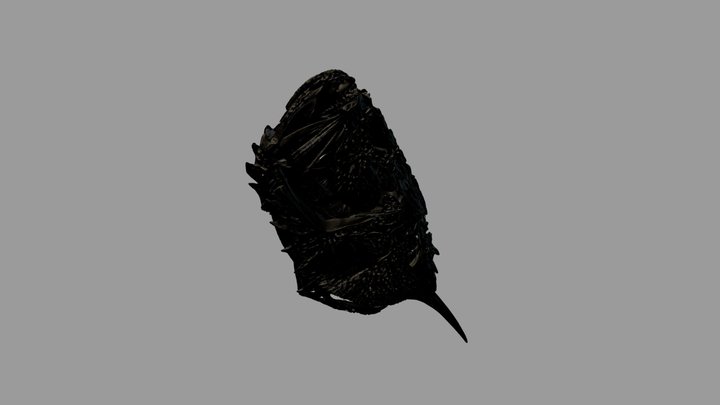
3D model
- Source
- Sketchfab
- Credit
- ArchmageManas
- Licence
- CC Attribution
- Commercial use
- cannot be read from the licence given — check the record
Smithsonian Open Access was not reached for this taxon, so this list is what the others held rather than everything there is.
The description on this site
- Source
- Wikipedia, “Astroscopus”
- Licence
- CC BY-SA 4.0
This is what the site found, which is not the same as what exists.
Keep going
What may have been alongside itUranoscopidae through timeFormations of the EoceneThe world it lived on
Occurrence data from the Paleobiology Database, CC BY 4.0.