Canis familiaris
The dog is a domesticated descendant of wolves. Also called the domestic dog, it was selectively bred during the Late Pleistocene by hunter-gatherers. Dogs and the modern gray wolf share a common ancestor. Dogs were the first species to be domesticated over 14,000 years ago, before the development of agriculture, though genetic studies suggest the domestication process may have begun over 25,000 years ago. Due to their long association with humans, dogs have gained the ability to thrive on a starch-rich diet that would be inadequate for other canids.

M. Rehemtulla · CC BY 2.0 · via Wikipedia/Commons. May be a photograph of a specimen, or an artist’s reconstruction — an interpretation of a skeleton, since colour and soft tissue are almost never preserved.
On record
Recorded, not inferred- Also called
- dogPBDB
- Sits inside
- CanisPBDB
- Diet
- carnivore, omnivorePBDB, for Canidae
- Life habit
- ground dwellingPBDB, for Canidae
- Motility
- actively mobilePBDB, for Osteichthyes
- Environment
- terrestrialPBDB, for Eutheria
Time the record covers
At least 762 thousand years on record.
The record covers at least 774 ka to 11.7 ka. No occurrence read is dated outside 2.58 Mya to 0 Mya.
39 occurrences of Canis familiaris on record. The Paleobiology Database records this as a living group. Bar height is expected occurrences, not a count: each fossil is spread across the span it is dated to, so a tall narrow bar means tight dating and a low wide one means loose.
When
39 occurrences- Pleistocene10%
- Holocene90%
These are dates about fossils, not the animal: the record can only begin after it arose and end before it died out, so either end may reach further. Shares are expected occurrences: a fossil dated to a span is counted partly in each period it straddles. More on what this infers.
Found in the same rock
637 taxa- Rangifer tarandus14 sites
- Odobenus rosmarus11 sites
- Erignathus barbatus10 sites
- Homo sapiens10 sites
- Ursus maritimus10 sites
- Phoca hispida9 sites
- Vulpes lagopus9 sites
- Vulpes vulpes8 sites
- Monodon monoceros7 sites
- Ondatra zibethicus7 sites
- Balaena mysticetus6 sites
- Bos taurus6 sites
- Cervus elaphus6 sites
- Larus6 sites
- Odocoileus virginianus6 sites
- Ovibos moschatus6 sites
- Procyon lotor6 sites
- Branta5 sites
- Capra hircus5 sites
- Castor canadensis5 sites
- Equus5 sites
- Lontra canadensis5 sites
- Phoca5 sites
- Sus scrofa5 sites
The Paleobiology Database records 38 sites for Canis familiaris, and this reads all of them. The number is how many of those sites it was catalogued from too. The 24 sharing the most are listed.
This is not a list of everything alive at the time. It is only what has come out of the same ground as this animal and been written down.
Entered from
31 references- Polar bear fossil and archaeological records from the Pleistocene and Holocene in relation to sea ice extent and open water polynyas6
- New findings at Andrahomana Cave, southeastern Madagascar2
- Sea mammal hunters of Chukotka, Bering Strait: recent archaeological results and problems2
- The prehistory of vertebrates, especially birds, on Tinian, Aguiguan, and Rota, Northern Mariana Islands2
- The Kor & Bot collection revisited, with a biostratigraphic interpretation of the Early Pleistocene Oosterschelde Fauna (Oosterschelde Estuary, the Netherlands)1
- Large canids at the Gravettian Předmostí site, the Czech Republic: The mandible1
- After Hopewell in Southern Québec1
- Missing mammals from mesolithic middens: A comparison of the fossil and archaeological records from Scotland1
- Life on the edge: prehistoric settlement and economy on Utrōk Atoll, northern Marshall Islands1
- The prehistory of the coastal areas of Amdrup Land and Holm Land adjacent to the Northeast Water polynya: an archaeological perspective1
- Ancient Arctic Hunters: Material Culture and Survival Strategy1
- Extinct and extirpated birds from Aitutaki and Atiu, southern Cook Islands1
Each of the 39 occurrences read was entered from one of these publications, ordered by how many each accounts for. This is not a search for papers mentioning the name. 19 further references are not listed. Entries link to doi.org where the Paleobiology Database holds an identifier, and to its own record where it does not. Relayed as the Paleobiology Database holds them, not checked against what they resolve to.
Media and terms
Media content3

Picture of Canis familiaris
- Source
- Wikipedia/Commons
- Credit
- M. Rehemtulla
- Licence
- CC BY 2.0
- Commercial use
- the licence allows it
CT scan
- Source
- MorphoSource
- Licence
- In Copyright
- Commercial use
- cannot be read from the licence given — check the record
- Specimen
- Canis familiaris · YPM:VZ:YPM MAM 007356
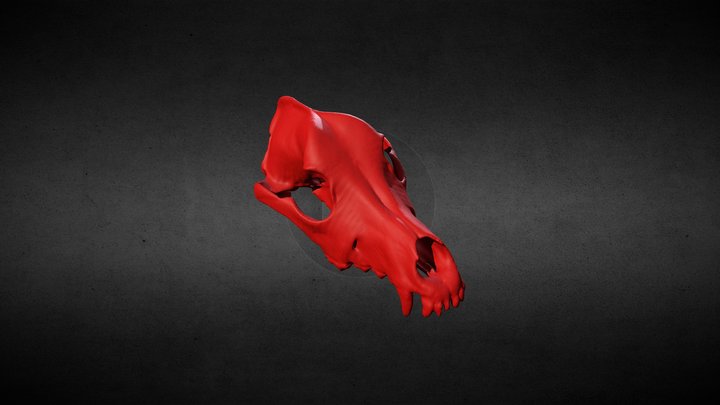
3D model
- Source
- Sketchfab
- Licence
- CC Attribution
- Commercial use
- cannot be read from the licence given — check the record
The description on this site
- Source
- Wikipedia, “Dog”
- Licence
- CC BY-SA 4.0
This is what the site found, which is not the same as what exists.
Keep going
What may have been alongside itCanis through timeThe world it lived on
Occurrence data from the Paleobiology Database, CC BY 4.0. Linnaeus 1758