Ursus maritimus
The polar bear is a large bear native to the Arctic and nearby areas. It is closely related to the brown bear, and the two species can interbreed. The polar bear is the largest extant species of bear and land carnivore by body mass, with adult males weighing 300–800 kg (660–1,760 lb). The species is sexually dimorphic, as adult females are much smaller. The polar bear is white or yellowish-furred with black skin and a thick layer of fat. It is more slender than the brown bear, with a narrower skull, longer neck and lower shoulder hump. Its teeth are sharper and more adapted to cutting meat. The paws are large and allow the bear to walk on ice and paddle in the water.

Alan Wilson · CC BY-SA 3.0 · via Wikipedia/Commons. May be a photograph of a specimen, or an artist’s reconstruction — an interpretation of a skeleton, since colour and soft tissue are almost never preserved.
On record
Recorded, not inferred- Also called
- polar bearPBDB
- Sits inside
- UrsusPBDB
- Diet
- carnivore, omnivorePBDB
- Life habit
- amphibiousPBDB
- Motility
- actively mobilePBDB, for Osteichthyes
- Environment
- terrestrialPBDB, for Eutheria
- Mass
- 450 kgWikidata
Time the record covers
At most 129 thousand years on record.
Every occurrence read is dated to somewhere between 129 ka and 0 Mya, and nothing in the dating separates them, so that window is what the record shows rather than a span.
120 occurrences of Ursus maritimus on record, most of them in the Holocene. The Paleobiology Database records this as a living group. Bar height is expected occurrences, not a count: each fossil is spread across the span it is dated to, so a tall narrow bar means tight dating and a low wide one means loose.
When
120 occurrences- Pleistocene23%
- Holocene78%
These are dates about fossils, not the animal: the record can only begin after it arose and end before it died out, so either end may reach further. Shares are expected occurrences: a fossil dated to a span is counted partly in each period it straddles. More on what this infers.
Ursus maritimus and its relatives
HoloceneWhere Ursus maritimus and its relatives were recorded in the Holocene.
Found in the same rock
159 taxa- Odobenus rosmarus48 sites
- Rangifer tarandus42 sites
- Erignathus barbatus33 sites
- Vulpes lagopus30 sites
- Ovibos moschatus29 sites
- Phoca hispida25 sites
- Balaena mysticetus20 sites
- Canis19 sites
- Lepus arcticus19 sites
- Phoca19 sites
- Branta15 sites
- Cetacea15 sites
- Pusa hispida15 sites
- Delphinapterus leucas12 sites
- Erignathus12 sites
- Phocadae12 sites
- Larus11 sites
- Larus hyperboreus11 sites
- Pagophilus groenlandica11 sites
- Salvelinus11 sites
- Canis familiaris10 sites
- Cepphus grylle9 sites
- Lagopus muta9 sites
- Somateria9 sites
The Paleobiology Database records 118 sites for Ursus maritimus, and this reads all of them. The number is how many of those sites it was catalogued from too. The 24 sharing the most are listed.
This is not a list of everything alive at the time. It is only what has come out of the same ground as this animal and been written down.
Entered from
45 references- Polar bear fossil and archaeological records from the Pleistocene and Holocene in relation to sea ice extent and open water polynyas41
- The evolution of Arctic marine mammals9
- The Northernmost Ruins of the Globe6
- Late Weichselian polar bear (Ursus maritimus Phipps) in southern Sweden6
- Archaeology of St. Lawrence Island, Alaska4
- Appendix 1. The zooarchaeology of Peary Land and adjacent areas3
- The Weichselian (c. 115,000 - 10,000 B.P.) vertebrate fauna of Norway3
- The prehistory of the coastal areas of Amdrup Land and Holm Land adjacent to the Northeast Water polynya: an archaeological perspective3
- The Paleoeskimo Occupations at Port Refuge, High Arctic Canada3
- The Walakpa Site, Alaska: its place in the Birnirk and Thule cultures3
- New records of Holocene polar bear and walrus (Carnivora) in the Russian Arctic2
- Late Pleistocene fossil find in Svalbard: the oldest remains of a polar bear (Ursus maritimus Phipps, 1744) ever discovered2
Each of the 120 occurrences read was entered from one of these publications, ordered by how many each accounts for. This is not a search for papers mentioning the name. 33 further references are not listed. Entries link to doi.org where the Paleobiology Database holds an identifier, and to its own record where it does not. Relayed as the Paleobiology Database holds them, not checked against what they resolve to.
Media and terms
Media content3
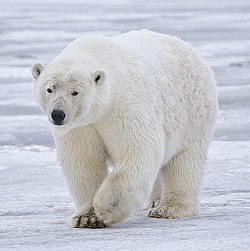
Picture of Ursus maritimus
- Source
- Wikipedia/Commons
- Credit
- Alan Wilson
- Licence
- CC BY-SA 3.0
- Commercial use
- the licence allows it
Structured light scan
- Source
- MorphoSource
- Licence
- In Copyright
- Commercial use
- cannot be read from the licence given — check the record
- Specimen
- Ursus maritimus maritimus · FMNH:Mammals:51473
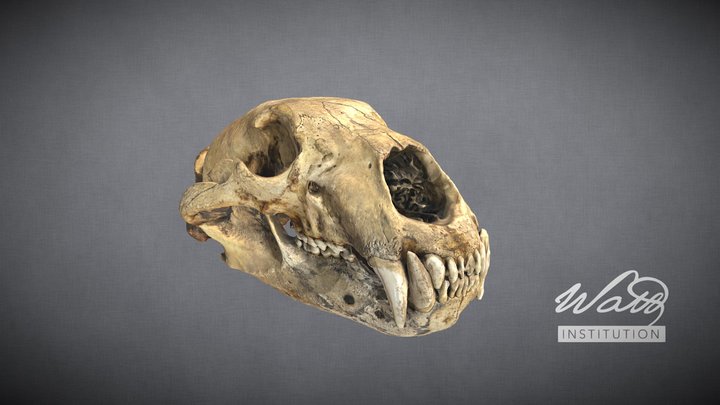
3D model
- Source
- Sketchfab
- Credit
- The Watt Institution
- Licence
- CC Attribution
- Commercial use
- cannot be read from the licence given — check the record
The description on this site
- Source
- Wikipedia, “Polar bear”
- Licence
- CC BY-SA 4.0
This is what the site found, which is not the same as what exists.
Keep going
What may have been alongside itUrsus through timeFormations of the HoloceneThe world it lived on
Occurrence data from the Paleobiology Database, CC BY 4.0. (Phipps 1774)