Dasypodidae
Searched as Dasypodidae indet.. The Paleobiology Database treats Dasypodidae as the accepted name.
Dasypodidae is a family of mostly extinct genera of armadillos. One genus, Dasypus, is extant, with eight living species.

Jerry Segraves ( en:User:Jsegraves99 ) · Attribution · via Wikipedia/Commons. May be a photograph of a specimen, or an artist’s reconstruction — an interpretation of a skeleton, since colour and soft tissue are almost never preserved.
On record
Recorded, not inferred- Also called
- armadilloPBDB
- Sits inside
- DasypodoideaPBDB
- Diet
- insectivorePBDB
- Life habit
- ground dwellingPBDB
- Motility
- actively mobilePBDB, for Osteichthyes
- Environment
- terrestrialPBDB, for Eutheria
Time the record covers
At least 55 million years on record.
The record covers at least 56 Mya to 11.7 ka. No occurrence read is dated outside 57 Mya to 0 Mya.
40 occurrences of Dasypodidae on record, most of them in the Miocene. The Paleobiology Database records this as a living group. Bar height is expected occurrences, not a count: each fossil is spread across the span it is dated to, so a tall narrow bar means tight dating and a low wide one means loose.
When
40 occurrencesThese are dates about fossils, not the animal: the record can only begin after it arose and end before it died out, so either end may reach further. Shares are expected occurrences: a fossil dated to a span is counted partly in each period it straddles. More on what this infers.
Found in
18 formations
- Sarmiento Formation3
- Cerro Azul Formation3
- Cura-Mallín Formation2
- Pebas Formation2
- Pozo Formation2
- Quehua Formation1
Loading coastlines…
The named rock units Dasypodidae has been recovered from, largest first. Drawn where the rock is now, not where it formed. 15 occurrences have no formation on record, which is common for older literature.
Dasypodidae and its relatives
MioceneWhere Dasypodidae and its relatives were recorded in the Miocene.
Found in the same rock
2,831 taxa- Dasypus bellus62 sites
- Equus51 sites
- Odocoileus virginianus45 sites
- Scalopus aquaticus25 sites
- Geomys pinetis23 sites
- Hemiauchenia macrocephala23 sites
- Sylvilagus floridanus22 sites
- Procyon lotor21 sites
- Panthera onca20 sites
- Holmesina septentrionalis19 sites
- Neofiber alleni19 sites
- Sigmodon hispidus19 sites
- Lynx rufus18 sites
- Tapirus18 sites
- Terrapene carolina18 sites
- Mammut americanum17 sites
- Oryzomys palustris17 sites
- Cryptotis parva16 sites
- Neotoma floridana16 sites
- Palaeolama mirifica16 sites
- Sylvilagus16 sites
- Tapirus (Helicotapirus) veroensis16 sites
- Aenocyon dirus15 sites
- Blarina carolinensis15 sites
The Paleobiology Database records 341 sites for Dasypodidae, and this reads 240 of them. The number is how many of those sites it was catalogued from too. The 24 sharing the most are listed.
This is not a list of everything alive at the time. It is only what has come out of the same ground as this animal and been written down.
Entered from
31 references- Biotic community and landscape changes around the Eocene–Oligocene transition at Shapaja, Peruvian Amazonia: Regional or global drivers?2
- A 60-million-year Cenozoic history of western Amazonian ecosystems in Contamana, eastern Peru2
- The Egidio Feruglio's collection in the Museum of Geology and Palaeontology of the University of Padova: its importance to the knowledge of Cenozoic mammals from South America2
- Eocene vertebrates of northwest Argentina: annotated list2
- Chronologic implications of new Miocene mammals from the Cura-Mallín and Trapa Trapa formations, Laguna del Laja area, south Central Chile2
- Nuevos registros de Dasypodidae (Xenarthra) del Mioceno tardío de la provincia de La Pampa, Argentina2
- The Eocene to Pleistocene vertebrates of Bolivia and their stratigraphic context: a review2
- Los vertebrados del Terciario continental de Colombia2
- Occurrence and relationships of the Rio Chico fauna of Patagonia2
- A chasicoan (late miocene) vertebrate assemblage from cerro azul formation, central Argentina. Geomorphological and biochronological considerations1
- No se les escapó la tortuga. Uso antrópico de Chelonoidis chilensis en un sitio de la región chaco-santiagueña (provincia de Santiago del Estero)1
- Una nueva localidad de vertebrados cuaternarios en Puerto Pinasco, Dpto. de Presidente Hayes, Republica del Paraguay1
Each of the 40 occurrences read was entered from one of these publications, ordered by how many each accounts for. This is not a search for papers mentioning the name. 19 further references are not listed. Entries link to doi.org where the Paleobiology Database holds an identifier, and to its own record where it does not. Relayed as the Paleobiology Database holds them, not checked against what they resolve to.
Media and terms
Media content2

Picture of Dasypodidae
- Source
- Wikipedia/Commons
- Credit
- Jerry Segraves ( en:User:Jsegraves99 )
- Licence
- Attribution
- Commercial use
- cannot be read from the licence given — check the record
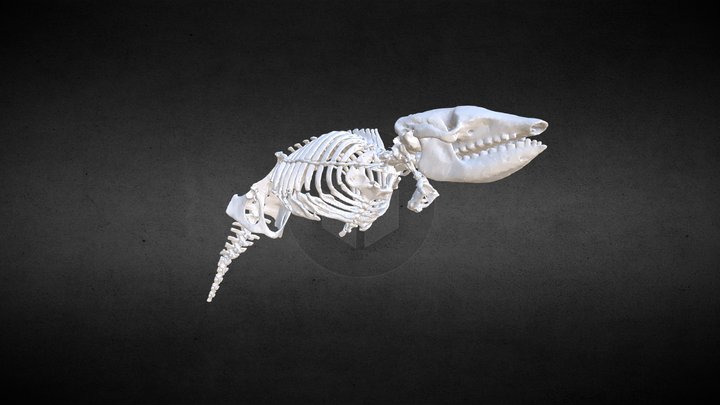
3D model
- Source
- Sketchfab
- Licence
- CC Attribution
- Commercial use
- cannot be read from the licence given — check the record
Smithsonian Open Access was not reached for this taxon, so this list is what the others held rather than everything there is.
The description on this site
- Source
- Wikipedia, “Dasypodidae”
- Licence
- CC BY-SA 4.0
This is what the site found, which is not the same as what exists.
Keep going
What may have been alongside itDasypodoidea through timeFormations of the MioceneThe world it lived on
Occurrence data from the Paleobiology Database, CC BY 4.0. (Gray 1821)