Emys orbicularis
No picture of Emys orbicularis was found. Wikidata and iDigBio were searched and had none. Wikipedia has a picture filed under this name, but nothing tied it to Emys orbicularis itself, so it was not used. Smithsonian Open Access did not answer, so this is what the others held rather than everything there is. GBIF was asked, and what came back is not recorded: nothing, or a picture this site could not tie to Emys orbicularis, or no answer at all. This entry cannot say which.
On record
Recorded, not inferred- Also called
- European pond turtlePBDB
- Sits inside
- EmysPBDB
- Diet
- omnivorePBDB, for Emydidae
- Life habit
- aquaticPBDB, for Emydidae
- Motility
- actively mobilePBDB, for Osteichthyes
- Environment
- freshwaterPBDB, for Emydidae
Time the record covers
At least 3.5 million years on record.
The record covers at least 3.55 Mya to 11.7 ka. No occurrence read is dated outside 5.333 Mya to 0 Mya.
72 occurrences of Emys orbicularis on record, most of them in the Pleistocene. The Paleobiology Database records this as a living group. Bar height is expected occurrences, not a count: each fossil is spread across the span it is dated to, so a tall narrow bar means tight dating and a low wide one means loose.
When
72 occurrences- Pliocene8%
- Pleistocene85%
- Holocene7%
These are dates about fossils, not the animal: the record can only begin after it arose and end before it died out, so either end may reach further. Shares are expected occurrences: a fossil dated to a span is counted partly in each period it straddles. More on what this infers.
Found in
7 formations
- Choremi Formation3
- Santa Maria di Ciciliano Formation1
- Cromer Forest Bed Formation1
- Unterer Travertin Formation1
- Oberer Travertin Formation1
- Chotec Formation1
Loading coastlines…
The named rock units Emys orbicularis has been recovered from, largest first. Drawn where the rock is now, not where it formed. 63 occurrences have no formation on record, which is common for older literature.
Emys orbicularis and its relatives
PleistoceneWhere Emys orbicularis and its relatives were recorded in the Pleistocene.
Found in the same rock
478 taxa- Rana20 sites
- Natrix natrix17 sites
- Bufo bufo16 sites
- Lacerta11 sites
- Equus10 sites
- Mimomys10 sites
- Natrix10 sites
- Cervidae9 sites
- Rana temporaria9 sites
- Testudo hermanni9 sites
- Cervus8 sites
- Anguis fragilis7 sites
- Castor fiber7 sites
- Cervus elaphus7 sites
- Mauremys rivulata7 sites
- Palaeoloxodon antiquus7 sites
- Stephanorhinus etruscus7 sites
- Sus scrofa7 sites
- Anas platyrhynchos6 sites
- Anura6 sites
- Bufo6 sites
- Elaphe longissima6 sites
- Mareca strepera6 sites
- Spatula clypeata6 sites
The Paleobiology Database records 71 sites for Emys orbicularis, and this reads all of them. The number is how many of those sites it was catalogued from too. The 24 sharing the most are listed.
This is not a list of everything alive at the time. It is only what has come out of the same ground as this animal and been written down.
Entered from
29 references- Pleistocene Amphibians and Reptiles in Britain and Europe27
- Fossil turtles of Slovakia: New material and a review of the previous record6
- Preliminary results on the reptiles from the Middle Pleistocene of Marathousa 1, Megalopolis basin (Greece)5
- Pleistocene vertebrates from the Kyparíssia lignite mine, Megalopolis Basin, S. Greece: Testudines, Aves, Suiformes4
- Food for thought: Sub-fossil and fossil chelonian remains from Franchthi Cave and Megalopolis confirm a glacial refuge for Emys orbicularis in Peloponnesus (S. Greece)3
- Magneto- and cyclostratigraphy and mammal-fauna’s of the Pleistocene lacustrine Megalopolis Basin, Peloponnesos, Greece3
- An overview of the fossil turtles from Sardinia (Italy)2
- The Fossil Record of Turtles and Tortoises (Reptilia: Testudines) in Greece1
- Trapped in a roman well: amphibians and reptiles from Tenuta Zuccarello near Marcon, Venice, Italy1
- Badger (Meles meles) predation on European pond turtle (Emys orbicularis) during the Eemian interglacial (MIS 5e)1
- Earliest evidence for human consumption of tortoises in the European Early Pleistocene from Sima del Elefante, Sierra de Atapuerca, Spain1
- Estudio preliminar de los quelonios del yacimiento calcolítico (Holoceno) de Camino de las Yeseras (Madrid, España)1
Each of the 72 occurrences read was entered from one of these publications, ordered by how many each accounts for. This is not a search for papers mentioning the name. 17 further references are not listed. Entries link to doi.org where the Paleobiology Database holds an identifier, and to its own record where it does not. Relayed as the Paleobiology Database holds them, not checked against what they resolve to.
Media and terms
Media content2
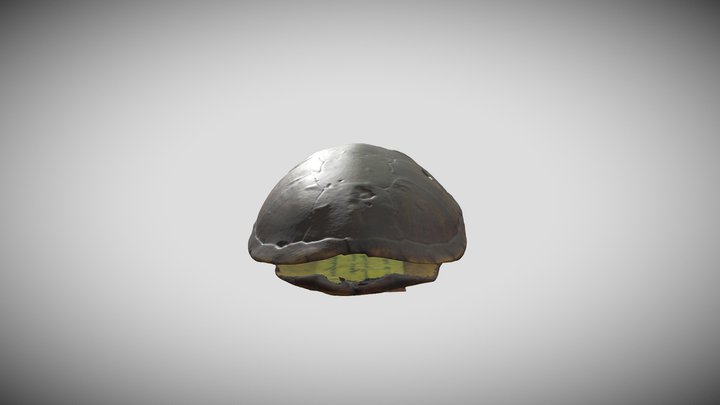
CT scan
- Source
- MorphoSource
- Credit
- MCZ Herpetology
- Licence
- In Copyright
- Commercial use
- cannot be read from the licence given — check the record
- Specimen
- Emys orbicularis orbicularis · MCZ:Herp:R-31976
No picture of Emys orbicularis was found. Wikidata and iDigBio were searched and had none.
Wikipedia has a picture filed under this name, but nothing tied it to Emys orbicularis itself, so it was not used.
Smithsonian Open Access did not answer, so this is what the others held rather than everything there is.
GBIF was asked, and what came back is not recorded: nothing, or a picture this site could not tie to Emys orbicularis, or no answer at all. This entry cannot say which.
Smithsonian Open Access was not reached for this taxon, so this list is what the others held rather than everything there is.
This is what the site found, which is not the same as what exists.
Keep going
What may have been alongside itEmys through timeFormations of the PleistoceneThe world it lived on
Occurrence data from the Paleobiology Database, CC BY 4.0. (Linnaeus 1758)