Equus sivalensis
Equus sivalensis or Sivalik Horse is an extinct species of large equid native to the northern Indian subcontinent. Remains date from the beginning of the Pleistocene, c. 2.58 million years ago until around 600,000 years ago, during the Middle Pleistocene. It is considered a "stenonine horse", meaning that it is more closely related to zebras and asses than true horses. Based on isotopes and teeth morphology, it is thought to have been a grazer. The later species Equus namadicus from the same region has sometimes been suggested to be a synonym due to their similar teeth morphology.

Ghedoghedo · CC BY-SA 3.0 · via Wikipedia/Commons. May be a photograph of a specimen, or an artist’s reconstruction — an interpretation of a skeleton, since colour and soft tissue are almost never preserved.
On record
Recorded, not inferred- Sits inside
- EquusPBDB
- Diet
- grazerPBDB, for Equus
- Life habit
- ground dwellingPBDB, for Equus
- Motility
- actively mobilePBDB, for Osteichthyes
- Environment
- terrestrialPBDB, for Eutheria
Time the record covers
At least 2.4 million years on record.
The record covers at least 2.58 Mya to 129 ka. No occurrence read is dated outside 5.333 Mya to 11.7 ka.
14 occurrences of Equus sivalensis on record, most of them in the Pleistocene. Bar height is expected occurrences, not a count: each fossil is spread across the span it is dated to, so a tall narrow bar means tight dating and a low wide one means loose.
When
14 occurrences- Pliocene37%
- Pleistocene63%
These are dates about fossils, not the animal: the record can only begin after it arose and end before it died out, so either end may reach further. Shares are expected occurrences: a fossil dated to a span is counted partly in each period it straddles. More on what this infers.
Found in
4 formations
- Pinjor Formation · Siwalik Group5
- Nagrota Formation · Siwalik Group1
- Tatrot Formation1
- Miliolite Formation1
Loading coastlines…
The named rock units Equus sivalensis has been recovered from, largest first. Drawn where the rock is now, not where it formed. 6 occurrences have no formation on record, which is common for older literature.
Equus sivalensis and its relatives
PleistoceneWhere Equus sivalensis and its relatives were recorded in the Pleistocene.
Found in the same rock
82 taxa- Cervus7 sites
- Bovidae5 sites
- Stegodon insignis4 sites
- Boselaphus3 sites
- Bovinae3 sites
- Bubalus3 sites
- Elephas planifrons3 sites
- Rhinoceros3 sites
- Rhinoceros sivalensis3 sites
- Antilopini2 sites
- Bos2 sites
- Camelus sivalensis2 sites
- Coelodonta2 sites
- Damalops palaeindicus2 sites
- Elephas hysudricus2 sites
- Hexaprotodon sivalensis2 sites
- Hystrix2 sites
- Pachycrocuta brevirostris2 sites
- Rhinoceros palaeindicus2 sites
- Sivatherium giganteum2 sites
- Suidae2 sites
- Alcelaphini1 site
- Antilope1 site
- Bison1 site
The Paleobiology Database records 14 sites for Equus sivalensis, and this reads all of them. The number is how many of those sites it was catalogued from too. The 24 sharing the most are listed.
This is not a list of everything alive at the time. It is only what has come out of the same ground as this animal and been written down.
Entered from
10 references- New fossil mammalian assemblages and first record of ostrich from the Pinjore (Pinjor) formation (2.58e0.63 Ma) of Siwalik Hills near Chandigarh, northern India3
- Record of Bovidean fossils from the Pinjor Formation of the Siwalik Group, Solan District, Himachal Pradesh2
- Predators and scavengers in Early Pleistocene southern Asia2
- A gomphothere (Mammalia, Proboscidea) from the Quaternary of the Kashmir Valley, India1
- A new Late Pleistocene fauna from arid coastal India: Implications for inundated coastal refugia and human dispersals1
- Siwalik mammals of the Jammu Sub-Himalaya, India: an appraisal of their diversity and habitats.1
- Taphonomy, fauna, environment and ecology of Upper Sivaliks (Plio-Pleistocene) near Chandigarh, India1
- Plio-Pleistocene mammals from Gidhniya village, Western Nepal1
- Fossil mammals of the Upper Siwalik and the problem of the boundary between the Neogene and the Quaternary system in India1
- Recent finds of Shivalik vertebrates. 4. On the skull of a young Equus sivalensis Falc. and Caut.1
Each of the 14 occurrences read was entered from one of these publications, ordered by how many each accounts for. This is not a search for papers mentioning the name. Entries link to doi.org where the Paleobiology Database holds an identifier, and to its own record where it does not. Relayed as the Paleobiology Database holds them, not checked against what they resolve to.
Media and terms
Media content2

Picture of Equus sivalensis
- Source
- Wikipedia/Commons
- Credit
- Ghedoghedo
- Licence
- CC BY-SA 3.0
- Commercial use
- the licence allows it
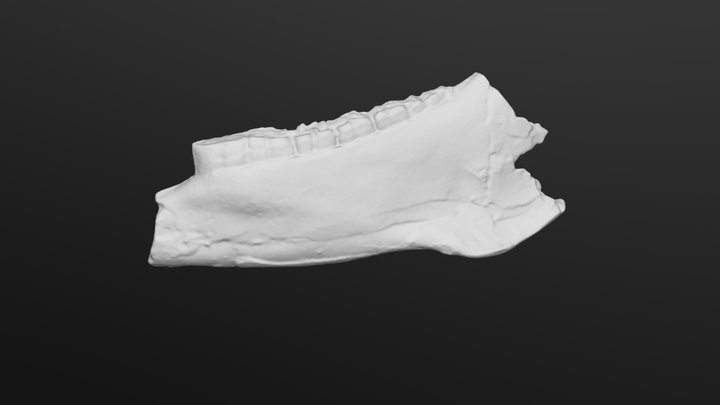
3D model
- Source
- Sketchfab
- Credit
- Virtual Curation Lab
- Licence
- CC Attribution-NonCommercial-NoDerivs
- Commercial use
- the licence does not allow it
Smithsonian Open Access and MorphoSource were not reached for this taxon, so this list is what the others held rather than everything there is.
The description on this site
- Licence
- CC BY-SA 4.0
This is what the site found, which is not the same as what exists.
Keep going
What may have been alongside itEquus through timeFormations of the PleistoceneThe world it lived on
Occurrence data from the Paleobiology Database, CC BY 4.0. Falconer and Cautley 1849