Ginglymostoma
Ginglymostoma is a genus of shark in the family Ginglymostomatidae. There are two members in the genus. Members of this genus eat small fish and crustaceans, and are commonly quite lethargic unless provoked. Members of this genus have the ability to suck in water in order to remove snails from their shells in a manner that can be described as 'vacuum-like'.

Uncredited · Public Domain · via Wikipedia/Commons. May be a photograph of a specimen, or an artist’s reconstruction — an interpretation of a skeleton, since colour and soft tissue are almost never preserved.
On record
Recorded, not inferred- Sits inside
- GinglymostomatidaePBDB
- Diet
- carnivorePBDB, for Orectolobiformes
- Life habit
- nektobenthicPBDB, for Orectolobiformes
- Motility
- actively mobilePBDB, for Orectolobiformes
Time the record covers
At least 100 million years on record.
The record covers at least 100.5 Mya to 129 ka. No occurrence read is dated outside 106.3 Mya to 11.7 ka.
137 occurrences of Ginglymostoma on record, most of them in the Eocene. The Paleobiology Database records this as a living group. Bar height is expected occurrences, not a count: each fossil is spread across the span it is dated to, so a tall narrow bar means tight dating and a low wide one means loose.
When
137 occurrences- Early Cretaceous1%
- Late Cretaceous23%
- Paleocene21%
- Eocene36%
- Oligocene3%
- Miocene11%
- Pliocene1%
- Pleistocene3%
These are dates about fossils, not the animal: the record can only begin after it arose and end before it died out, so either end may reach further. Shares are expected occurrences: a fossil dated to a span is counted partly in each period it straddles. More on what this infers.
Found in
49 formations
- Matam Formation9
- Couche II Formation6
- Couche III Formation4
- Yazoo Formation · Jackson Group3
- Bermont Formation3
- Malembo Formation3
Loading coastlines…
The named rock units Ginglymostoma has been recovered from, largest first. Drawn where the rock is now, not where it formed. 25 further formations hold fewer occurrences each and are not listed. 56 occurrences have no formation on record, which is common for older literature.
Ginglymostoma and its relatives
EoceneWhere Ginglymostoma and its relatives were recorded in the Eocene.
Found in the same rock
2,009 taxa- Dasyatis29 sites
- Myliobatis25 sites
- Rhinobatos21 sites
- Rhizoprionodon20 sites
- Coupatezia17 sites
- Hemipristis serra17 sites
- Physogaleus secundus14 sites
- Abdounia beaugei13 sites
- Premontreia (Oxyscyllium) subulidens13 sites
- Aetomylaeus dixoni12 sites
- Carcharhinus12 sites
- Chiloscyllium12 sites
- Pristis12 sites
- Rhinoptera12 sites
- Rhynchobatus12 sites
- Dasyatoidea11 sites
- Otodus megalodon11 sites
- Carcharias hopei10 sites
- Palaeogaleus brivesi10 sites
- Scyliorhinus ptychtus10 sites
- Striatolamia macrota10 sites
- Anoxypristis9 sites
- Carcharodon hastalis9 sites
- Dasyatis hexagonalis9 sites
The Paleobiology Database records 114 sites for Ginglymostoma, and this reads all of them. The number is how many of those sites it was catalogued from too. The 24 sharing the most are listed.
This is not a list of everything alive at the time. It is only what has come out of the same ground as this animal and been written down.
Entered from
62 references- Les Orectolobiformes, Carcharhiniformes et Myliobatiformes (Elasmobranchii, Neoselachii) des bassins à phosphate du Maroc (Maastrichtien-Lutétien basal). Systématique, biostratigraphie, évolution et dynamique des faunes41
- The selachian fauna (sharks and rays) of the phosphate series of Ndendouri-Ouali Diala (Matam, Western Senegal): Dating and paleoenvironmental interests9
- Les poissons fossiles du Bas-Congo et des régions voisines9
- Les chondrichthyens du Miocène moyen (Serravallien) de Salles (Gironde, France)3
- The Umm Himar Formation (Paleocene) of Saudi Arabia and Associated Strata: Stratigraphy, Vertebrate Fauna, and Paleoenvironment3
- On the fossil fishes of the Lithuanian Chalk. I. Selachii3
- A new Palaeogene elasmobranch fauna (Tebessa region, eastern Algeria) and the importance of Algerian-Tunisian phosphates for the North African fossil record2
- Sharks and rays from the Mokattamian Stage (middle and late Eocene) of Egypt, including some species from the middle Eocene Midra Shale of Qatar2
- Taxonomy and biostratigraphy of the elasmobranchs and bony fishes (Chondrichthyes and Osteichthyes) of the lower-to-middle Eocene (Ypresian to Bartonian) Claiborne Group in Alabama, USA, including an analysis of otoliths2
- Carcharocles megalodon unpublished collections from Natural History Museums around the world2
- Localidades fossiliferas da Formacao Pirabas (Mioceno Inferior)2
- Paleoecology and biostratigraphy of marginal marine gulf coast Eocene vertebrate localities2
Each of the 137 occurrences read was entered from one of these publications, ordered by how many each accounts for. This is not a search for papers mentioning the name. 50 further references are not listed. Entries link to doi.org where the Paleobiology Database holds an identifier, and to its own record where it does not. Relayed as the Paleobiology Database holds them, not checked against what they resolve to.
Media and terms
Media content3
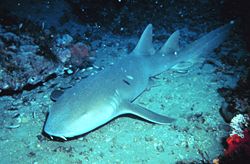
Picture of Ginglymostoma
- Source
- Wikipedia/Commons
- Credit
- nobody named on the record
- Licence
- Public Domain
- Commercial use
- the licence allows it
CT scan
- Source
- MorphoSource
- Licence
- In Copyright
- Commercial use
- cannot be read from the licence given — check the record
- Specimen
- Ginglymostoma cirratum · UMMZ:ummz_fish:143059
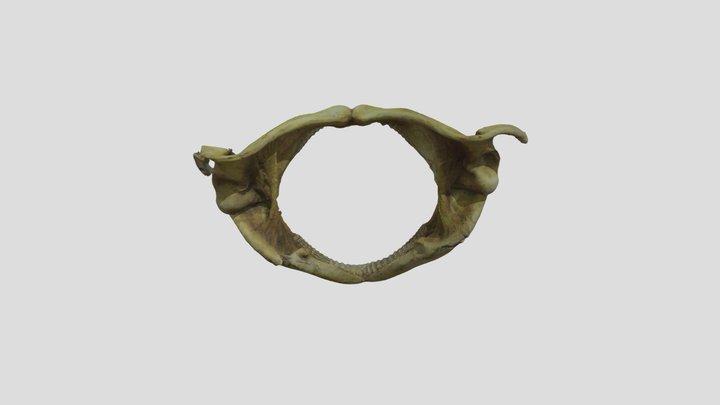
3D model
- Source
- Sketchfab
- Credit
- coleccionesbiol.3d.sig
- Licence
- CC Attribution
- Commercial use
- cannot be read from the licence given — check the record
The description on this site
- Licence
- CC BY-SA 4.0
This is what the site found, which is not the same as what exists.
Keep going
What may have been alongside itGinglymostomatidae through timeFormations of the EoceneThe world it lived on
Occurrence data from the Paleobiology Database, CC BY 4.0. Müller and Henle 1838