Globularia
Globularia is an extinct genus of sea snails, marine gastropod molluscs in the family Ampullinidae.

H. Zell · CC BY-SA 3.0 · via Wikipedia/Commons. May be a photograph of a specimen, or an artist’s reconstruction — an interpretation of a skeleton, since colour and soft tissue are almost never preserved.
On record
Recorded, not inferred- Sits inside
- AmpullinidaePBDB
- Diet
- grazerPBDB, for Ampullinoidea
- Life habit
- epifaunalPBDB, for Ampullinoidea
- Motility
- actively mobilePBDB, for Ampullinoidea
- Vision
- limitedPBDB, for Gastropoda
Time the record covers
At least 175 million years on record.
The record covers at least 182.9 Mya to 7.246 Mya. No occurrence read is dated outside 201.4 Mya to 5.333 Mya.
328 occurrences of Globularia on record, most of them in the Middle Jurassic. The Paleobiology Database records this as a living group, and the chart stops with its fossils rather than at the present. Bar height is expected occurrences, not a count: each fossil is spread across the span it is dated to, so a tall narrow bar means tight dating and a low wide one means loose.
When
328 occurrences- Early Jurassic2%
- Middle Jurassic33%
- Late Jurassic16%
- Early Cretaceous5%
- Late Cretaceous1%
- Paleocene2%
- Eocene17%
- Oligocene10%
- Miocene14%
These are dates about fossils, not the animal: the record can only begin after it arose and end before it died out, so either end may reach further. Shares are expected occurrences: a fossil dated to a span is counted partly in each period it straddles. More on what this infers.
Found in
82 formations
- Tataouine Formation65
- Dhruma Formation · Shaqra Group17
- Chipola Formation · Alum Bluff Group15
- Atherfield Clay Formation · Lower Greensand Group8
- Chari Formation7
- Arcadia Formation · Hawthorn Group7
Loading coastlines…
The named rock units Globularia has been recovered from, largest first. Drawn where the rock is now, not where it formed. 58 further formations hold fewer occurrences each and are not listed. 67 occurrences have no formation on record, which is common for older literature.
Globularia and its relatives
Middle JurassicWhere Globularia and its relatives were recorded in the Middle Jurassic.
Found in the same rock
3,285 taxa- Modiolus (Modiolus) imbricatus18 sites
- Protocardia18 sites
- Architectonica16 sites
- Nucula16 sites
- Ampullina15 sites
- Chlamys15 sites
- Drillia15 sites
- Modiolus15 sites
- Ringicula15 sites
- Ficus14 sites
- Pholadomya14 sites
- Pseudomelania14 sites
- Turritella14 sites
- Anadara13 sites
- Glycymeris13 sites
- Natica13 sites
- Olivella13 sites
- Turricula13 sites
- Actinostreon gregarea12 sites
- Crassatella12 sites
- Lucina12 sites
- Gemmula11 sites
- Plagiostoma11 sites
- Ampullospira10 sites
The Paleobiology Database records 201 sites for Globularia, and this reads all of them. Of that, one read hit the database's own return limit, so every count below is a floor rather than a total. The number is how many of those sites it was catalogued from too. The 24 sharing the most are listed.
This is not a list of everything alive at the time. It is only what has come out of the same ground as this animal and been written down.
Entered from
89 references- Palökologie benthischer Faunengemeinschaften und Taxonomie der Bivalven im Jura von Südtunesien56
- Le Jurassique D`Arabie Centrale26
- Karagyuleva, 196417
- Jurassic Bivalvia and Gastropoda from Tanganyika and Kenya13
- Notes on the fauna of the Chipola Formation - XVI. On the color pattern of Globularia fischeri (MolluscaL Gastropoda)10
- Gasteropodes Jurassiques du Sud-Est Tunisien [Jurassic gastropods from SE Tunisia]10
- Unpublished data from Kachchh9
- Les Mesogastropoda Fossiles du Cenozoïque étranger des Collections de L'Institute Royale des Sciences Naturelles de Belgique9
- The Molluscan Fauna of the Alum Bluff Group of Florida7
- Molluscs of the Tampa and Suwannee Limestones7
- Skwarko, 19946
- The stratigraphy of the Atherfield Clay Formation (Lower Aptian, Lower Cretaceous) at the type and other localities in southern England6
Each of the 328 occurrences read was entered from one of these publications, ordered by how many each accounts for. This is not a search for papers mentioning the name. 77 further references are not listed. Entries link to doi.org where the Paleobiology Database holds an identifier, and to its own record where it does not. Relayed as the Paleobiology Database holds them, not checked against what they resolve to.
Media and terms
Media content2

Picture of Globularia
- Source
- Wikipedia/Commons
- Credit
- H. Zell
- Licence
- CC BY-SA 3.0
- Commercial use
- the licence allows it
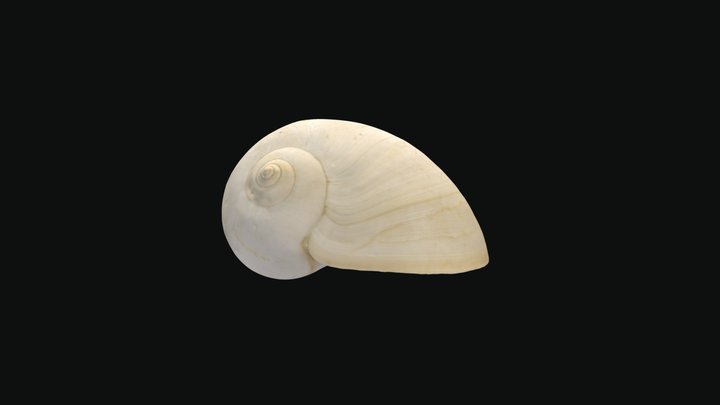
3D model
- Source
- Sketchfab
- Credit
- Shellie Luallin
- Licence
- CC Attribution
- Commercial use
- cannot be read from the licence given — check the record
The description on this site
- Licence
- CC BY-SA 4.0
This is what the site found, which is not the same as what exists.
Keep going
What may have been alongside itAmpullinidae through timeFormations of the Middle JurassicThe world it lived on
Occurrence data from the Paleobiology Database, CC BY 4.0. (Swainson 1840)