Homotherium
Homotherium is an extinct genus of scimitar-toothed cat belonging to the extinct subfamily Machairodontinae that inhabited North America, Eurasia, and Africa, as well as possibly South America during the Pliocene and Pleistocene epochs from around 4 million to 12,000 years ago. A probable descendant of Amphimachairodus, it was one of the last surviving members of Machairodontinae alongside the more famous sabertooth Smilodon, to which it was not particularly closely related. It was a large cat, comparable in size to a lion with a body mass of up to 200 kilograms (440 lb), functioning as an apex predator in the ecosystems it inhabited. It had an elongate neck and relatively elongate legs, a relatively short back and a very short tail, with the mummy of a H. latidens cub of Late Pleistocene age found in Siberia having a plain dark brown coat colour. In comparison to Smilodon, the canines of Homotherium were shorter, though still longer than those of living cats, and it is suggested to have had a different ecology from Smilodon as a moderate speed endurance pursuit predator adapted to running down large prey, such as antelope, equines, bovines, and juvenile mammoths in open habitats, with Homotherium also proposed to have likely engaged in cooperative hunting.

Skb8721 · CC BY-SA 3.0 · via Wikipedia/Commons. May be a photograph of a specimen, or an artist’s reconstruction — an interpretation of a skeleton, since colour and soft tissue are almost never preserved.
On record
Recorded, not inferred- Sits inside
- HomotheriinaPBDB
- Diet
- carnivorePBDB, for Felidae
- Life habit
- scansorialPBDB, for Felidae
- Motility
- actively mobilePBDB, for Osteichthyes
- Environment
- terrestrialPBDB, for Eutheria
- Mass
- 190 kgWikidata
Time the record covers
At least 7.1 million years on record.
The record covers at least 7.246 Mya to 129 ka. No occurrence read is dated outside 23.04 Mya to 11.7 ka.
151 occurrences of Homotherium on record, most of them in the Pleistocene. Bar height is expected occurrences, not a count: each fossil is spread across the span it is dated to, so a tall narrow bar means tight dating and a low wide one means loose.
When
151 occurrences- Miocene2%
- Pliocene34%
- Pleistocene64%
These are dates about fossils, not the animal: the record can only begin after it arose and end before it died out, so either end may reach further. Shares are expected occurrences: a fossil dated to a span is counted partly in each period it straddles. More on what this infers.
Found in
30 formations
- Koobi Fora Formation7
- Vogel River Series Formation7
- Varswater Formation4
- Nachukui Formation · Omo Group4
- Hadar Formation · Awash Group3
- Glenns Ferry Formation2
Loading coastlines…
The named rock units Homotherium has been recovered from, largest first. Drawn where the rock is now, not where it formed. 6 further formations hold fewer occurrences each and are not listed. 96 occurrences have no formation on record, which is common for older literature.
Homotherium and its relatives
PleistoceneWhere Homotherium and its relatives were recorded in the Pleistocene.
Found in the same rock
1,616 taxa- Equus59 sites
- Stephanorhinus etruscus38 sites
- Gazella30 sites
- Hipparion26 sites
- Bison23 sites
- Felis22 sites
- Lynx issiodorensis22 sites
- Allohippus stenonis21 sites
- Canis21 sites
- Lepus21 sites
- Ursus etruscus21 sites
- Eucladoceros20 sites
- Hystrix20 sites
- Mammuthus meridionalis20 sites
- Mimomys20 sites
- Cervus18 sites
- Leptobos18 sites
- Pachycrocuta brevirostris18 sites
- Bovidae17 sites
- Panthera gombaszoegensis17 sites
- Ursus16 sites
- Hemiauchenia macrocephala15 sites
- Microtus15 sites
- Anancus arvernensis14 sites
The Paleobiology Database records 149 sites for Homotherium, and this reads all of them. The number is how many of those sites it was catalogued from too. The 24 sharing the most are listed.
This is not a list of everything alive at the time. It is only what has come out of the same ground as this animal and been written down.
Entered from
95 references- Reidentifications and synonomies of European mammals9
- Synonymies and reidentifications of North American fossil mammals7
- Mittelpleistozane Saugetierfaunen aus Mitteleuropa - der Versuch einer biostratigraphischen Zuordnung7
- Laetoli: a Pliocene Site in Northern Tanzania7
- Principaux gisements villafranchiens de France: Listes fauniques et biostratigraphie6
- Overview of the geology and vertebrate biochronology of the Leisey Shell Pit Local Fauna, Hillsborough County, Florida4
- The Paradise Lost of Milia (Grevena, Greece; Late Pliocene, Early Villafranchian, MN15/MN16a): faunal composition and diversity3
- Evolutionary History of Saber-Toothed Cats Based on Ancient Mitogenomics3
- The Villafranchian mammalian faunas and biochronology of Greece3
- Le gisement Pleistocene moyen et superieur d'Artenac (Saint-Mary, Charent): premier bilan interdisciplinaire3
- The Latest Villfranchian faunas in Italy - the Pirro Nord local fauna (Apricena, Gargano)3
- Koobi Fora Research Project The Fossil Ungulates: Proboscidea, Perissodactyla, Suidae3
Each of the 151 occurrences read was entered from one of these publications, ordered by how many each accounts for. This is not a search for papers mentioning the name. 83 further references are not listed. Entries link to doi.org where the Paleobiology Database holds an identifier, and to its own record where it does not. Relayed as the Paleobiology Database holds them, not checked against what they resolve to.
Media and terms
Media content3

Picture of Homotherium
- Source
- Wikipedia/Commons
- Credit
- Skb8721
- Licence
- CC BY-SA 3.0
- Commercial use
- the licence allows it
Structured light scan
- Source
- MorphoSource
- Credit
- LACM Rancho La Brea
- Licence
- In Copyright
- Commercial use
- cannot be read from the licence given — check the record
- Specimen
- Homotherium serum · lacm:hc:70001
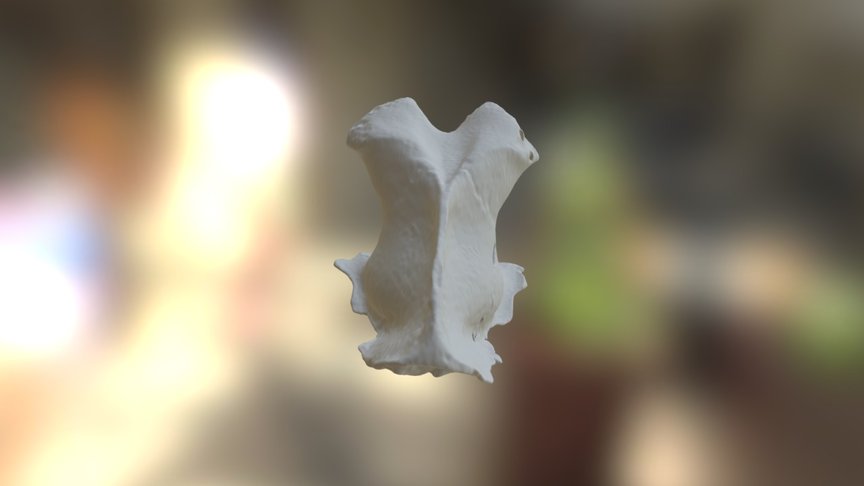
3D model
- Source
- Sketchfab
- Licence
- CC Attribution
- Commercial use
- cannot be read from the licence given — check the record
The description on this site
- Source
- Wikipedia, “Homotherium”
- Licence
- CC BY-SA 4.0
This is what the site found, which is not the same as what exists.
Keep going
What may have been alongside itHomotheriina through timeFormations of the PleistoceneThe world it lived on
Occurrence data from the Paleobiology Database, CC BY 4.0. Fabrini 1890