Mesoplodon
Searched as Micropterus. The Paleobiology Database treats Mesoplodon as the accepted name.
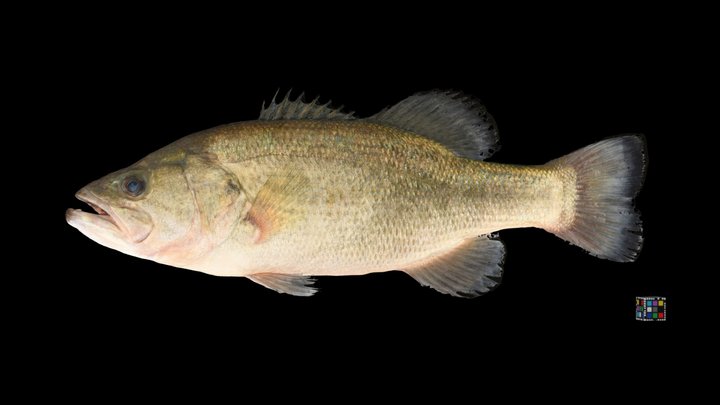
Micropterus is a genus of North American freshwater fish collectively known as the black bass, which belong to the sunfish family Centrarchidae of order Centrarchiformes. They are sometimes erroneously called "black trout", but the name trout more correctly refers to certain potamodromous members of the family Salmonidae.

USFWS Mountain Prairie · Public Domain · via Wikipedia/Commons. May be a photograph of a specimen, or an artist’s reconstruction — an interpretation of a skeleton, since colour and soft tissue are almost never preserved.
On record
Recorded, not inferred- Sits inside
- HyperoodontinaePBDB
- Diet
- piscivore, carnivorePBDB, for Ziphiidae
- Life habit
- aquatic, depth=surfacePBDB, for Cetacea
- Motility
- actively mobilePBDB, for Cetacea
- Environment
- marine,freshwaterPBDB, for Odontoceti
Time the record covers
At least 20 million years on record.
The record covers at least 20.45 Mya to 11.7 ka. No occurrence read is dated outside 23.04 Mya to 0 Mya.
111 occurrences of Mesoplodon on record. The Paleobiology Database records this as a living group. Bar height is expected occurrences, not a count: each fossil is spread across the span it is dated to, so a tall narrow bar means tight dating and a low wide one means loose.
When
111 occurrences- Miocene15%
- Pliocene25%
- Pleistocene24%
- Holocene36%
These are dates about fossils, not the animal: the record can only begin after it arose and end before it died out, so either end may reach further. Shares are expected occurrences: a fossil dated to a span is counted partly in each period it straddles. More on what this infers.
Found in
16 formations
- Red Crag Formation4
- Kattendijk Formation2
- Valentine Formation · Ogallala Group1
- Fleming Formation1
- Ogallala Formation1
- Kingsdown Formation1
Loading coastlines…
The named rock units Mesoplodon has been recovered from, largest first. Drawn where the rock is now, not where it formed. 91 occurrences have no formation on record, which is common for older literature.
Found in the same rock
210 taxa- Delphinidae6 sites
- Delphinus6 sites
- Cetacea5 sites
- Balaenoptera4 sites
- Chondrichthyes4 sites
- Globicephala4 sites
- Hemisyntrachelus cortesii4 sites
- Mysticeti4 sites
- Physeter4 sites
- Ziphiidae4 sites
- Balaenidae3 sites
- Etruridelphis giulii3 sites
- Eubalaena australis3 sites
- Kogia3 sites
- Otodus megalodon3 sites
- Balaena2 sites
- Balaenoptera acutorostrata2 sites
- Balaenoptera physalus2 sites
- Balaenotus insignis2 sites
- Balaenula2 sites
- Balaenula balaenopsis2 sites
- Berardius bairdii2 sites
- Carcharodon2 sites
- Carcharodon carcharias2 sites
The Paleobiology Database records 91 sites for Mesoplodon, and this reads all of them. The number is how many of those sites it was catalogued from too. The 24 sharing the most are listed.
This is not a list of everything alive at the time. It is only what has come out of the same ground as this animal and been written down.
Entered from
52 references- A 5.3-million-year-old deep-sea whale necropolis in the Diamantina Zone15
- Preliminary estimates of the abundance of cetaceans along the U.S. west coast: 1991-200112
- Catalog of Living Whales11
- Report on the bones of Cetacea5
- I cetacei fossili del Museo Geologico Giovanni Capellini dell’Università di Bologna4
- New records of beaked whales, genus Mesoplodon, from New Zealand (Cetacea: Ziphiidae)4
- Resti fossili di Dioplodon e Mesoplodon4
- Neogene and Quaternary fossil remains of beaked whales (Cetacea, Odontoceti, Ziphiidae) from deep-sea deposits off Crozet and Kerguelen islands, Southern Ocean3
- A list of fossil cetaceans in Japan3
- Lawley, 18763
- Monograph of the British fossil Cetacea from the Red Crag3
- A review of the Tertiary fossil Cetacea (Mammalia) localities in Australia2
Each of the 111 occurrences read was entered from one of these publications, ordered by how many each accounts for. This is not a search for papers mentioning the name. 40 further references are not listed. Entries link to doi.org where the Paleobiology Database holds an identifier, and to its own record where it does not. Relayed as the Paleobiology Database holds them, not checked against what they resolve to.
Media and terms
Media content3

Picture of Mesoplodon
- Source
- Wikipedia/Commons
- Credit
- USFWS Mountain Prairie
- Licence
- Public Domain
- Commercial use
- the licence allows it
Photogrammetry
- Source
- MorphoSource
- Licence
- not stated by the source
- Commercial use
- cannot be read from the licence given — check the record
- Specimen
- Physunio micropterus · UF:Invertebrate Zoology:507388-Mollusca
3D model
- Source
- Sketchfab
- Licence
- CC0 Public Domain
- Commercial use
- the licence allows it
The description on this site
- Source
- Wikipedia, “Micropterus”
- Licence
- CC BY-SA 4.0
This is what the site found, which is not the same as what exists.
Keep going
What may have been alongside itHyperoodontinae through timeThe world it lived on
Occurrence data from the Paleobiology Database, CC BY 4.0. Wagner 1846