Monoplacophora
Monoplacophora, meaning "bearing one plate", is a paraphyletic class of molluscs with a cap-like shell, inhabiting deep sea environments. Extant representatives were not recognized as such until 1952; previously they were known only from the fossil record, and were thought to have become extinct 375 million years ago.

FunkMonk · CC BY-SA 3.0 · via Wikipedia/Commons. May be a photograph of a specimen, or an artist’s reconstruction — an interpretation of a skeleton, since colour and soft tissue are almost never preserved.
On record
Recorded, not inferred- Sits inside
- SerialiaPBDB
- Diet
- grazerPBDB
- Life habit
- epifaunalPBDB
- Motility
- actively mobilePBDB
- Vision
- blindPBDB
Time the record covers
At least 101 million years on record.
The record covers at least 521 Mya to 419.62 Mya. No occurrence read is dated outside 530.7 Mya to 393.47 Mya.
9 occurrences of Monoplacophora on record, most of them in the Cambrian. The Paleobiology Database records this as a living group, and the chart stops with its fossils rather than at the present. Bar height is expected occurrences, not a count: each fossil is spread across the span it is dated to, so a tall narrow bar means tight dating and a low wide one means loose.
When
9 occurrences- Cambrian56%
- Ordovician33%
- Devonian11%
These are dates about fossils, not the animal: the record can only begin after it arose and end before it died out, so either end may reach further. Shares are expected occurrences: a fossil dated to a span is counted partly in each period it straddles. More on what this infers.
Found in
6 formations
- Scales Formation · Maquoketa Group1
- Dengying Formation1
- Scenic Drive Formation · El Paso Group1
- Waynesville Formation1
- Chatsworth Formation1
- Balang Formation1
Loading coastlines…
The named rock units Monoplacophora has been recovered from, largest first. Drawn where the rock is now, not where it formed. 3 occurrences have no formation on record, which is common for older literature.
Monoplacophora and its relatives
CambrianWhere Monoplacophora and its relatives were recorded in the Cambrian.
Found in the same rock
194 taxa- Brachiopoda3 sites
- Bivalvia2 sites
- Crinoidea2 sites
- Gastropoda2 sites
- Ostracoda2 sites
- Trepostomata2 sites
- Actinostroma1 site
- Alalcomenaeus1 site
- Allatheca nanjiangensis1 site
- Allonnia1 site
- Alveolites1 site
- Ambonychia1 site
- Anabarites1 site
- Ancalagon1 site
- Anhuiconus1 site
- Archotuba1 site
- Arthricocephalus1 site
- Arthricocephalus chauveaui1 site
- Arthropoda1 site
- Artiopoda1 site
- Asaphida1 site
- Askepasma1 site
- Balangia balangensis1 site
- Banffozoa1 site
The Paleobiology Database records 8 sites for Monoplacophora, and this reads all of them. The number is how many of those sites it was catalogued from too. The 24 sharing the most are listed.
This is not a list of everything alive at the time. It is only what has come out of the same ground as this animal and been written down.
Entered from
8 references- Early Cambrian small shelly fossils from Chaohu area, Anhui2
- A Cambrian soft-bodied biota after the first Phanerozoic mass extinction1
- Wenlockian to Emsian communities of the Carnic Alps (Austria and Italy)1
- Paleoecology of a well-preserved nautiloid assemblage from a Late Ordovician shale unit, southwestern Ohio1
- Late Precambrian Pennatulids (sea pens) from the Eastern Yangtze Gorge, China: Paracharnia gen. nov1
- Late Cambrian trilobites from the Chatsworth Limestone, western Queensland1
- Merostomes from a Cotter horizon of the El Paso Group1
- Repetitive benthonic community in the Maquoketa Fm. (Ordovician) of Minnesota1
Each of the 9 occurrences read was entered from one of these publications, ordered by how many each accounts for. This is not a search for papers mentioning the name. Entries link to doi.org where the Paleobiology Database holds an identifier, and to its own record where it does not. Relayed as the Paleobiology Database holds them, not checked against what they resolve to.
Media and terms
Media content2

Picture of Monoplacophora
- Source
- Wikipedia/Commons
- Credit
- FunkMonk
- Licence
- CC BY-SA 3.0
- Commercial use
- the licence allows it
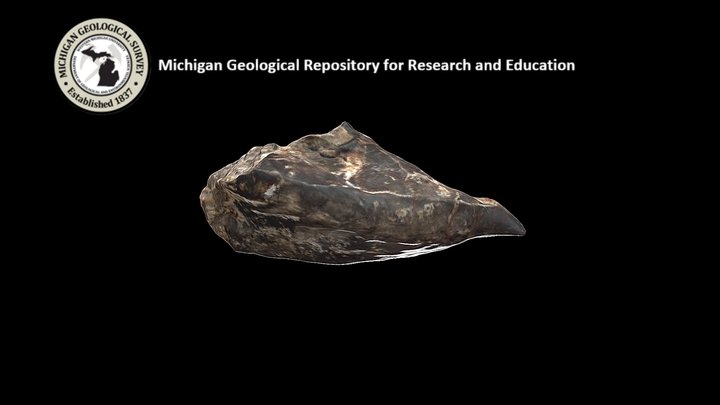
MorphoSource was not reached for this taxon, so this list is what the others held rather than everything there is.
The description on this site
- Licence
- CC BY-SA 4.0
This is what the site found, which is not the same as what exists.
Keep going
What may have been alongside itSerialia through timeFormations of the CambrianThe world it lived on
Occurrence data from the Paleobiology Database, CC BY 4.0. Knight 1952