Morganucodon
Morganucodon is an early mammaliaform genus that lived from the Late Triassic to the Middle Jurassic. It first appeared about 205 million years ago. Unlike many other early mammaliaforms, Morganucodon is well represented by abundant and well-preserved material. Most of this comes from Glamorgan in Wales, but fossils have also been found in Yunnan Province in China and various parts of Europe and North America. Some closely related animals (Megazostrodon) are known from exquisite fossils from South Africa.

Stephan Lautenschlager, Pamela Gill, Zhe-Xi Luo, Michael J. Fagan, Emily J. Rayfield · CC BY 4.0 · via Wikipedia/Commons. May be a photograph of a specimen, or an artist’s reconstruction — an interpretation of a skeleton, since colour and soft tissue are almost never preserved.
On record
Recorded, not inferred- Sits inside
- MorganucodontidaePBDB
- Diet
- insectivorePBDB
- Life habit
- scansorialPBDB, for Mammaliaformes
- Motility
- actively mobilePBDB, for Osteichthyes
- Environment
- terrestrialPBDB, for Amniota
Time the record covers
At least 33 million years on record.
The record covers at least 201.4 Mya to 168.2 Mya. No occurrence read is dated outside 205.7 Mya to 165.3 Mya.
14 occurrences of Morganucodon on record, most of them in the Early Jurassic. Bar height is expected occurrences, not a count: each fossil is spread across the span it is dated to, so a tall narrow bar means tight dating and a low wide one means loose.
When
14 occurrencesThese are dates about fossils, not the animal: the record can only begin after it arose and end before it died out, so either end may reach further. Shares are expected occurrences: a fossil dated to a span is counted partly in each period it straddles. More on what this infers.
Found in
4 formations
- Lufeng Formation3
- Klettgau Formation2
- Kayenta Formation · Glen Canyon Group1
- Forest Marble Formation · Great Oolite Group1
Loading coastlines…
The named rock units Morganucodon has been recovered from, largest first. Drawn where the rock is now, not where it formed. 7 occurrences have no formation on record, which is common for older literature.
Morganucodon and its relatives
Early JurassicWhere Morganucodon and its relatives were recorded in the Early Jurassic.
Found in the same rock
120 taxa- Archosauria4 sites
- Gephyrosaurus4 sites
- Sphenodontia4 sites
- Hirmeriella muensteri3 sites
- Rhamphorhynchidae3 sites
- Anura2 sites
- Crocodylomorpha2 sites
- Eudimorphodon2 sites
- Haramiyidae2 sites
- Kuehneotherium2 sites
- Kuehneotherium praecursoris2 sites
- Oligokyphus2 sites
- Theropoda2 sites
- Thomasia antiqua2 sites
- Thomasia moorei2 sites
- Thyreophora2 sites
- Tritylodontidae2 sites
- Albanerpetontidae1 site
- Allotheria1 site
- Amphibia1 site
- Amphitheriidae1 site
- Amphitherium1 site
- Ankylosauria1 site
- Archosauriformes1 site
The Paleobiology Database records 12 sites for Morganucodon, and this reads all of them. The number is how many of those sites it was catalogued from too. The 24 sharing the most are listed.
This is not a list of everything alive at the time. It is only what has come out of the same ground as this animal and been written down.
Entered from
9 references- Assemblages of small tetrapods from the Early Jurassic of Britain4
- Reptilian, therapsid and mammalian teeth from the Upper Triassic of Varangéville (northeastern France)2
- Rhaeto-Liassic mammals from Switzerland and West Germany2
- Diversity of triconodonts in the Middle Jurassic of Great Britain1
- A new specimen of Morganucodon oehleri (Mammalia, Triconodonta) from the Liassic Lower Lufeng Formation of Yunnan, China1
- Mesozoic mammals from Arizona: new evidence on mammalian evolution1
- New materials of Eozostrodon1
- Gliding lizards from the upper Keuper of Great Britain1
- On a triconodont tooth of a new pattern from a fissure-filling in South Glamorgan.1
Each of the 14 occurrences read was entered from one of these publications, ordered by how many each accounts for. This is not a search for papers mentioning the name. Entries link to doi.org where the Paleobiology Database holds an identifier, and to its own record where it does not. Relayed as the Paleobiology Database holds them, not checked against what they resolve to.
Media and terms
Media content3

Picture of Morganucodon
- Source
- Wikipedia/Commons
- Credit
- Stephan Lautenschlager, Pamela Gill, Zhe-Xi Luo, Michael J. Fagan, Emily J. Rayfield
- Licence
- CC BY 4.0
- Commercial use
- the licence allows it

CT scan
- Source
- MorphoSource
- Licence
- In Copyright
- Commercial use
- cannot be read from the licence given — check the record
- Specimen
- Morganucodon watsoni · NHMUK:PAL:PV M 92843
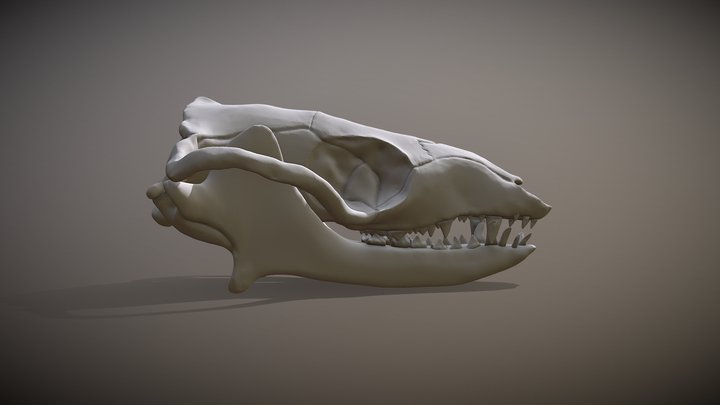
3D model
- Source
- Sketchfab
- Credit
- Adam Worthington
- Licence
- CC Attribution
- Commercial use
- cannot be read from the licence given — check the record
The description on this site
- Licence
- CC BY-SA 4.0
This is what the site found, which is not the same as what exists.
Keep going
What may have been alongside itMorganucodontidae through timeFormations of the Early JurassicThe world it lived on
Occurrence data from the Paleobiology Database, CC BY 4.0. Kuehne 1949