Negaprion
Negaprion is a genus of requiem sharks in the family Carcharhinidae. It contains the two extant species of lemon sharks: the lemon shark of the Americas, and the sicklefin lemon shark of the Indo-Pacific. Both species are large, slow-moving, bulky sharks inhabiting shallow coastal waters, and can be identified by their short, blunt snouts, two dorsal fins of nearly equal size, and uniform yellowish brown or gray coloration.

Albert Kok · CC BY-SA 3.0 · via Wikipedia/Commons. May be a photograph of a specimen, or an artist’s reconstruction — an interpretation of a skeleton, since colour and soft tissue are almost never preserved.
On record
Recorded, not inferred- Also called
- lemon sharkPBDB
- Sits inside
- CarcharhinidaePBDB
- Diet
- carnivorePBDB, for Carcharhiniformes
- Life habit
- nektonicPBDB, for Carcharhiniformes
- Motility
- actively mobilePBDB, for Carcharhiniformes
Time the record covers
At least 41 million years on record.
The record covers at least 41.03 Mya to 11.7 ka. No occurrence read is dated outside 56 Mya to 0 Mya.
187 occurrences of Negaprion on record, most of them in the Miocene. The Paleobiology Database records this as a living group. Bar height is expected occurrences, not a count: each fossil is spread across the span it is dated to, so a tall narrow bar means tight dating and a low wide one means loose.
When
187 occurrencesThese are dates about fossils, not the animal: the record can only begin after it arose and end before it died out, so either end may reach further. Shares are expected occurrences: a fossil dated to a span is counted partly in each period it straddles. More on what this infers.
Found in
76 formations
- Qasr el-Sagha Formation12
- Birket Qarun Formation10
- Gehannam Formation9
- Gatun Formation8
- Pirabas Formation6
- Urumaco Formation6
Loading coastlines…
The named rock units Negaprion has been recovered from, largest first. Drawn where the rock is now, not where it formed. 52 further formations hold fewer occurrences each and are not listed. 25 occurrences have no formation on record, which is common for older literature.
Negaprion and its relatives
MioceneWhere Negaprion and its relatives were recorded in the Miocene.
Found in the same rock
2,187 taxa- Hemipristis serra89 sites
- Carcharhinus79 sites
- Otodus megalodon66 sites
- Myliobatis55 sites
- Carcharodon hastalis42 sites
- Galeocerdo aduncus41 sites
- Rhinoptera41 sites
- Carcharias taurus36 sites
- Carcharhinus leucas32 sites
- Dasyatis32 sites
- Isurus oxyrinchus31 sites
- Pristis31 sites
- Galeocerdo cuvier30 sites
- Aetobatus28 sites
- Rhizoprionodon26 sites
- Physogaleus contortus23 sites
- Squatina22 sites
- Sphyraena20 sites
- Isurus19 sites
- Sphyrna zygaena19 sites
- Carcharias18 sites
- Carcharodon carcharias18 sites
- Aetomylaeus17 sites
- Carcharhinus priscus17 sites
The Paleobiology Database records 143 sites for Negaprion, and this reads all of them. The number is how many of those sites it was catalogued from too. The 24 sharing the most are listed.
This is not a list of everything alive at the time. It is only what has come out of the same ground as this animal and been written down.
Entered from
82 references- Shark and ray faunas in the Middle and Late Eocene of the Fayum Area, Egypt31
- Carcharocles megalodon unpublished collections from Natural History Museums around the world9
- Sawfishes and other elasmobranch assemblages from the Mio-Pliocene of the south Caribbean (Urumaco sequence, northwestern Venezuela)8
- Sharks and Rays (Chondrichthyes, Elasmobranchii) from the late Miocene Gatun Formation of Panama8
- Taxonomy and biostratigraphy of the elasmobranchs and bony fishes (Chondrichthyes and Osteichthyes) of the lower-to-middle Eocene (Ypresian to Bartonian) Claiborne Group in Alabama, USA, including an analysis of otoliths7
- Late Mesozoic and Cenozoic fish faunas of Japan7
- Neogene sharks and rays from the Brazilian 'Blue Amazon'6
- Late Eocene fishes from the Tupelo Bay Formation of South Carolina, USA5
- Additions to, and review of, the Miocene shark and ray fauna of Malta5
- Geology and biostratigraphy of the Potomac River Cliffs at Stratford Hall, Westmoreland County, Virginia4
- A new Early Miocene (Aquitanian) Elasmobranchii assemblage from the la Guajira Peninsula, Colombia4
- Habitat reconstruction of Oligocene elasmobranchs from Yamaga Formation, Ashiya Group, western Japan4
Each of the 187 occurrences read was entered from one of these publications, ordered by how many each accounts for. This is not a search for papers mentioning the name. 70 further references are not listed. Entries link to doi.org where the Paleobiology Database holds an identifier, and to its own record where it does not. Relayed as the Paleobiology Database holds them, not checked against what they resolve to.
Media and terms
Media content2
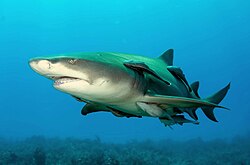
Picture of Negaprion
- Source
- Wikipedia/Commons
- Credit
- Albert Kok
- Licence
- CC BY-SA 3.0
- Commercial use
- the licence allows it
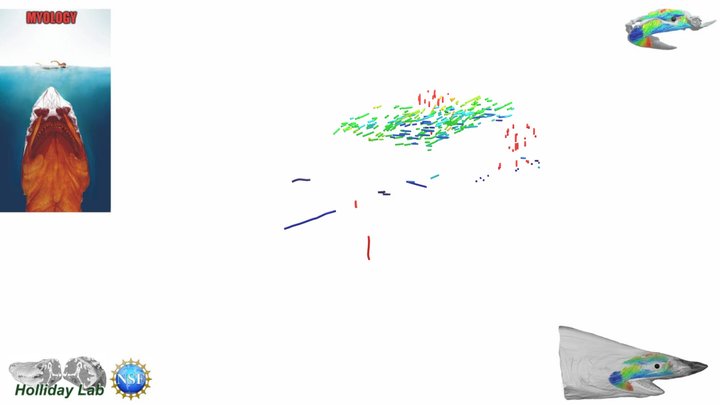
3D model
- Source
- Sketchfab
- Credit
- Holliday Lab
- Licence
- CC Attribution
- Commercial use
- cannot be read from the licence given — check the record
The description on this site
- Source
- Wikipedia, “Negaprion”
- Licence
- CC BY-SA 4.0
This is what the site found, which is not the same as what exists.
Keep going
What may have been alongside itCarcharhinidae through timeFormations of the MioceneThe world it lived on
Occurrence data from the Paleobiology Database, CC BY 4.0. Whitley 1940