Phoenix
Phoenix is a genus of 14 species of palms, native to an area starting from the Canary Islands in the west, across northern and central Africa, to the extreme southeast of Europe (Crete), and continuing throughout southern Asia, from Anatolia east to southern China and Malaysia. The diverse habitats they occupy include swamps, deserts, and mangrove sea coasts. Most Phoenix species originate in semi-arid regions, but usually occur near high groundwater levels, rivers, or springs. The genus is unusual among members of subfamily Coryphoideae in having pinnate, rather than palmate leaves; tribe Caryoteae also have pinnate or bipinnate leaves. The palms were more numerous and widespread in the past than they are at present. Some Phoenix palms have become naturalised in other parts of the world; in particular, the date palm's long history of cultivation means that escaped plants in the past have long-since become ingrained into the native ecosystems of countries far from its original range in the Middle East.

Mmcknight4 · CC BY-SA 3.0 · via Wikipedia/Commons. May be a photograph of a specimen, or an artist’s reconstruction — an interpretation of a skeleton, since colour and soft tissue are almost never preserved.
On record
Recorded, not inferred- Also called
- date palmPBDB
- Sits inside
- ArecaceaePBDB
- Diet
- "photoautotroph"PBDB, for Angiospermae
Time the record covers
At least 55 million years on record.
The record covers at least 56 Mya to 11.7 ka. No occurrence read is dated outside 66 Mya to 0 Mya.
10 occurrences of Phoenix on record, most of them in the Pleistocene. The Paleobiology Database records this as a living group. Bar height is expected occurrences, not a count: each fossil is spread across the span it is dated to, so a tall narrow bar means tight dating and a low wide one means loose.
When
10 occurrencesThese are dates about fossils, not the animal: the record can only begin after it arose and end before it died out, so either end may reach further. Shares are expected occurrences: a fossil dated to a span is counted partly in each period it straddles. More on what this infers.
Found in
5 formations
- Nubia Formation1
- Varswater Formation1
- Lusso Beds Formation · Semliki Group1
- Deccan Intertrappean Formation1
- Neyveli Formation · Cuddalore Group1
Loading coastlines…
The named rock units Phoenix has been recovered from, largest first. Drawn where the rock is now, not where it formed. 5 occurrences have no formation on record, which is common for older literature.
Phoenix and its relatives
PleistoceneWhere Phoenix and its relatives were recorded in the Pleistocene.
Found in the same rock
635 taxa- Poaceae7 sites
- Arecaceae3 sites
- Cyperaceae3 sites
- Fabaceae3 sites
- Sonneratia3 sites
- Acacia2 sites
- Acanthus2 sites
- Asteraceae2 sites
- Bryophyta2 sites
- Chenopodiaceae2 sites
- Dicotyledoneae2 sites
- Diospyros2 sites
- Grewia2 sites
- Heritiera2 sites
- Holoptelea2 sites
- Indet. indet.2 sites
- Lemna2 sites
- Malvaceae2 sites
- Mammalia2 sites
- Nypa2 sites
- Olea2 sites
- Podocarpus2 sites
- Sabal2 sites
- Sterculia2 sites
The Paleobiology Database records 10 sites for Phoenix, and this reads all of them. The number is how many of those sites it was catalogued from too. The 24 sharing the most are listed.
This is not a list of everything alive at the time. It is only what has come out of the same ground as this animal and been written down.
Entered from
7 references- A Catalogue of Fossil Plants from India Part 6: Cenozoic (Quaternary) Palynology and Palaeobotany3
- A Catalogue of Fossil Plants from India Part 4: Cenozoic (Tertiary) Megafossils2
- First Clarkforkian Equivalent Land Mammal Age in the Latest Paleocene Basal Sparnacian Facies of Europe: Fauna, Flora, Paleoenvironment and (Bio)stratigraphy1
- Pollen evidence for vegetational and climatic change in Southern Africa during the Neogene and Quaternary1
- Climatic environment and air quality in the farrowing units of a pig house1
- Plio-Pleistocene Hippopotamidae from the Upper Semliki1
- Wendorf and Schild, 19761
Each of the 10 occurrences read was entered from one of these publications, ordered by how many each accounts for. This is not a search for papers mentioning the name. Entries link to doi.org where the Paleobiology Database holds an identifier, and to its own record where it does not. Relayed as the Paleobiology Database holds them, not checked against what they resolve to.
Media and terms
Media content3

Picture of Phoenix
- Source
- Wikipedia/Commons
- Credit
- Mmcknight4
- Licence
- CC BY-SA 3.0
- Commercial use
- the licence allows it
CT scan
- Source
- MorphoSource
- Licence
- not stated by the source
- Commercial use
- cannot be read from the licence given — check the record
- Specimen
- Phoenix canariensis · ftg:143123
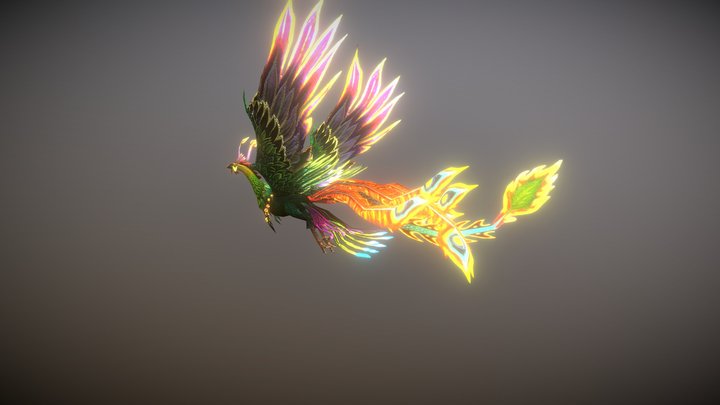
3D model
- Source
- Sketchfab
- Credit
- NORBERTO-3D
- Licence
- CC Attribution
- Commercial use
- cannot be read from the licence given — check the record
Smithsonian Open Access was not reached for this taxon, so this list is what the others held rather than everything there is.
The description on this site
- Licence
- CC BY-SA 4.0
This is what the site found, which is not the same as what exists.
Keep going
What may have been alongside itArecaceae through timeFormations of the PleistoceneThe world it lived on
Occurrence data from the Paleobiology Database, CC BY 4.0. Linnaeus 1753