Pinophyta
No picture of Pinophyta was found. iDigBio and Smithsonian Open Access were searched and had none. Wikipedia and Wikidata have a picture filed under this name, but nothing tied it to Pinophyta itself, so it was not used. GBIF was asked, and what came back is not recorded: nothing, or a picture this site could not tie to Pinophyta, or no answer at all. This entry cannot say which.
On record
Recorded, not inferred- Also called
- coniferPBDB
- Sits inside
- SpermatophytaPBDB
- Diet
- "photoautotroph"PBDB, for Streptophyta
Time the record covers
At least 358 million years on record.
The record covers at least 358.86 Mya to 11.7 ka. No occurrence read is dated outside 538.8 Mya to 0 Mya.
3,671 occurrences of Pinophyta on record, most of them in the Permian. The Paleobiology Database records this as a living group. Bar height is expected occurrences, not a count: each fossil is spread across the span it is dated to, so a tall narrow bar means tight dating and a low wide one means loose.
When
3,671 occurrences- Cambrianunder 1%
- Ordovicianunder 1%
- Silurianunder 1%
- Devonianunder 1%
- Carboniferous4%
- Permian23%
- Early Triassic1%
- Middle Triassic2%
- Late Triassic4%
- Early Jurassic2%
- Middle Jurassic5%
- Late Jurassic4%
- Early Cretaceous4%
- Late Cretaceous6%
- Paleocene2%
- Eocene7%
- Oligocene4%
- Miocene14%
- Pliocene4%
- Pleistocene13%
- Holocene1%
These are dates about fossils, not the animal: the record can only begin after it arose and end before it died out, so either end may reach further. Shares are expected occurrences: a fossil dated to a span is counted partly in each period it straddles. More on what this infers.
Found in
600 formations
- Chloropagus Formation60
- Molteno Formation · Stormberg Group59
- Hell Creek Formation37
- Fort Union Formation33
- Pautut Formation28
- Yaw Formation28
Loading coastlines…
The named rock units Pinophyta has been recovered from, largest first. Drawn where the rock is now, not where it formed. 576 further formations hold fewer occurrences each and are not listed. 1,779 occurrences have no formation on record, which is common for older literature.
Pinophyta and its relatives
PermianWhere Pinophyta and its relatives were recorded in the Permian.
Found in the same rock
1,629 taxa- Cordaites54 sites
- Gymnospermopsida43 sites
- Heidiphyllum43 sites
- Sphenopteris38 sites
- Dicroidium37 sites
- Equisetum37 sites
- Neuropteris37 sites
- Pteridophyta35 sites
- Sphenobaiera35 sites
- Pseudoctenis34 sites
- Annularia33 sites
- Sphenophyllum33 sites
- Pecopteris32 sites
- Calamites30 sites
- Taeniopteris29 sites
- Pecopteris (Alethopteris)27 sites
- Pteridopsida27 sites
- Brachyphyllum26 sites
- Pityosporites26 sites
- Pachypteris25 sites
- Elatides23 sites
- Lepidodendron23 sites
- Nilsonia23 sites
- Ptilophyllum23 sites
The Paleobiology Database records at least 1,206 sites for Pinophyta, and this reads 240 of them. The number is how many of those sites it was catalogued from too. The 24 sharing the most are listed.
This is not a list of everything alive at the time. It is only what has come out of the same ground as this animal and been written down.
Entered from
621 references- Die mittelmiozaenen und obermiozaenen Floren aus der Meuroer und Raunoer Folge in der Lausitz. III. Fundstellen und Palaeobiologie132
- A Catalogue of Fossil Plants from India Part 6: Cenozoic (Quaternary) Palynology and Palaeobotany125
- Site U1344108
- The Carboniferous and Permian Stratigraphy of Mongolia on the Basis of Palaeobotanical Data99
- A Catalogue of Indian Fossil Plants79
- Site U134374
- Triassic Floras of Eurasia67
- Distribution of pollen and spores in a subsurface marine Wilcox (Paleocene-Eocene) section in southwest Louisiana63
- Table 35 Molteno vegetative genera, phytosociological table62
- The Miocene Purple Mountain Flora of Western Nevada56
- Biostratigraphy of selected K/T boundary sections in southwestern North Dakota, USA: toward a refinement of palynological identification criteria48
- Die oberoligozanen Floren am Nordrand der Sachsischen Lausitz47
Each of the 3,671 occurrences read was entered from one of these publications, ordered by how many each accounts for. This is not a search for papers mentioning the name. 609 further references are not listed. Entries link to doi.org where the Paleobiology Database holds an identifier, and to its own record where it does not. Relayed as the Paleobiology Database holds them, not checked against what they resolve to.
Media and terms
Media content1
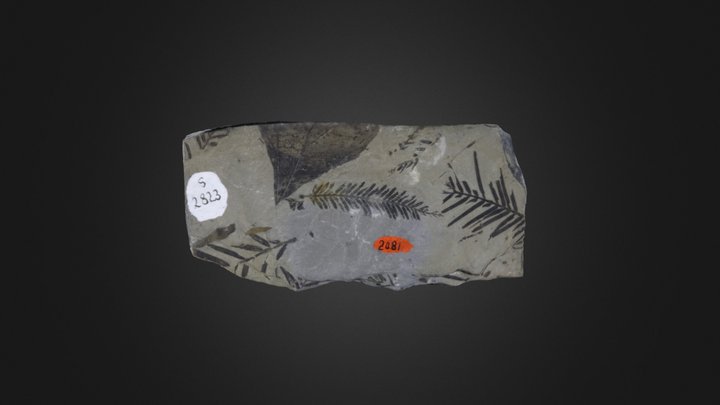
3D model
- Source
- Sketchfab
- Licence
- CC0 Public Domain
- Commercial use
- the licence allows it
No picture of Pinophyta was found. iDigBio and Smithsonian Open Access were searched and had none.
Wikipedia and Wikidata have a picture filed under this name, but nothing tied it to Pinophyta itself, so it was not used.
GBIF was asked, and what came back is not recorded: nothing, or a picture this site could not tie to Pinophyta, or no answer at all. This entry cannot say which.
This is what the site found, which is not the same as what exists.
Keep going
What may have been alongside itSpermatophyta through timeFormations of the PermianThe world it lived on
Occurrence data from the Paleobiology Database, CC BY 4.0. (Reveal 1996)