Posidonia oceanica
Posidonia oceanica, commonly known as Neptune grass or Mediterranean tapeweed, is a seagrass species that is endemic to the Mediterranean Sea. The mapping of submerged seagrass meadows in the Mediterranean has recently benefited from advanced artificial intelligence techniques. It forms large underwater meadows that are an important part of the ecosystem. The fruit is free floating and known in Italy as "the olive of the sea". Balls of fibrous material from its foliage, known as egagropili or Neptune balls, wash up to nearby shorelines.

Frédéric Ducarme · CC BY-SA 4.0 · via Wikipedia/Commons. May be a photograph of a specimen, or an artist’s reconstruction — an interpretation of a skeleton, since colour and soft tissue are almost never preserved.
On record
Recorded, not inferred- Sits inside
- PosidoniaPBDB
- Diet
- "photoautotroph"PBDB, for Angiospermae
Time the record covers
At most 1.9 million years on record.
Every occurrence read is dated to somewhere between 2.58 Mya and 774 ka, and nothing in the dating separates them, so that window is what the record shows rather than a span.
2 occurrences of Posidonia oceanica on record, most of them in the Pleistocene. The Paleobiology Database records this as a living group, and the chart stops with its fossils rather than at the present. Bar height is expected occurrences, not a count: each fossil is spread across the span it is dated to, so a tall narrow bar means tight dating and a low wide one means loose.
When
2 occurrences- Pleistocene100%
These are dates about fossils, not the animal: the record can only begin after it arose and end before it died out, so either end may reach further. Shares are expected occurrences: a fossil dated to a span is counted partly in each period it straddles. More on what this infers.
Found in
1 formation
Loading coastlines…
The named rock units Posidonia oceanica has been recovered from, largest first. Drawn where the rock is now, not where it formed.
Posidonia oceanica and its relatives
PleistoceneWhere Posidonia oceanica and its relatives were recorded in the Pleistocene.
Found in the same rock
153 taxa- Anomia ephippium2 sites
- Barbatia (Barbatia) barbata2 sites
- Calliostoma conulus2 sites
- Calliostoma zizyphinum2 sites
- Calyptraea chinensis2 sites
- Cavolinia2 sites
- Cerithium (Thericium) vulgatum2 sites
- Chrysalida2 sites
- Clio2 sites
- Crepidula2 sites
- Ctena decussata2 sites
- Diplodonta (Diplodonta) rotundata2 sites
- Ervillia2 sites
- Erycina2 sites
- Flexopecten2 sites
- Gibberula2 sites
- Gibbula2 sites
- Glycymeris pilosa2 sites
- Gouldia (Gouldia) minima2 sites
- Homalopoma2 sites
- Janthina2 sites
- Jujubinus striatus2 sites
- Lucinella divaricata2 sites
- Nassarius2 sites
The Paleobiology Database records 2 sites for Posidonia oceanica, and this reads all of them. The number is how many of those sites it was catalogued from too. The 24 sharing the most are listed.
This is not a list of everything alive at the time. It is only what has come out of the same ground as this animal and been written down.
Entered from
2 references- Seagrass-Associated Molluscan and Fish Communities from the Early Pleistocene of the Island of Rhodes (Greece)1
- Spectacular preservation of seagrasses and seagrass-associated communities from the Pliocene of Rhodes, Greece1
Each of the 2 occurrences read was entered from one of these publications, ordered by how many each accounts for. This is not a search for papers mentioning the name. Each entry links to doi.org. Relayed as the Paleobiology Database holds them, not checked against what they resolve to.
Media and terms
Media content2
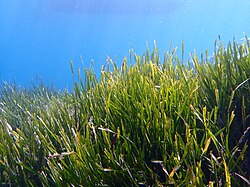
Picture of Posidonia oceanica
- Source
- Wikipedia/Commons
- Credit
- Frédéric Ducarme
- Licence
- CC BY-SA 4.0
- Commercial use
- the licence allows it
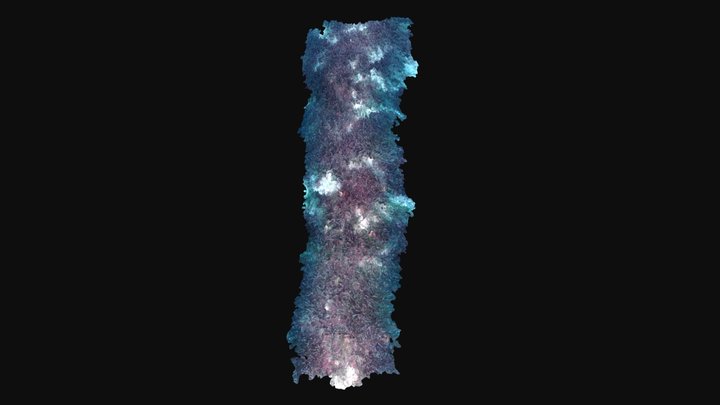
3D model
- Source
- Sketchfab
- Credit
- VirtualMAR
- Licence
- CC Attribution
- Commercial use
- cannot be read from the licence given — check the record
Smithsonian Open Access was not reached for this taxon, so this list is what the others held rather than everything there is.
The description on this site
- Licence
- CC BY-SA 4.0
This is what the site found, which is not the same as what exists.
Keep going
What may have been alongside itPosidonia through timeFormations of the PleistoceneThe world it lived on
Occurrence data from the Paleobiology Database, CC BY 4.0. Linnaeus 1758