Pseudochama (Pseudochama) gryphina
No picture of Pseudochama (Pseudochama) gryphina was found. Wikipedia, Wikidata and iDigBio were searched and had none. Smithsonian Open Access did not answer, so this is what the others held rather than everything there is. GBIF was asked, and what came back is not recorded: nothing, or a picture this site could not tie to Pseudochama (Pseudochama) gryphina, or no answer at all. This entry cannot say which.
On record
Recorded, not inferred- Sits inside
- Pseudochama (Pseudochama)PBDB
- Diet
- suspension feederPBDB, for Pseudochama
- Life habit
- epifaunalPBDB, for Pseudochama
- Motility
- stationary, attached, epibiontPBDB, for Pseudochama
- Vision
- blindPBDB, for Bivalvia
Time the record covers
At least 15 million years on record.
The record covers at least 15.98 Mya to 129 ka. No occurrence read is dated outside 20.45 Mya to 0 Mya.
16 occurrences of Pseudochama (Pseudochama) gryphina on record, most of them in the Miocene. The Paleobiology Database records this as a living group. Bar height is expected occurrences, not a count: each fossil is spread across the span it is dated to, so a tall narrow bar means tight dating and a low wide one means loose.
When
16 occurrences- Miocene63%
- Pliocene8%
- Pleistocene29%
These are dates about fossils, not the animal: the record can only begin after it arose and end before it died out, so either end may reach further. Shares are expected occurrences: a fossil dated to a span is counted partly in each period it straddles. More on what this infers.
Found in
4 formations
Loading coastlines…
The named rock units Pseudochama (Pseudochama) gryphina has been recovered from, largest first. Drawn where the rock is now, not where it formed. 12 occurrences have no formation on record, which is common for older literature.
Pseudochama (Pseudochama) gryphina and its relatives
MioceneWhere Pseudochama (Pseudochama) gryphina and its relatives were recorded in the Miocene.
Found in the same rock
629 taxa- Barbatia (Barbatia) barbata9 sites
- Chama gryphoides8 sites
- Arca noae7 sites
- Lithophaga lithophaga7 sites
- Spondylus gaederopus7 sites
- Aequipecten6 sites
- Chlamys6 sites
- Ctena decussata6 sites
- Limopsis6 sites
- Nucula (Nucula) nucleus6 sites
- Scapharca (Scapharca) diluvii6 sites
- Striarca6 sites
- Varicorbula gibba6 sites
- Glycymeris (Glycymeris)5 sites
- Talochlamys multistriata5 sites
- Acar4 sites
- Callista (Callista) chione4 sites
- Cardita (Cardita) calyculata4 sites
- Cardites4 sites
- Cerithium (Thericium) vulgatum4 sites
- Coralliophaga4 sites
- Cubitostrea digitalina4 sites
- Diplodonta (Diplodonta) rotundata4 sites
- Glans (Centrocardita)4 sites
The Paleobiology Database records 11 sites for Pseudochama (Pseudochama) gryphina, and this reads all of them. The number is how many of those sites it was catalogued from too. The 24 sharing the most are listed.
This is not a list of everything alive at the time. It is only what has come out of the same ground as this animal and been written down.
Entered from
13 references- Bivalve Molluscs from the Badenian of Northwestern Bulgaria3
- Les formations recifales coralliennes du Miocene superieur d'Algerie et du Maroc [Upper Miocene coral reef formations from Algeria and Morocco]2
- Paleoenvironmental and paleobiogeographical implications of a Middle Pleistocene mollusc assemblage from the marine terraces of Baía das Pipas, southwest Angola1
- Lower to Middle Miocene Mollusc assemblages from the Torino Hills (NW Italy): Synthesis of new data and chronostratigraphical arrangement1
- Computer-based mollusc stratigraphy - a case study from the Eggenburgian (Lower Miocene) type region (NE Austria)1
- Paleoecology of a Pliocene coral reef in Cyprus: recovery of a marine community from the Messinian Salinity Crisis1
- Census Assemblages in Hard-Bottom Coastal Communities: a case study from the Plio-Pleistocene Mediterranean1
- Middle Miocene bivalve faunas from the carbonate deposits of Poland (Central Paratethys)1
- Presenza di «Ospiti boreali» (Mollusca, Gastropoda) nel Pleistocene di Contrada Case Alte (Villa S. Giovanni)1
- Occurence and taphonomy of bivalves from the Nijar reef (Messinian, Late Miocene, SE Spain)1
- The marine Quaternary of the Canary Islands1
- Recherches sur le Neogene et le Quaternaire marins de la cote Atlantique du Maroc1
Each of the 16 occurrences read was entered from one of these publications, ordered by how many each accounts for. This is not a search for papers mentioning the name. 1 further reference is not listed. Entries link to doi.org where the Paleobiology Database holds an identifier, and to its own record where it does not. Relayed as the Paleobiology Database holds them, not checked against what they resolve to.
Media and terms
Media content1
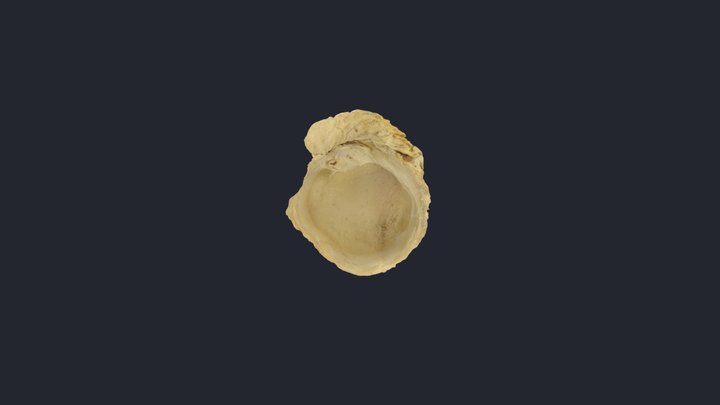
No picture of Pseudochama (Pseudochama) gryphina was found. Wikipedia, Wikidata and iDigBio were searched and had none.
Smithsonian Open Access did not answer, so this is what the others held rather than everything there is.
GBIF was asked, and what came back is not recorded: nothing, or a picture this site could not tie to Pseudochama (Pseudochama) gryphina, or no answer at all. This entry cannot say which.
Smithsonian Open Access and MorphoSource were not reached for this taxon, so this list is what the others held rather than everything there is.
This is what the site found, which is not the same as what exists.
Keep going
What may have been alongside itPseudochama (Pseudochama) through timeFormations of the MioceneThe world it lived on
Occurrence data from the Paleobiology Database, CC BY 4.0. (Lamarck 1819)