Teiidae
Teiidae is a family of lacertoidean lizards native to the Americas. Members of this family are generally known as whiptails or racerunners; however, tegus also belong to this family. Teiidae is sister to the Gymnopthalmidae, and both families comprise the Teiioidea. The Teiidae includes several parthenogenic species – a mode of clonal reproduction. Presently, the Teiidae consists of approximately 150 species in eighteen genera.

Kristof Zyskowski · CC BY 4.0 · via Wikipedia/Commons. May be a photograph of a specimen, or an artist’s reconstruction — an interpretation of a skeleton, since colour and soft tissue are almost never preserved.
On record
Recorded, not inferred- Sits inside
- TeiioideaPBDB
- Diet
- insectivore, carnivorePBDB
- Life habit
- ground dwellingPBDB
- Motility
- actively mobilePBDB, for Osteichthyes
- Environment
- terrestrialPBDB, for Amniota
Time the record covers
At least 121 million years on record.
The record covers at least 121.4 Mya to 11.7 ka. No occurrence read is dated outside 125.77 Mya to 0 Mya.
127 occurrences of Teiidae on record, most of them in the Miocene. The Paleobiology Database records this as a living group. Bar height is expected occurrences, not a count: each fossil is spread across the span it is dated to, so a tall narrow bar means tight dating and a low wide one means loose.
When
127 occurrences- Early Cretaceous13%
- Late Cretaceous22%
- Eocene7%
- Oligocene1%
- Miocene30%
- Pliocene5%
- Pleistocene15%
- Holocene6%
These are dates about fossils, not the animal: the record can only begin after it arose and end before it died out, so either end may reach further. Shares are expected occurrences: a fossil dated to a span is counted partly in each period it straddles. More on what this infers.
Found in
48 formations
- La Victoria Formation · Honda Group13
- Villavieja Formation · Honda Group8
- Cloverly Formation5
- Lance Formation4
- Cedar Mountain Formation · Dakota Group3
- Oldman Formation · Belly River Group3
Loading coastlines…
The named rock units Teiidae has been recovered from, largest first. Drawn where the rock is now, not where it formed. 24 further formations hold fewer occurrences each and are not listed. 33 occurrences have no formation on record, which is common for older literature.
Teiidae and its relatives
MioceneWhere Teiidae and its relatives were recorded in the Miocene.
Found in the same rock
2,016 taxa- Dracaena colombiana21 sites
- Cnemidophorus14 sites
- Theropoda14 sites
- Anura13 sites
- Aves10 sites
- Crocodylia10 sites
- Cnemidophorus sexlineatus9 sites
- Eumeces9 sites
- Lacertilia9 sites
- Osteichthyes9 sites
- Rana9 sites
- Bufo8 sites
- Crotalus8 sites
- Hadrosauridae8 sites
- Rana pipiens8 sites
- Squamata8 sites
- Testudines8 sites
- Thamnophis8 sites
- Chiroptera7 sites
- Glossotheriopsis pascuali7 sites
- Lampropeltis getulus7 sites
- Lepidotes7 sites
- Multituberculata7 sites
- Neonematherium flabellatum7 sites
The Paleobiology Database records 110 sites for Teiidae, and this reads all of them. The number is how many of those sites it was catalogued from too. The 24 sharing the most are listed.
This is not a list of everything alive at the time. It is only what has come out of the same ground as this animal and been written down.
Entered from
76 references- A reassessment of the fossil Tupinambinae21
- Vertebrate paleontology of the Cloverly Formation (Lower Cretaceous), I: faunal composition, biogeographic relationships, and sampling5
- Fossil lizards of North America5
- Taxonomy and evolution of Late Cretaceous lizards (Reptilia: Squamata) from western Canada4
- New teiid lizards from the Upper Cretaceous Oldman Formation (Judithian) of southeastern Alberta, Canada, with a review of the Cretaceous record of teiids4
- Eumysops marplatensis Olivares and Verzi 2015 (Rodentia, Hystricognathi) from the Plio-Pleistocene of the Northern Pampa in Argentina: Paleoenvironmental and paleobiogeographic implications3
- Transient presence of a teiid lizard in the European Eocene suggests transatlantic dispersal and rapid extinction3
- Holocene vertebrates from a dry cave on Eleuthera Island, Commonwealth of The Bahamas3
- Lizards of the Mussentuchit Local Fauna (Albian-Cenomanian boundary) and comments on the evolution of the Cretaceous lizard fauna of North America3
- Miocene Lizards from Colombia3
- A new record of a Scelidotheriine ground sloth (Xenarthra, Mylodontidae) from Central Brazil: Quaternary cave stratigraphy, taxonomy and stable isotopes2
- The geology and paleontology of Ashfall Fossil Beds, a late Miocene (Clarendonian) mass-death assemblage, Antelope County and adjacent Knox County, Nebraska, USA2
Each of the 127 occurrences read was entered from one of these publications, ordered by how many each accounts for. This is not a search for papers mentioning the name. 64 further references are not listed. Entries link to doi.org where the Paleobiology Database holds an identifier, and to its own record where it does not. Relayed as the Paleobiology Database holds them, not checked against what they resolve to.
Media and terms
Media content2

Picture of Teiidae
- Source
- Wikipedia/Commons
- Credit
- Kristof Zyskowski
- Licence
- CC BY 4.0
- Commercial use
- the licence allows it
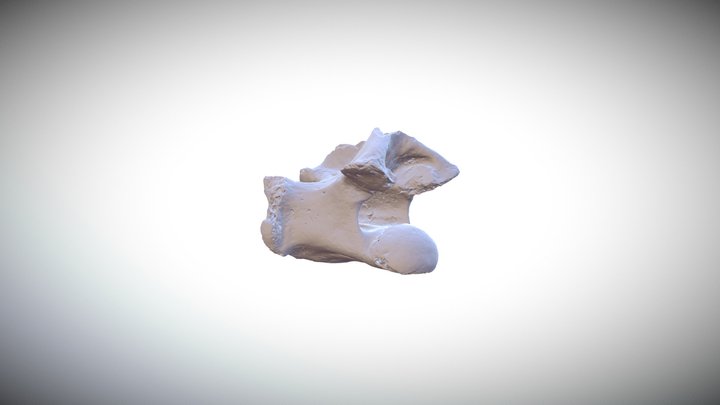
3D model
- Source
- Sketchfab
- Credit
- Katherine Wolcott
- Licence
- CC Attribution-NonCommercial-ShareAlike
- Commercial use
- the licence does not allow it
Smithsonian Open Access and MorphoSource were not reached for this taxon, so this list is what the others held rather than everything there is.
The description on this site
- Source
- Wikipedia, “Teiidae”
- Licence
- CC BY-SA 4.0
This is what the site found, which is not the same as what exists.
Keep going
What may have been alongside itTeiioidea through timeFormations of the MioceneThe world it lived on
Occurrence data from the Paleobiology Database, CC BY 4.0. Gray 1827