Viviparus
Viviparus, commonly known as the river snails, is a genus of large, freshwater snails with an operculum, aquatic gastropod molluscs.

Tom Meijer · CC BY-SA 3.0 · via Wikipedia/Commons. May be a photograph of a specimen, or an artist’s reconstruction — an interpretation of a skeleton, since colour and soft tissue are almost never preserved.
On record
Recorded, not inferred- Sits inside
- ViviparinaePBDB
- Diet
- omnivorePBDB, for Viviparidae
- Life habit
- epifaunalPBDB, for Viviparidae
- Motility
- actively mobilePBDB, for Viviparidae
- Vision
- limitedPBDB, for Gastropoda
- Environment
- freshwaterPBDB, for Viviparidae
Time the record covers
At least 165 million years on record.
The record covers at least 165.3 Mya to 11.7 ka. No occurrence read is dated outside 170.9 Mya to 0 Mya.
172 occurrences of Viviparus on record, most of them in the Paleocene. The Paleobiology Database records this as a living group. Bar height is expected occurrences, not a count: each fossil is spread across the span it is dated to, so a tall narrow bar means tight dating and a low wide one means loose.
When
172 occurrences- Middle Jurassic6%
- Late Jurassic5%
- Early Cretaceous14%
- Late Cretaceous17%
- Paleocene18%
- Eocene7%
- Oligocene1%
- Miocene8%
- Pliocene10%
- Pleistocene14%
- Holocene1%
These are dates about fossils, not the animal: the record can only begin after it arose and end before it died out, so either end may reach further. Shares are expected occurrences: a fossil dated to a span is counted partly in each period it straddles. More on what this infers.
Found in
65 formations
- Ravenscrag Formation27
- Morrison Formation6
- Lealt Shale Formation · Great Estuarine Group5
- Fort Crittenden Formation4
- Kuwajima Formation · Tetori Group4
- Lance Formation4
Loading coastlines…
The named rock units Viviparus has been recovered from, largest first. Drawn where the rock is now, not where it formed. 41 further formations hold fewer occurrences each and are not listed. 44 occurrences have no formation on record, which is common for older literature.
Viviparus and its relatives
PaleoceneWhere Viviparus and its relatives were recorded in the Paleocene.
Found in the same rock
1,919 taxa- Unio28 sites
- Lioplacodes20 sites
- Valvata15 sites
- Physa14 sites
- Trionychidae14 sites
- Planorbella13 sites
- Crocodylia12 sites
- Tyrannosauridae12 sites
- Campeloma10 sites
- Neomiodon10 sites
- Sphaerium10 sites
- Theropoda10 sites
- Daedalochila9 sites
- Haitia heterostropha heterostropha9 sites
- Hydrobia9 sites
- Lepisosteus9 sites
- Testudines9 sites
- Hadrosauridae8 sites
- Myledaphus bipartitus8 sites
- Sinamia8 sites
- Teleostei8 sites
- Triodopsis8 sites
- Unionidae8 sites
- Albanerpetontidae7 sites
The Paleobiology Database records 145 sites for Viviparus, and this reads all of them. The number is how many of those sites it was catalogued from too. The 24 sharing the most are listed.
This is not a list of everything alive at the time. It is only what has come out of the same ground as this animal and been written down.
Entered from
87 references- Fauna and correlation of the Ravenscrag Formation (Paleocene) of southwestern Saskatchewan26
- Non-marine Mollusca17
- Die Mollusken des Pliozäns von Boemiajoe (Java)8
- Stratigraphic and palaeogeographic significance of lacustrine molluscs from the Pliocene Viviparus beds in central Croatia5
- Jurassic Paleosalinities and Brackish-water Communities-A Case Study5
- Eocene fresh-water Mollusca from Wyoming5
- Stratigraphy and mammal faunas of the Brackwassermolasse in the surroundings of Ulm (Southwest Germany)4
- Fossil vertebrates from the Late Cretaceous Lance Formation, eastern Wyoming4
- [Vertebrate fossils from the Lower Cretaceous Itsuki Formation of the Tetori Group in the Kuzuryu district, Ono City, Fukui Prefecture, central Japan]3
- The Pleistocene molluscan fauna from Leisley Shell Pit 1, Hillsborough County, Florida3
- Asupra unor Prosodacnine din Pontianul de la Boteni (jud. Arges) [Pontian Prosodacninae from Boteni (Arges Province)]3
- Fruita Paleontological Area (Upper Jurassic, Morrison Formation), western Colorado: an example of terrestrial taphofacies analysis2
Each of the 172 occurrences read was entered from one of these publications, ordered by how many each accounts for. This is not a search for papers mentioning the name. 75 further references are not listed. Entries link to doi.org where the Paleobiology Database holds an identifier, and to its own record where it does not. Relayed as the Paleobiology Database holds them, not checked against what they resolve to.
Media and terms
Media content3

Picture of Viviparus
- Source
- Wikipedia/Commons
- Credit
- Tom Meijer
- Licence
- CC BY-SA 3.0
- Commercial use
- the licence allows it
CT scan
- Source
- MorphoSource
- Credit
- AUM Fish Collection
- Licence
- In Copyright
- Commercial use
- cannot be read from the licence given — check the record
- Specimen
- Barbus viviparus · AUM:AUM:63561
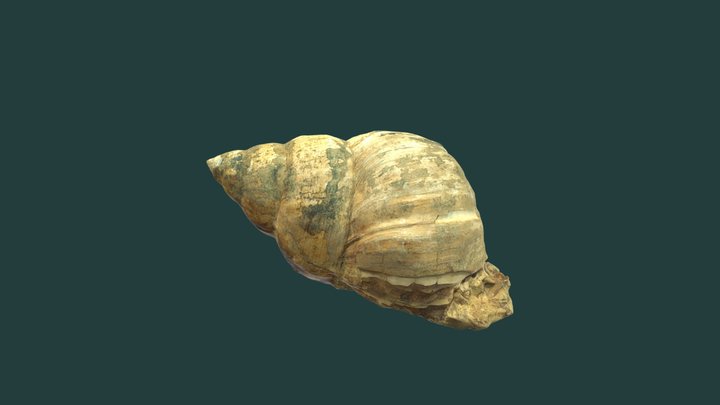
3D model
- Source
- Sketchfab
- Credit
- Shellie Luallin
- Licence
- CC Attribution
- Commercial use
- cannot be read from the licence given — check the record
Smithsonian Open Access was not reached for this taxon, so this list is what the others held rather than everything there is.
The description on this site
- Source
- Wikipedia, “Viviparus”
- Licence
- CC BY-SA 4.0
This is what the site found, which is not the same as what exists.
Keep going
What may have been alongside itViviparinae through timeFormations of the PaleoceneThe world it lived on
Occurrence data from the Paleobiology Database, CC BY 4.0. Montfort 1810