Unio
Unio is a genus of medium-sized freshwater mussels, aquatic bivalve mollusks in the family Unionidae, the river mussels. They are found throughout Europe, Africa, and the Middle East, with some species introduced to East Asia. Fossil species are also known from the Jurassic of North America.

No machine-readable author provided. Emma78 assumed (based on copyright claims). · CC BY 2.5 · via Wikipedia/Commons. May be a photograph of a specimen, or an artist’s reconstruction — an interpretation of a skeleton, since colour and soft tissue are almost never preserved.
On record
Recorded, not inferred- Sits inside
- UnioninaePBDB
- Diet
- suspension feederPBDB, for Bivalvia
- Life habit
- infaunalPBDB, for Bivalvia
- Motility
- facultatively mobilePBDB, for Bivalvia
- Vision
- blindPBDB, for Bivalvia
- Environment
- freshwaterPBDB, for Unionida
Time the record covers
At least 241 million years on record.
The record covers at least 241.464 Mya to 11.7 ka. No occurrence read is dated outside 247 Mya to 0 Mya.
189 occurrences of Unio on record, most of them in the Late Cretaceous. The Paleobiology Database records this as a living group. Bar height is expected occurrences, not a count: each fossil is spread across the span it is dated to, so a tall narrow bar means tight dating and a low wide one means loose.
When
189 occurrences- Middle Triassic2%
- Late Triassic7%
- Early Jurassic1%
- Middle Jurassic5%
- Late Jurassic7%
- Early Cretaceous10%
- Late Cretaceous22%
- Paleoceneunder 1%
- Eocene17%
- Oligocene4%
- Miocene12%
- Pliocene2%
- Pleistocene11%
- Holoceneunder 1%
These are dates about fossils, not the animal: the record can only begin after it arose and end before it died out, so either end may reach further. Shares are expected occurrences: a fossil dated to a span is counted partly in each period it straddles. More on what this infers.
Found in
76 formations
- Woodbine Formation14
- Headon Beds Formation7
- Lealt Shale Formation · Great Estuarine Group6
- Lameta Formation6
- Morrison Formation5
- Hempstead Formation5
Loading coastlines…
The named rock units Unio has been recovered from, largest first. Drawn where the rock is now, not where it formed. 52 further formations hold fewer occurrences each and are not listed. 47 occurrences have no formation on record, which is common for older literature.
Unio and its relatives
Late CretaceousWhere Unio and its relatives were recorded in the Late Cretaceous.
Found in the same rock
1,799 taxa- Viviparus26 sites
- Theropoda18 sites
- Paludina15 sites
- Teleostei14 sites
- Testudines14 sites
- Crocodylia13 sites
- Valvata13 sites
- Aves12 sites
- Planorbis12 sites
- Lepidotes11 sites
- Plantae11 sites
- Reptilia11 sites
- Squamata11 sites
- Dinosauria10 sites
- Limnaea10 sites
- Thiara10 sites
- Gastropoda9 sites
- Melanopsis9 sites
- Osteichthyes9 sites
- Physa9 sites
- Dromaeosauridae8 sites
- Trionyx8 sites
- Anura7 sites
- Clarias7 sites
The Paleobiology Database records 163 sites for Unio, and this reads all of them. The number is how many of those sites it was catalogued from too. The 24 sharing the most are listed.
This is not a list of everything alive at the time. It is only what has come out of the same ground as this animal and been written down.
Entered from
109 references- Larger invertebrate fossils of the Woodbine formation (Cenomanian) of Texas14
- Monograph of the British lower Tertiary Unionidae, with descriptions of three new species7
- Jurassic Paleosalinities and Brackish-water Communities-A Case Study6
- Eocene fresh-water Mollusca from Wyoming6
- On the Tertiary fluvio-marine formation of the Isle of Wight6
- Fossil Vertebrate Collections5
- Freshwater amphibians and squamates from Villeveyrac (lower Campanian; Hérault, France): palaeodiversity, palaeoenvironment and implications for the Late Cretaceous palaeobiogeography of the European herpetofauna4
- Neue Ergebnisse zur Stratigraphie der mittleren Serie der Oberen Süßwassermolasse Bayerns (New results on the stratigraphy of the middle series of upper Freshwater Molasse, Bavaria)4
- Tertiary faunal horizons of western Washington4
- On the Tertiary Beds of Hordwell, Hampshire4
- [Vertebrate fossils from the Lower Cretaceous Itsuki Formation of the Tetori Group in the Kuzuryu district, Ono City, Fukui Prefecture, central Japan]3
- Large mammals from Rickenbach (Switzerland, reference locality MP29, Late Oligocene): biostratigraphic and palaeoenvironmental implications3
Each of the 189 occurrences read was entered from one of these publications, ordered by how many each accounts for. This is not a search for papers mentioning the name. 97 further references are not listed. Entries link to doi.org where the Paleobiology Database holds an identifier, and to its own record where it does not. Relayed as the Paleobiology Database holds them, not checked against what they resolve to.
Media and terms
Media content3
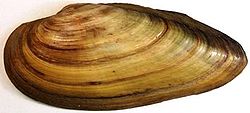
Picture of Unio
- Source
- Wikipedia/Commons
- Credit
- No machine-readable author provided. Emma78 assumed (based on copyright claims).
- Licence
- CC BY 2.5
- Commercial use
- the licence allows it
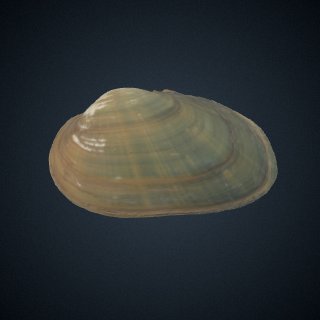
3D scan
- Source
- Smithsonian
- Licence
- CC0 — this site’s default, not the record’s
- Commercial use
- the licence allows it
- Specimen
- Unio crassus
CT scan
- Source
- MorphoSource
- Licence
- In Copyright
- Commercial use
- cannot be read from the licence given — check the record
- Specimen
- Purgatorius unio · uwbm:vp:115434
The description on this site
- Licence
- CC BY-SA 4.0
This is what the site found, which is not the same as what exists.
Keep going
What may have been alongside itUnioninae through timeFormations of the Late CretaceousThe world it lived on
Occurrence data from the Paleobiology Database, CC BY 4.0. Philipsson 1788