Sphaerium
Sphaerium is a genus of very small freshwater clams, aquatic bivalve molluscs in the family Sphaeriidae, known as the fingernail clams. The small clams in this genus are unusual in that many of them, such as Sphaerium corneum, can climb around underwater on aquatic plants, using their long and strong foot.

Donald Anderson · CC0 · via Wikipedia/Commons. May be a photograph of a specimen, or an artist’s reconstruction — an interpretation of a skeleton, since colour and soft tissue are almost never preserved.
On record
Recorded, not inferred- Also called
- fingernail clamPBDB
- Sits inside
- PisidiinaePBDB
- Diet
- suspension feederPBDB, for Bivalvia
- Life habit
- infaunalPBDB, for Bivalvia
- Motility
- facultatively mobilePBDB, for Bivalvia
- Vision
- blindPBDB, for Bivalvia
- Environment
- freshwaterPBDB, for Sphaeriidae
Time the record covers
At least 142 million years on record.
The record covers at least 143.1 Mya to 129 ka. No occurrence read is dated outside 161.5 Mya to 11.7 ka.
60 occurrences of Sphaerium on record, most of them in the Pleistocene. The Paleobiology Database records this as a living group. Bar height is expected occurrences, not a count: each fossil is spread across the span it is dated to, so a tall narrow bar means tight dating and a low wide one means loose.
When
60 occurrences- Late Jurassic2%
- Early Cretaceous13%
- Late Cretaceous20%
- Paleocene8%
- Eocene3%
- Miocene8%
- Pliocene13%
- Pleistocene32%
These are dates about fossils, not the animal: the record can only begin after it arose and end before it died out, so either end may reach further. Shares are expected occurrences: a fossil dated to a span is counted partly in each period it straddles. More on what this infers.
Found in
26 formations
- Ravenscrag Formation5
- Hell Creek Formation · Montana Group5
- Shahai Formation4
- Siesta Formation3
- Kuwajima Formation · Tetori Group2
- Wyandotte Formation2
Loading coastlines…
The named rock units Sphaerium has been recovered from, largest first. Drawn where the rock is now, not where it formed. 2 further formations hold fewer occurrences each and are not listed. 18 occurrences have no formation on record, which is common for older literature.
Sphaerium and its relatives
PleistoceneWhere Sphaerium and its relatives were recorded in the Pleistocene.
Found in the same rock
991 taxa- Campeloma11 sites
- Lymnaea11 sites
- Lioplacodes10 sites
- Viviparus10 sites
- Dromaeosauridae8 sites
- Gyraulus8 sites
- Physa8 sites
- Pisidium7 sites
- Trionychidae7 sites
- Valvata7 sites
- Hydrobia6 sites
- Lepisosteus6 sites
- Testudines6 sites
- Unio6 sites
- Unionidae6 sites
- Anura5 sites
- Aves5 sites
- Gastrocopta armifera5 sites
- Hadrosauridae5 sites
- Helisoma5 sites
- Myledaphus bipartitus5 sites
- Stagnicola5 sites
- Succinea5 sites
- Theropoda5 sites
The Paleobiology Database records 52 sites for Sphaerium, and this reads all of them. The number is how many of those sites it was catalogued from too. The 24 sharing the most are listed.
This is not a list of everything alive at the time. It is only what has come out of the same ground as this animal and been written down.
Entered from
41 references- Discovery of the Dinosaur fossil in Heishan, Liaoning and its stratigraphical significance5
- Fauna and correlation of the Ravenscrag Formation (Paleocene) of southwestern Saskatchewan5
- Pliocene non-marine mollusks from Contra Costa County, California5
- The fossil land and freshwater mollusks of Sandelzhausen (Early/Middle Miocene, Germany): Caenogastropoda, Neritimorpha, lower Heterobranchia and Bivalvia2
- Revised identification of a reported Iguanodon-grade ornithopod tooth from the Scollard Formation, Alberta, Canada2
- Probable Cerion (Gastropoda: Pulmonata) from Uppermost Cretaceous Hell Creek Formation, Garfield County, Montana2
- Pre-Late Wisconsinan Pleistocene biota from southeastern Michigan, U.S.A.2
- The Wyandotte Local Fauna: A New, Dated, Pleistocene Vertebrate Fauna from Northern Queensland2
- Moluscos continentales del Plio-Pleistoceno de la cuenca de Guadix-Baza2
- Eshelman and Hager, 19842
- Stratigraphy and depositional environments of the upper Fox Hills and lower Hell Creek Formations at the Concordia Hadrosaur Site in northwestern South Dakota1
- A clue to the Neocomian vertebrate fauna: initial results from the Kuwajima "Kaseki-kabe" (Tetori Group) in Shiramine, Ishikawa, central Japan1
Each of the 60 occurrences read was entered from one of these publications, ordered by how many each accounts for. This is not a search for papers mentioning the name. 29 further references are not listed. Entries link to doi.org where the Paleobiology Database holds an identifier, and to its own record where it does not. Relayed as the Paleobiology Database holds them, not checked against what they resolve to.
Media and terms
Media content2

Picture of Sphaerium
- Source
- Wikipedia/Commons
- Credit
- Donald Anderson
- Licence
- CC0
- Commercial use
- the licence allows it
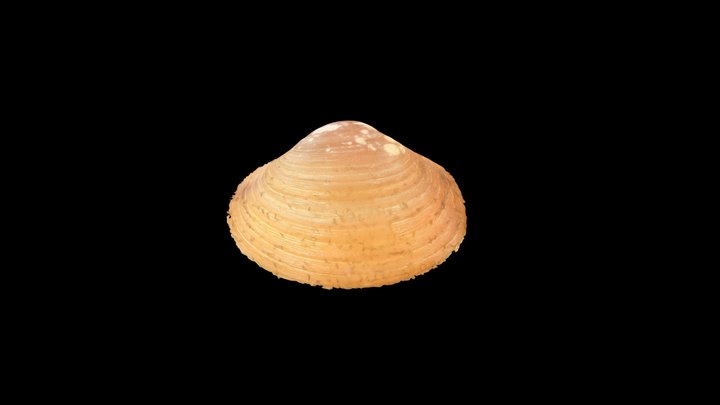
3D model
- Source
- Sketchfab
- Licence
- CC0 Public Domain
- Commercial use
- the licence allows it
The description on this site
- Source
- Wikipedia, “Sphaerium”
- Licence
- CC BY-SA 4.0
This is what the site found, which is not the same as what exists.
Keep going
What may have been alongside itPisidiinae through timeFormations of the PleistoceneThe world it lived on
Occurrence data from the Paleobiology Database, CC BY 4.0. Scopoli 1777