Annona
Annona or Anona is a genus of flowering plants in the pawpaw/sugar apple family, Annonaceae. It is the second largest genus in the family after Guatteria, containing approximately 166 species of mostly Neotropical and Afrotropical trees and shrubs.

Muhammad Mahdi Karim · GFDL 1.2 · via Wikipedia/Commons. May be a photograph of a specimen, or an artist’s reconstruction — an interpretation of a skeleton, since colour and soft tissue are almost never preserved.
On record
Recorded, not inferred- Sits inside
- AnnonaceaePBDB
- Diet
- "photoautotroph"PBDB, for Angiospermae
Time the record covers
At least 65 million years on record.
The record covers at least 66 Mya to 11.7 ka. No occurrence read is dated outside 72.2 Mya to 0 Mya.
35 occurrences of Annona on record, most of them in the Miocene. The Paleobiology Database records this as a living group. Bar height is expected occurrences, not a count: each fossil is spread across the span it is dated to, so a tall narrow bar means tight dating and a low wide one means loose.
When
35 occurrences- Late Cretaceous6%
- Paleoceneunder 1%
- Eocene12%
- Oligocene14%
- Miocene53%
- Pliocene3%
- Pleistocene9%
- Holocene3%
These are dates about fossils, not the animal: the record can only begin after it arose and end before it died out, so either end may reach further. Shares are expected occurrences: a fossil dated to a span is counted partly in each period it straddles. More on what this infers.
Found in
8 formations
- Lance Formation2
- Cerro Pelado Formation1
- Mancora Formation1
- Rockdale Formation · Wilcox Group1
- Lower Churia Formation · Siwalik Group1
- Liuqu Formation1
Loading coastlines…
The named rock units Annona has been recovered from, largest first. Drawn where the rock is now, not where it formed. 26 occurrences have no formation on record, which is common for older literature.
Annona and its relatives
MioceneWhere Annona and its relatives were recorded in the Miocene.
Found in the same rock
696 taxa- Ficus10 sites
- Cassia7 sites
- Nectandra6 sites
- Phyllites6 sites
- Tapirira6 sites
- Trigonia varians6 sites
- Coussapoa5 sites
- Persea5 sites
- Combretum4 sites
- Eugenia4 sites
- Heliconia4 sites
- Hernandia4 sites
- Inga4 sites
- Laurophyllum4 sites
- Magnolia4 sites
- Mespilodaphne4 sites
- Myrcia4 sites
- Palmophyllum4 sites
- Quercus4 sites
- Styrax4 sites
- Arecaceae3 sites
- Cinnamomum3 sites
- Cissus3 sites
- Fabaceae3 sites
The Paleobiology Database records 32 sites for Annona, and this reads all of them. The number is how many of those sites it was catalogued from too. The 24 sharing the most are listed.
This is not a list of everything alive at the time. It is only what has come out of the same ground as this animal and been written down.
Entered from
24 references- Tertiary plants from Venezuela7
- A catalogue of Cenozoic megafossil plants in China3
- Upper Cretaceous floras of the Rocky Mountain region; Flora of the Lance Formation at its type locality, Niobrara County, Wyoming2
- Miocene plants from Colombia, South America2
- The flora of the Concepcion-Arauco coal measures of Chile2
- Middle Miocene flora from Siwalik foreland basin of Uttarakhand, India and its phytogeographic and palaeoclimatic implications1
- Angiospermous fossil leaves from the Siwalik foreland basins and their palaeoclimatic implications1
- Exceptionally well preserved late Quaternary plant and vertebrate fossils from a blue hole on Abaco, The Bahamas1
- A Catalogue of Fossil Plants from India Part 6: Cenozoic (Quaternary) Palynology and Palaeobotany1
- A new paratropical angiosperm florule in the Eocene Rockdale Formation of Bastrop County, Texas1
- The Rujada Flora of west central Oregon1
- Fossil plants from the state of Anzoategui, Venezuela1
Each of the 35 occurrences read was entered from one of these publications, ordered by how many each accounts for. This is not a search for papers mentioning the name. 12 further references are not listed. Entries link to doi.org where the Paleobiology Database holds an identifier, and to its own record where it does not. Relayed as the Paleobiology Database holds them, not checked against what they resolve to.
Media and terms
Media content2

Picture of Annona
- Source
- Wikipedia/Commons
- Credit
- Muhammad Mahdi Karim
- Licence
- GFDL 1.2
- Commercial use
- the licence allows it
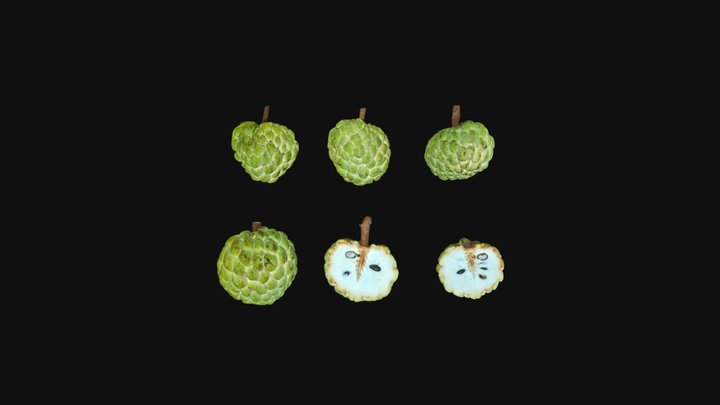
Smithsonian Open Access was not reached for this taxon, so this list is what the others held rather than everything there is.
The description on this site
- Source
- Wikipedia, “Annona”
- Licence
- CC BY-SA 4.0
This is what the site found, which is not the same as what exists.
Keep going
What may have been alongside itAnnonaceae through timeFormations of the MioceneThe world it lived on
Occurrence data from the Paleobiology Database, CC BY 4.0. Linnaeus 1753