Cheirolepis
Cheirolepis is an extinct genus of marine and freshwater ray-finned fish that lived in the Devonian period of Europe and North America. It is the only genus yet known within the family Cheirolepididae and the order Cheirolepidiformes. It was among the most basal of the Devonian actinopterygians and is considered the first to possess the "standard" dermal cranial bones seen in later actinopterygians.

Smokeybjb · CC BY-SA 3.0 · via Wikipedia/Commons. May be a photograph of a specimen, or an artist’s reconstruction — an interpretation of a skeleton, since colour and soft tissue are almost never preserved.
On record
Recorded, not inferred- Sits inside
- ActinopterygiiPBDB
- Motility
- actively mobilePBDB, for Osteichthyes
Time the record covers
At least 231 million years on record.
The record covers at least 393.47 Mya to 161.5 Mya. No occurrence read is dated outside 410.62 Mya to 143.1 Mya.
62 occurrences of Cheirolepis on record, most of them in the Devonian. Bar height is expected occurrences, not a count: each fossil is spread across the span it is dated to, so a tall narrow bar means tight dating and a low wide one means loose.
When
62 occurrencesThese are dates about fossils, not the animal: the record can only begin after it arose and end before it died out, so either end may reach further. Shares are expected occurrences: a fossil dated to a span is counted partly in each period it straddles. More on what this infers.
Found in
27 formations
- Lybster Flagstone Formation · Caithness Flagstone Group6
- Narva Formation3
- Burtnieki Formation2
- Narva Formation2
- Aruküla Formation2
- Polotsk Formation2
Loading coastlines…
The named rock units Cheirolepis has been recovered from, largest first. Drawn where the rock is now, not where it formed. 3 further formations hold fewer occurrences each and are not listed. 24 occurrences have no formation on record, which is common for older literature.
Cheirolepis and its relatives
DevonianWhere Cheirolepis and its relatives were recorded in the Devonian.
Found in the same rock
533 taxa- Glyptolepis17 sites
- Hirmeriella muensteri12 sites
- Acanthodes11 sites
- Cheiracanthus11 sites
- Byssacanthus dilatatus10 sites
- Hirmeriella10 sites
- Coccosteus cuspidatus9 sites
- Dipnoi9 sites
- Actinopterygii8 sites
- Cheiracanthus brevicostatus8 sites
- Diplacanthus8 sites
- Equisetites8 sites
- Orvikuina8 sites
- Osteolepididae8 sites
- Actinolepis tuberculata7 sites
- Cephalaspidida7 sites
- Cheiracanthus latus7 sites
- Homostius latus7 sites
- Asterolepis estonica6 sites
- Clathropteris6 sites
- Diplacanthus crassisimus6 sites
- Gyroptychius6 sites
- Laliacanthus singularis6 sites
- Orvikuina vardiaensis6 sites
The Paleobiology Database records 61 sites for Cheirolepis, and this reads all of them. The number is how many of those sites it was catalogued from too. The 24 sharing the most are listed.
This is not a list of everything alive at the time. It is only what has come out of the same ground as this animal and been written down.
Entered from
28 references- The Middle Devonian fishes of the Baltic States (Estonia, Latvia) and Belarus16
- A new species of ray-finned fish (Osteichthyes, Actinopterygii) from the upper Emsian and lowermost Eifelian deposits of Belarus9
- The lower jaw of Morganucodon5
- Endoskeletal structure in Cheirolepis (Osteichthyes, Actinopterygii), an early ray-finned fish3
- A Catalogue of Indian Fossil Plants3
- The oldest actinopterygian highlights the cryptic early history of the hyperdiverse ray-finned fishes2
- Triassic Floras of Eurasia2
- O srodkowoliasowym wieku flory z Chmielowa pod Ostrowcem i jej znaczeniu dla stratygrafii kontynentalnej jury [On the Middle Liassic age of the flora from Chmielow, near Ostrowiec (central Poland) and its significance for stratigraphy of the continental Jurassic]2
- A new species of ischnacanthiform acanthodian from the Givetian of Mimerdalen, Svalbard1
- End-Devonian extinction and a bottleneck in the early evolution of modern jawed vertebrates1
- The late Middle Devonian fauna of Red Hill I, Nevada, and its paleobiogeographic implications1
- A dicynodont-theropod association in the latest Triassic of Poland1
Each of the 62 occurrences read was entered from one of these publications, ordered by how many each accounts for. This is not a search for papers mentioning the name. 16 further references are not listed. Entries link to doi.org where the Paleobiology Database holds an identifier, and to its own record where it does not. Relayed as the Paleobiology Database holds them, not checked against what they resolve to.
Media and terms
Media content3

Picture of Cheirolepis
- Source
- Wikipedia/Commons
- Credit
- Smokeybjb
- Licence
- CC BY-SA 3.0
- Commercial use
- the licence allows it
CT scan
- Source
- MorphoSource
- Licence
- not stated by the source
- Commercial use
- cannot be read from the licence given — check the record
- Specimen
- Cheirolepis jonesi · pmo:235.121
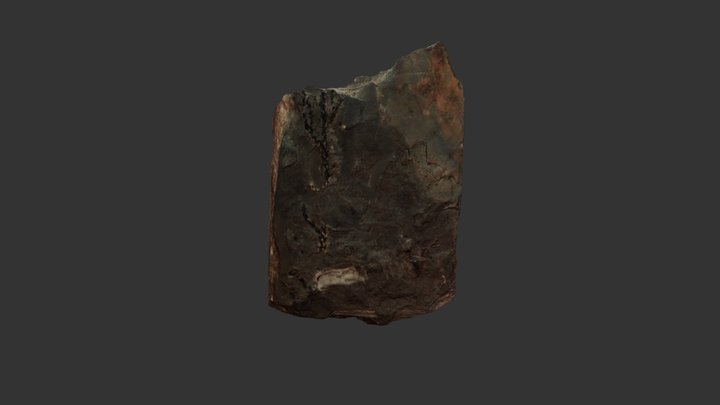
3D model
- Source
- Sketchfab
- Licence
- CC Attribution
- Commercial use
- cannot be read from the licence given — check the record
The description on this site
- Source
- Wikipedia, “Cheirolepis”
- Licence
- CC BY-SA 4.0
This is what the site found, which is not the same as what exists.
Keep going
What may have been alongside itActinopterygii through timeFormations of the DevonianThe world it lived on
Occurrence data from the Paleobiology Database, CC BY 4.0. Agassiz 1835