Elephas maximus
The Asian elephant, also known as the Asiatic elephant, is the only living species in the genus Elephas. It is the largest living land animal in Asia and the second largest living elephantid in the world. It is characterised by its long trunk with a single finger-like process; large tusks in males; laterally folded large ears and wrinkled grey skin that is partly depigmented on the trunk, ears or neck. Adult males average 4 t in weight and females 2.7 t. It has a large and well developed neocortex of the brain, is highly intelligent and self-aware, being able to display behaviours associated with grief, learning and greeting. Three subspecies are recognised—E. m. maximus, E. m. indicus and E. m. sumatranus.

Yathin S Krishnappa · CC BY-SA 3.0 · via Wikipedia/Commons. May be a photograph of a specimen, or an artist’s reconstruction — an interpretation of a skeleton, since colour and soft tissue are almost never preserved.
On record
Recorded, not inferred- Also called
- Asian elephantPBDB
- Sits inside
- ElephasPBDB
- Diet
- grazer, browserPBDB, for Elephantidae
- Life habit
- ground dwellingPBDB, for Elephantidae
- Motility
- actively mobilePBDB, for Osteichthyes
- Environment
- terrestrialPBDB, for Eutheria
- Mass
- 95 kgWikidata
Time the record covers
At least 762 thousand years on record.
The record covers at least 774 ka to 11.7 ka. No occurrence read is dated outside 2.58 Mya to 0 Mya.
8 occurrences of Elephas maximus on record, most of them in the Pleistocene. The Paleobiology Database records this as a living group. Bar height is expected occurrences, not a count: each fossil is spread across the span it is dated to, so a tall narrow bar means tight dating and a low wide one means loose.
When
8 occurrences- Pleistocene88%
- Holocene13%
These are dates about fossils, not the animal: the record can only begin after it arose and end before it died out, so either end may reach further. Shares are expected occurrences: a fossil dated to a span is counted partly in each period it straddles. More on what this infers.
Found in
1 formation
- Pinjor Formation · Siwalik Group1
Loading coastlines…
The named rock units Elephas maximus has been recovered from, largest first. Drawn where the rock is now, not where it formed. 7 occurrences have no formation on record, which is common for older literature.
Elephas maximus and its relatives
PleistoceneWhere Elephas maximus and its relatives were recorded in the Pleistocene.
Found in the same rock
129 taxa- Axis porcinus3 sites
- Muntiacus muntjak3 sites
- Panthera tigris3 sites
- Pongo pygmaeus3 sites
- Sus3 sites
- Arctonyx collaris2 sites
- Axis axis2 sites
- Bubalus2 sites
- Bubalus bubalis2 sites
- Capricornis sumatraensis2 sites
- Cervus2 sites
- Cervus unicolor2 sites
- Felis2 sites
- Hystrix2 sites
- Macaca2 sites
- Mus2 sites
- Panthera pardus2 sites
- Presbytis2 sites
- Rattus2 sites
- Rhinoceros2 sites
- Rhinoceros sondaicus2 sites
- Sus scrofa2 sites
- Tapirus indicus2 sites
- Ursus malayanus2 sites
The Paleobiology Database records 8 sites for Elephas maximus, and this reads all of them. The number is how many of those sites it was catalogued from too. The 24 sharing the most are listed.
This is not a list of everything alive at the time. It is only what has come out of the same ground as this animal and been written down.
Entered from
6 references- Large mammal fossil occurrences and associated archaeological evidence in Pleistocene contexts of peninsular India and Sri Lanka3
- Geochronology of Ailuropoda–Stegodon fauna and Gigantopithecus in Guangxi Province, southern China1
- The Late Neogene elephantoid-bearing faunas of Indonesia and their palaeozoogeographic implications. A study of the terrestrial faunal succession of Sulawesi, Flores and Java, including evidence for early hominid dispersal east of Wallace's Line1
- Extension of the geographic distribution of the giant panda (Ailuropoda) and search for the reasons for its progressive disappearance in Southeast Asia during the Latest Middle Pleistocene1
- On the occurence of Elepha maximus in the Pinjor Formation south east of Chandigarh1
- The Malay race of the Indian elephant, Elephas maximus hirsutus1
Each of the 8 occurrences read was entered from one of these publications, ordered by how many each accounts for. This is not a search for papers mentioning the name. Entries link to doi.org where the Paleobiology Database holds an identifier, and to its own record where it does not. Relayed as the Paleobiology Database holds them, not checked against what they resolve to.
Media and terms
Media content3

Picture of Elephas maximus
- Source
- Wikipedia/Commons
- Credit
- Yathin S Krishnappa
- Licence
- CC BY-SA 3.0
- Commercial use
- the licence allows it
Laser scan
- Source
- MorphoSource
- Licence
- not stated by the source
- Commercial use
- cannot be read from the licence given — check the record
- Specimen
- Elephas maximus · UFZ:2694
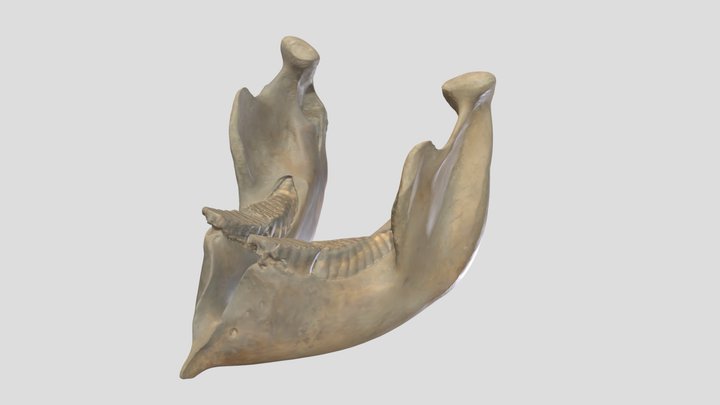
3D model
- Source
- Sketchfab
- Licence
- CC Attribution-NonCommercial
- Commercial use
- the licence does not allow it
Smithsonian Open Access was not reached for this taxon, so this list is what the others held rather than everything there is.
The description on this site
- Licence
- CC BY-SA 4.0
This is what the site found, which is not the same as what exists.
Keep going
What may have been alongside itElephas through timeFormations of the PleistoceneThe world it lived on
Occurrence data from the Paleobiology Database, CC BY 4.0. Linnaeus 1758