Eurypterida
Searched as Eurypterida indet.. The Paleobiology Database treats Eurypterida as the accepted name.
Eurypterids, often informally called sea scorpions, are a group of extinct marine arthropods that form the order Eurypterida. The earliest known eurypterids date to the Tremadocian stage of the Ordovician period, 480 million years ago. The group is likely to have appeared first during the Late Cambrian period. With approximately 250 species, the Eurypterida is the most diverse Paleozoic chelicerate order. Following their appearance during the Ordovician, eurypterids became major components of marine faunas during the Silurian, from which the majority of eurypterid species have been described. The Silurian genus Eurypterus accounts for more than 90% of all known eurypterid specimens. Though the group continued to diversify during the subsequent Devonian period, the eurypterids were heavily affected by the Late Devonian extinction event. They declined in numbers and diversity during the Permian period, though their time of extinction remains contentious, argued to be either the early Middle Permian, or the Permian–Triassic extinction event 251.9 million years ago.

H. Zell · CC BY-SA 3.0 · via Wikipedia/Commons. May be a photograph of a specimen, or an artist’s reconstruction — an interpretation of a skeleton, since colour and soft tissue are almost never preserved.
On record
Recorded, not inferred- Also called
- eurypteridPBDB
- Sits inside
- ChelicerataPBDB
- Diet
- carnivorePBDB
- Life habit
- nektobenthicPBDB
- Motility
- actively mobilePBDB
- Vision
- well-developedPBDB
Time the record covers
At least 145 million years on record.
The record covers at least 449.6 Mya to 303.7 Mya. No occurrence read is dated outside 457.3 Mya to 293.52 Mya.
48 occurrences of Eurypterida on record, most of them in the Devonian. Bar height is expected occurrences, not a count: each fossil is spread across the span it is dated to, so a tall narrow bar means tight dating and a low wide one means loose.
When
48 occurrences- Ordovician6%
- Silurian29%
- Devonian46%
- Carboniferous18%
- Permian1%
These are dates about fossils, not the animal: the record can only begin after it arose and end before it died out, so either end may reach further. Shares are expected occurrences: a fossil dated to a span is counted partly in each period it straddles. More on what this infers.
Found in
28 formations
- Wild Cow Formation · Madera Group6
- Huixingshao Formation2
- Pimenteira Formation2
- Normanskill Formation1
- Oak Orchard Formation1
- Radotinkalk Formation1
Loading coastlines…
The named rock units Eurypterida has been recovered from, largest first. Drawn where the rock is now, not where it formed. 4 further formations hold fewer occurrences each and are not listed. 13 occurrences have no formation on record, which is common for older literature.
Eurypterida and its relatives
DevonianWhere Eurypterida and its relatives were recorded in the Devonian.
Found in the same rock
1,633 taxa- Bivalvia37 sites
- Pterygotus34 sites
- Ostracoda29 sites
- Gastropoda27 sites
- Orbiculoidea26 sites
- Lingula25 sites
- Howellella23 sites
- Leperditia23 sites
- Cephalopoda21 sites
- Crinoidea20 sites
- Camarotoechia19 sites
- Nuculites18 sites
- Phyllocarida17 sites
- Plantae17 sites
- Bryozoa16 sites
- Carcinosoma16 sites
- Erieopterus15 sites
- Hughmilleria15 sites
- Erettopterus14 sites
- Tentaculites14 sites
- Trilobita14 sites
- Brachiopoda13 sites
- Lingulidae12 sites
- Nanahughmilleria12 sites
The Paleobiology Database records 311 sites for Eurypterida, and this reads 240 of them. The number is how many of those sites it was catalogued from too. The 24 sharing the most are listed.
This is not a list of everything alive at the time. It is only what has come out of the same ground as this animal and been written down.
Entered from
30 references- Upper SiIurian-Lower Devonian Chitinozoa from the subsurface of southeastern Poland9
- Sedimentary patterns in Pennsylvanian strata at the Kinney Brick Company Quarry, Bernalillo County, New Mexico4
- Lower Early Devonian communities of Taimyr3
- Habitat of Llandoverian-Lochkovian eurypterids3
- The Malvinokaffric realm in the Devonian of Brazil3
- Correlation of the Silurian rocks of China2
- Codium-like taxa from the Silurian of North America: morphology, taxonomy, paleoecology, and phylogenetic affinity1
- The earliest osteostracan Kalanaspis delectabilis gen. et sp. nov. from the mid-Aeronian (mid-Llandovery, lower Silurian) of Estonia1
- Late Silurian and Early Devonian fossil plants of Bathurst Island, Arctic Canada1
- Lower Devonian coalified sporangia from Shropshire; Salopella Edwards & Richardson and Tortilicaulis Edwards1
- Overview of Upper Pennsylvanian stratigraphy and paleontology, Kinney Quarry, Manzanita Mountains, New Mexico1
- Early Virgilian plant megafossils from the Kinney Brick Company Quarry, Manzanita Mountains, New Mexico1
Each of the 48 occurrences read was entered from one of these publications, ordered by how many each accounts for. This is not a search for papers mentioning the name. 18 further references are not listed. Entries link to doi.org where the Paleobiology Database holds an identifier, and to its own record where it does not. Relayed as the Paleobiology Database holds them, not checked against what they resolve to.
Media and terms
Media content2

Picture of Eurypterida
- Source
- Wikipedia/Commons
- Credit
- H. Zell
- Licence
- CC BY-SA 3.0
- Commercial use
- the licence allows it
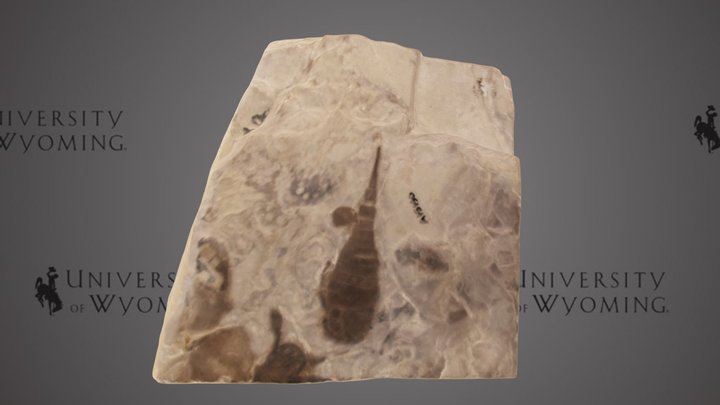
3D model
- Source
- Sketchfab
- Licence
- CC Attribution-NonCommercial
- Commercial use
- the licence does not allow it
Smithsonian Open Access and MorphoSource were not reached for this taxon, so this list is what the others held rather than everything there is.
The description on this site
- Source
- Wikipedia, “Eurypterid”
- Licence
- CC BY-SA 4.0
This is what the site found, which is not the same as what exists.
Keep going
What may have been alongside itChelicerata through timeFormations of the DevonianThe world it lived on
Occurrence data from the Paleobiology Database, CC BY 4.0. (Huxley 1857)