Hibiscus
Hibiscus is a genus of common flowering plants in the mallow family, Malvaceae. The genus is quite large, comprising several hundred species that are native to warm temperate, subtropical and tropical regions throughout the world. Member species are renowned for their large, showy flowers and those species are commonly known simply as "hibiscus", or less widely known as rose mallow. The genus includes both annual and perennial herbaceous plants, as well as woody shrubs and small trees.

Muhammad Mahdi Karim · GFDL 1.2 · via Wikipedia/Commons. May be a photograph of a specimen, or an artist’s reconstruction — an interpretation of a skeleton, since colour and soft tissue are almost never preserved.
On record
Recorded, not inferred- Also called
- rosemallowPBDB
- Sits inside
- MalvaceaePBDB
- Diet
- "photoautotroph"PBDB, for Angiospermae
Time the record covers
At most 12 thousand years on record.
The one occurrence read is dated to somewhere between 11.7 ka and 0 Mya, which is a dating window rather than a span.
1 occurrence of Hibiscus on record, most of them in the Holocene. The Paleobiology Database records this as a living group. Bar height is expected occurrences, not a count: each fossil is spread across the span it is dated to, so a tall narrow bar means tight dating and a low wide one means loose.
When
1 occurrences- Holocene100%
These are dates about fossils, not the animal: the record can only begin after it arose and end before it died out, so either end may reach further. Shares are expected occurrences: a fossil dated to a span is counted partly in each period it straddles. More on what this infers.
Hibiscus and its relatives
HoloceneWhere Hibiscus and its relatives were recorded in the Holocene.
Found in the same rock
50 taxa- Abutilon1 site
- Accipiter1 site
- Acrostichum1 site
- Anacardiaceae1 site
- Annona1 site
- Arecaceae1 site
- Asteraceae1 site
- Bacopa1 site
- Bursera1 site
- Calliandra cf. haematomma1 site
- Caracara creightoni1 site
- Ceratopteris1 site
- cf. Pityrogramma sp.1 site
- Chelonoidis alburyorum1 site
- Crocodylus rhombifer1 site
- Cycadaceae1 site
- Dictyosporites1 site
- Eudocimus albus1 site
- Eugenia1 site
- Fabaceae1 site
- Fusiformisporites1 site
- Geocapromys1 site
- Geotrygon chrysia1 site
- Guaiacum sanctum1 site
The Paleobiology Database records 1 site for Hibiscus, and this reads all of them. The number is how many of those sites it was catalogued from too. The 24 sharing the most are listed.
This is not a list of everything alive at the time. It is only what has come out of the same ground as this animal and been written down.
Entered from
1 referenceEach of the 1 occurrence read was entered from one of these publications, ordered by how many each accounts for. This is not a search for papers mentioning the name. Each entry links to doi.org. Relayed as the Paleobiology Database holds them, not checked against what they resolve to.
Media and terms
Media content2

Picture of Hibiscus
- Source
- Wikipedia/Commons
- Credit
- Muhammad Mahdi Karim
- Licence
- GFDL 1.2
- Commercial use
- the licence allows it
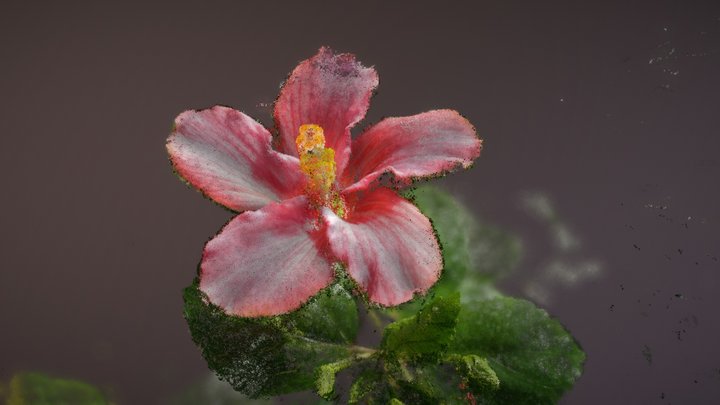
3D model
- Source
- Sketchfab
- Credit
- Mesheritage
- Licence
- CC Attribution
- Commercial use
- cannot be read from the licence given — check the record
The description on this site
- Source
- Wikipedia, “Hibiscus”
- Licence
- CC BY-SA 4.0
This is what the site found, which is not the same as what exists.
Keep going
What may have been alongside itMalvaceae through timeFormations of the HoloceneThe world it lived on
Occurrence data from the Paleobiology Database, CC BY 4.0. Linnaeus 1753