Odontopterygiformes
The Pelagornithidae, commonly called pelagornithids, pseudodontorns, bony-toothed birds, false-toothed birds or pseudotooth birds, are a prehistoric family of large seabirds. Their fossil remains have been found all over the world in rocks dating between the Early Paleocene and the Pliocene-Pleistocene boundary.

Pelagornis.jpg : Ryan Somma derivative work: Haplochromis ( talk ) · CC BY-SA 2.0 · via Wikipedia/Commons. May be a photograph of a specimen, or an artist’s reconstruction — an interpretation of a skeleton, since colour and soft tissue are almost never preserved.
On record
Recorded, not inferred- Sits inside
- AvesPBDB
- Diet
- carnivorePBDB, for Coelurosauria
- Life habit
- ground dwelling, solitaryPBDB, for Theropoda
- Motility
- actively mobilePBDB, for Theropoda
- Environment
- terrestrialPBDB, for Theropoda
Time the record covers
At least 56 million years on record.
The record covers at least 59.24 Mya to 2.58 Mya. No occurrence read is dated outside 61.66 Mya to 11.7 ka.
113 occurrences of Odontopterygiformes on record, most of them in the Eocene. Bar height is expected occurrences, not a count: each fossil is spread across the span it is dated to, so a tall narrow bar means tight dating and a low wide one means loose.
When
113 occurrencesThese are dates about fossils, not the animal: the record can only begin after it arose and end before it died out, so either end may reach further. Shares are expected occurrences: a fossil dated to a span is counted partly in each period it straddles. More on what this infers.
Found in
44 formations
- London Clay Formation · Thames Group13
- Pisco Formation8
- Bahía Inglesa Formation6
- La Meseta Formation6
- Monterey Formation4
- Brussels Formation3
Loading coastlines…
The named rock units Odontopterygiformes has been recovered from, largest first. Drawn where the rock is now, not where it formed. 20 further formations hold fewer occurrences each and are not listed. 21 occurrences have no formation on record, which is common for older literature.
Odontopterygiformes and its relatives
EoceneWhere Odontopterygiformes and its relatives were recorded in the Eocene.
Found in the same rock
1,665 taxa- Pelagornithidae29 sites
- Myliobatis16 sites
- Pelagornis16 sites
- Carcharodon hastalis13 sites
- Otodus megalodon12 sites
- Cetotheriidae11 sites
- Monachinae10 sites
- Spheniscidae10 sites
- Aves9 sites
- Carcharhinus8 sites
- Dasornis emuinus8 sites
- Physeteridae8 sites
- Sula8 sites
- Dasornis7 sites
- Pelagornis orri7 sites
- Phalacrocorax7 sites
- Phocoenidae7 sites
- Psephophorus7 sites
- Alosidae6 sites
- Balaenopteridae6 sites
- Carcharodon carcharias6 sites
- Crocodylia6 sites
- Galeorhinus6 sites
- Mysticeti6 sites
The Paleobiology Database records 90 sites for Odontopterygiformes, and this reads all of them. The number is how many of those sites it was catalogued from too. The 24 sharing the most are listed.
This is not a list of everything alive at the time. It is only what has come out of the same ground as this animal and been written down.
Entered from
73 references- Pseudotoothed birds (Aves, Odontopterygiformes) from the early Tertiary of Morocco8
- Birds of the British Lower Eocene8
- El registro de Pelagornithidae (Aves: Pelecaniformes) y la avifauna neogena del Pacifico sudeste7
- Pseudodontorn fossils from Japan, with preliminary observations on the maxilla specimen from the Lower Oligocene Iwaki Formation, Fukushima, Japan6
- Bony-toothed birds (Aves: Pelagornithidae) from the middle Eocene of Belgium3
- A gigantic "toothed" marine bird from the Miocene of California3
- A Miocene pelagornithid skull from the Astoria Formation and other bones of bony-toothed birds from the late Eocene Keasey Formation, western Oregon (USA)2
- A diverse bird assemblage from the Ypresian of Belgium furthers knowledge of early Eocene avifaunas of the North Sea Basin2
- Diversity of pseudo-toothed birds (Pelagornithidae) from the Eocene of Antarctica2
- The earliest record (early Miocene) of a bony-toothed bird from South America and a reexamination of Venezuelan pelagornithids2
- A skull of the giant bony-toothed bird Dasornis (Aves: Pelagornithidae) from the Lower Eocene of the Isle of Sheppey2
- Miocene and Pliocene birds from the Lee Creek Mine, North Carolina2
Each of the 113 occurrences read was entered from one of these publications, ordered by how many each accounts for. This is not a search for papers mentioning the name. 61 further references are not listed. Entries link to doi.org where the Paleobiology Database holds an identifier, and to its own record where it does not. Relayed as the Paleobiology Database holds them, not checked against what they resolve to.
Media and terms
Media content2

Picture of Odontopterygiformes
- Source
- Wikipedia/Commons
- Credit
- Pelagornis.jpg : Ryan Somma derivative work: Haplochromis ( talk )
- Licence
- CC BY-SA 2.0
- Commercial use
- the licence allows it
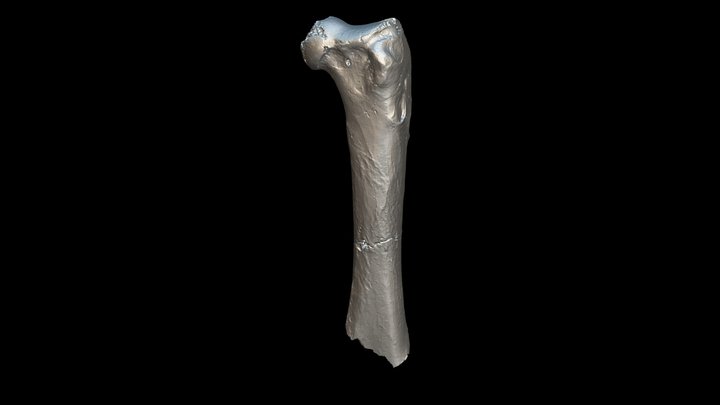
3D model
- Source
- Sketchfab
- Credit
- Stanislav Dobrovolsky
- Licence
- CC Attribution
- Commercial use
- cannot be read from the licence given — check the record
Smithsonian Open Access was not reached for this taxon, so this list is what the others held rather than everything there is.
The description on this site
- Licence
- CC BY-SA 4.0
This is what the site found, which is not the same as what exists.
Keep going
What may have been alongside itAves through timeFormations of the EoceneThe world it lived on
Occurrence data from the Paleobiology Database, CC BY 4.0. Howard 1957