Platypterygius
Platypterygius is a historically paraphyletic genus of platypterygiine ichthyosaur from the Cretaceous period. It was historically used as a wastebasket taxon, and most species within Platypterygius likely are undiagnostic at the genus or species level, or represent distinct genera, even being argued as invalid. While fossils referred to Platypterygius have been found throughout different continents, the holotype specimen was found in Germany.

Roland Tanglao from Vancouver, Canada · CC BY 2.0 · via Wikidata/Commons. May be a photograph of a specimen, or an artist’s reconstruction — an interpretation of a skeleton, since colour and soft tissue are almost never preserved.
On record
Recorded, not inferred- Sits inside
- PlatypterygiinaePBDB
- Diet
- carnivorePBDB, for Ichthyosauria
- Life habit
- nektonicPBDB, for Ichthyopterygia
- Motility
- actively mobilePBDB, for Ichthyosauria
- Environment
- marinePBDB, for Ichthyosauria
- Length
- 7 mWikidata
Time the record covers
At least 42 million years on record.
The record covers at least 143.1 Mya to 100.5 Mya. No occurrence read is dated outside 161.5 Mya to 66 Mya.
62 occurrences of Platypterygius on record, most of them in the Early Cretaceous. Bar height is expected occurrences, not a count: each fossil is spread across the span it is dated to, so a tall narrow bar means tight dating and a low wide one means loose.
When
62 occurrencesThese are dates about fossils, not the animal: the record can only begin after it arose and end before it died out, so either end may reach further. Shares are expected occurrences: a fossil dated to a span is counted partly in each period it straddles. More on what this infers.
Found in
22 formations
- Toolebuc Formation · Rolling Downs Group15
- Zapata Formation6
- Marnes bleues Formation3
- Mowry Shale Formation · Colorado Group2
- Paja Formation2
- Gault Formation2
Loading coastlines…
The named rock units Platypterygius has been recovered from, largest first. Drawn where the rock is now, not where it formed. 16 occurrences have no formation on record, which is common for older literature.
Platypterygius and its relatives
Early CretaceousWhere Platypterygius and its relatives were recorded in the Early Cretaceous.
Found in the same rock
245 taxa- Ichthyosauria7 sites
- Elasmosauridae6 sites
- Inoceramus6 sites
- Ophthalmosauridae4 sites
- Ophthalmosaurinae4 sites
- Plesiosauria4 sites
- Sisteronia seeleyi4 sites
- Chimaeridae3 sites
- Cretalamna3 sites
- Theropoda3 sites
- Anhangueridae2 sites
- Aucellina2 sites
- Belonostomus2 sites
- Beudanticeras sutherlandi2 sites
- Dimetobelus sp.2 sites
- Foraminifera2 sites
- Inoceramus carsoni2 sites
- Mammalia2 sites
- Plantae2 sites
- Pliosauridae2 sites
- Polyacrodus2 sites
- Polycotylidae2 sites
- Squalicorax2 sites
- Squatina2 sites
The Paleobiology Database records 54 sites for Platypterygius, and this reads all of them. The number is how many of those sites it was catalogued from too. The 24 sharing the most are listed.
This is not a list of everything alive at the time. It is only what has come out of the same ground as this animal and been written down.
Entered from
43 references- The Australian Cretaceous ichthyosaur Platypterygius australis: A description and review of postcranial remains9
- High diversity in Cretaceous ichthyosaurs from Europe prior to their extinction6
- A Lower Cretaceous ichthyosaur graveyard in deep marine slope channel deposits at Torres del Paine National Park, southern Chile3
- Jack and Etheridge, 18923
- A mid-Cretaceous association of shell beds and organic-rich shale: bivalve exploitation of a nutrient-rich, anoxic seafloor environment2
- Présence du genre Platypterygius (Ichthyosauria, Reptilia) dans le Cénomanien inférieur de Villers-sur-Mer (Normandie, France)2
- Platypterygius Huene, 1922 (Ichthyosauria, Ophthalmosauridae) from the Late Cretaceous of Texas, USA1
- Postcranial Anatomy of Platypterygius americanus (Reptilia: Ichthyosauria) from the Cretaceous of Wyoming1
- On ichthyosaur remains from the Cretaceous of the Voronezh Region1
- On the brain of a primitive bird from the Upper Cretaceous of European Russia1
- Revision of Platypterygius hauthali von Huene, 1927 (Ichthyosauria: Ophthalmosauridae) from the early Cretaceous of Patagonia, Argentina1
- Cranial morphology of Platypterygius longmani Wade, 1990 (Reptilia: Ichthyosauria) from the Lower Cretaceous of Australia1
Each of the 62 occurrences read was entered from one of these publications, ordered by how many each accounts for. This is not a search for papers mentioning the name. 31 further references are not listed. Entries link to doi.org where the Paleobiology Database holds an identifier, and to its own record where it does not. Relayed as the Paleobiology Database holds them, not checked against what they resolve to.
Media and terms
Media content3
Picture of Platypterygius
- Source
- Wikidata/Commons
- Credit
- Roland Tanglao from Vancouver, Canada
- Licence
- CC BY 2.0
- Commercial use
- the licence allows it
CT scan
- Source
- MorphoSource
- Licence
- not stated by the source
- Commercial use
- cannot be read from the licence given — check the record
- Specimen
- Platypterygius australis · am:paleontology:116940
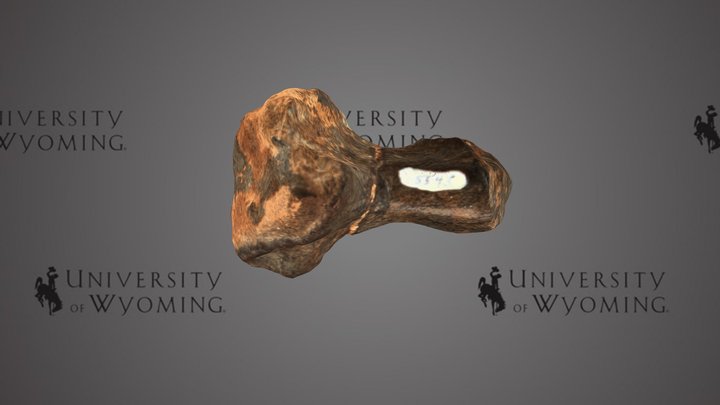
3D model
- Source
- Sketchfab
- Licence
- CC Attribution-NonCommercial
- Commercial use
- the licence does not allow it
Smithsonian Open Access was not reached for this taxon, so this list is what the others held rather than everything there is.
The description on this site
- Licence
- CC BY-SA 4.0
This is what the site found, which is not the same as what exists.
Keep going
What may have been alongside itPlatypterygiinae through timeFormations of the Early CretaceousThe world it lived on
Occurrence data from the Paleobiology Database, CC BY 4.0. von Huene 1922