Enantiornithes

Nobu Tamura ( http://spinops.blogspot.com ) · CC BY 3.0 · via Wikidata/Commons. May be a photograph of a specimen, or an artist’s reconstruction — an interpretation of a skeleton, since colour and soft tissue are almost never preserved.
On record
Recorded, not inferred- Sits inside
- OrnithothoracesPBDB
- Diet
- carnivorePBDB, for Coelurosauria
- Life habit
- ground dwelling, solitaryPBDB, for Theropoda
- Motility
- actively mobilePBDB, for Theropoda
- Environment
- terrestrialPBDB, for Theropoda
Time the record covers
At least 53 million years on record.
The record covers at least 125.77 Mya to 72.2 Mya. No occurrence read is dated outside 161.5 Mya to 61.66 Mya.
183 occurrences of Enantiornithes on record, most of them in the Early Cretaceous. Bar height is expected occurrences, not a count: each fossil is spread across the span it is dated to, so a tall narrow bar means tight dating and a low wide one means loose.
When
183 occurrences- Late Jurassicunder 1%
- Early Cretaceous51%
- Late Cretaceous49%
- Paleoceneunder 1%
These are dates about fossils, not the animal: the record can only begin after it arose and end before it died out, so either end may reach further. Shares are expected occurrences: a fossil dated to a span is counted partly in each period it straddles. More on what this infers.
Found in
51 formations
- Jiufotang Formation · Jehol Group47
- Bissekty Formation16
- Yixian Formation · Jehol Group15
- Lecho Formation · Salta Group13
- Baruungoyot Formation6
- Huajiying Formation6
Loading coastlines…
The named rock units Enantiornithes has been recovered from, largest first. Drawn where the rock is now, not where it formed. 27 further formations hold fewer occurrences each and are not listed. 4 occurrences have no formation on record, which is common for older literature.
Enantiornithes and its relatives
Early CretaceousWhere Enantiornithes and its relatives were recorded in the Early Cretaceous.
Found in the same rock
976 taxa- Theropoda15 sites
- Dinosauria12 sites
- Dromaeosauridae10 sites
- Mammalia10 sites
- Lacertilia9 sites
- Testudines9 sites
- Ornithomimidae8 sites
- Osteichthyes8 sites
- Ankylosauridae7 sites
- Aves7 sites
- Euenantiornithes7 sites
- Lycoptera7 sites
- Multituberculata7 sites
- Anura6 sites
- Azhdarchidae6 sites
- Hadrosauridae6 sites
- Pterosauria6 sites
- Titanosauria6 sites
- Lepisosteidae5 sites
- Maniraptora5 sites
- Ornithopoda5 sites
- Squamata5 sites
- Abelisauridae4 sites
- Albanerpetontidae4 sites
The Paleobiology Database records 111 sites for Enantiornithes, and this reads all of them. The number is how many of those sites it was catalogued from too. The 24 sharing the most are listed.
This is not a list of everything alive at the time. It is only what has come out of the same ground as this animal and been written down.
Entered from
148 references- [New species of enantiornithines (Aves: Enantiornithes) from the Upper Cretaceous of central Kyzylkum]9
- Euenantiornithine birds from the Late Cretaceous of El Brete (Argentina)8
- Hou, 19975
- A Late Cretaceous (Maastrichtian) avifauna from the Maevarano Formation, Madagascar4
- Juvenile birds from the Early Cretaceous of China: implications for enantiornithine phylogeny4
- Mesozoic birds of Mongolia and the former USSR3
- Enantiornithine (Aves) tarsometatarsi from the Cretaceous Lecho Formation of northwestern Argentina3
- The uppermost Cretaceous continental deposits at the southern end of Patagonia, the Chorrillo Formation case study (Austral-Magallanes Basin): Sedimentology, fossil content and regional implications2
- A new species of Pengornithidae (Aves: Enantiornithes) from the Lower Cretaceous of China suggests a specialized scansorial habitat previously unknown in early birds2
- A new diverse enantiornithine family (Bohaiornithidae fam. nov.) from the Lower Cretaceous of China with information from two new species2
- Large euenantiornithine birds from the Cretaceous of southern France, North America and Argentina2
- New material of enantiornithine birds from the Early Cretaceous of Australia2
Each of the 183 occurrences read was entered from one of these publications, ordered by how many each accounts for. This is not a search for papers mentioning the name. 136 further references are not listed. Entries link to doi.org where the Paleobiology Database holds an identifier, and to its own record where it does not. Relayed as the Paleobiology Database holds them, not checked against what they resolve to.
Media and terms
Media content2
Picture of Enantiornithes
- Source
- Wikidata/Commons
- Credit
- Nobu Tamura ( http://spinops.blogspot.com )
- Licence
- CC BY 3.0
- Commercial use
- the licence allows it
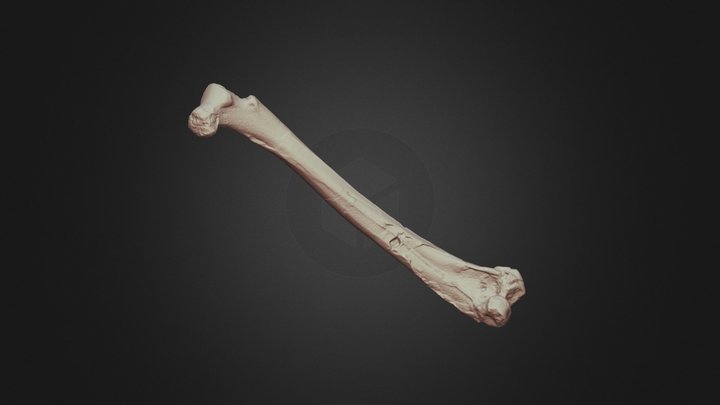
3D model
- Source
- Sketchfab
- Licence
- CC Attribution
- Commercial use
- cannot be read from the licence given — check the record
Smithsonian Open Access and MorphoSource were not reached for this taxon, so this list is what the others held rather than everything there is.
This is what the site found, which is not the same as what exists.
Keep going
What may have been alongside itOrnithothoraces through timeFormations of the Early CretaceousThe world it lived on
Occurrence data from the Paleobiology Database, CC BY 4.0. (Walker 1981)